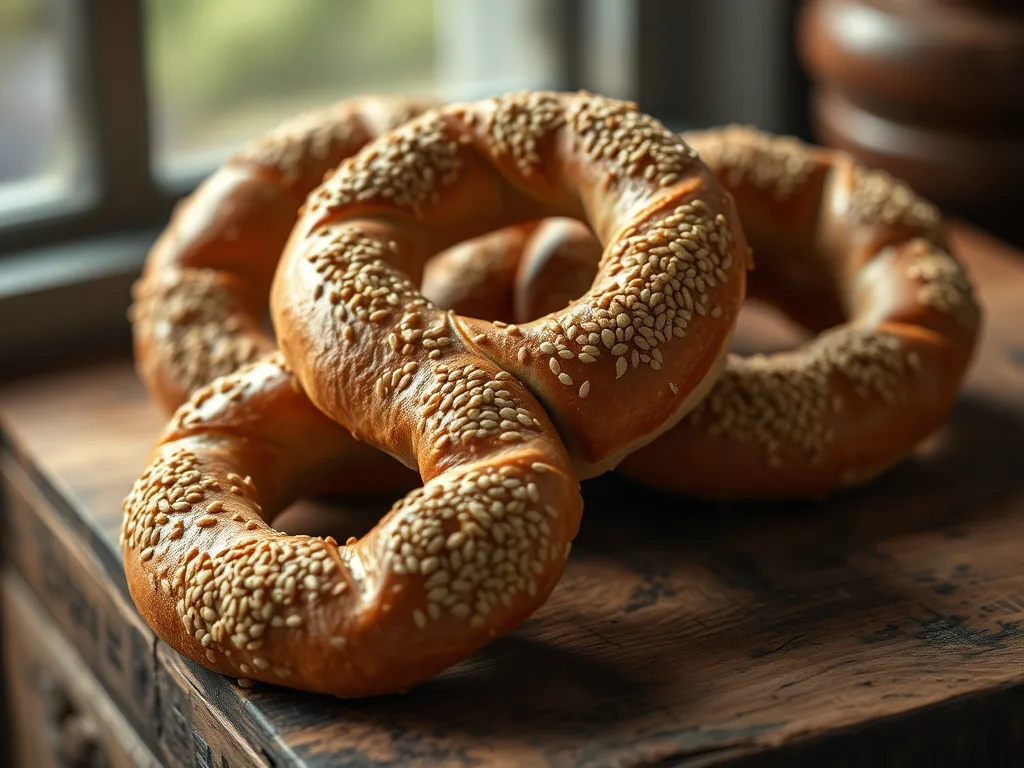
The Story Behind Turkish Simit
Simit is the bread of Istanbul — a circular sesame-crusted ring with a chewy, slightly sweet interior, sold from red wheeled carts by simitçis (simit vendors) throughout the city at all hours of the day. There is almost no street corner in Istanbul without a simit cart, and the sight of a vendor cycling through morning traffic with a tray of 20 simit balanced on his head is as iconic to the city as the Blue Mosque or the Bosphorus. The first documentary evidence of simit appears in Ottoman court records from 1525, listing the price and weight specifications for simit sold in Istanbul, suggesting the bread was already well-established by the early 16th century. Some food historians trace an older lineage, connecting simit to Byzantine ring breads documented in Constantinople before the Ottoman conquest in 1453.
The simit's production process is what makes it distinctive: the rings are dipped in pekmez (grape molasses) before being coated in sesame seeds and baked, giving them their characteristic sweetness, mahogany color, and the extraordinary density of sesame coverage that distinguishes a proper simit from lesser imitations. Sesame seeds have been cultivated in the Middle East and Mediterranean since ancient times, and sesame-covered breads appear across the entire region — from the Jerusalem ka'ak to the Algerian khoubz el barcha to the Italian sesame rolls of Sicily. The Turkish simit is the form that has become most globally recognized, a humble street bread that represents the democratic heart of one of the world's great food cultures.
What makes simit so appealing is the contrast between the crisp sesame crust and the tender, chewy inside. It is not as soft as a roll and not as dense as a bagel; it lives in its own perfect middle ground. The pekmez dip is important because it gives the sesame something to cling to while adding color and a subtle fruity sweetness. When baked properly, the sesame seeds toast deeply and fill the kitchen with a nutty aroma that makes the bread feel irresistible before it even cools.
As Chef Ruben, I love foods that belong to daily life, and simit is exactly that. It can be breakfast with tea, a snack with cheese and olives, or a simple bread to tear and share. It is affordable, portable, and deeply connected to the rhythm of Turkish streets. Making it at home lets you appreciate the craft behind something that looks simple from a cart window. Every ring carries a little of Istanbul's energy: busy mornings, ferry rides, tea glasses, sesame crumbs, and the comfort of bread made for everyone.
Time and Servings:
Prep Time: 15 minutes (plus 1 hour rising time)
Cook Time: 20 minutes
Total Time: 35 minutes (active time) + 1 hour rising
Servings: 6 rings
Nutrition (per serving):
Calories: 180 kcal
Protein: 5g
Fat: 6g
Carbohydrates: 28g
Fiber: 2g
Sugar: 5g
Sodium: 190mg
Ingredients:
- For the Dough:
- 2 cups all-purpose flour
- 1 tsp instant yeast
- 1 tsp sugar
- 1 tsp salt
- 3/4 cup water
- For the Coating:
- 1/2 cup molasses
- 1/2 cup sesame seeds
Instructions:
- Prepare the Dough:
- In a large mixing bowl, combine the flour, yeast, sugar, and salt. Gradually add water while mixing to form a soft dough.
- Knead the dough on a floured surface for 8-10 minutes until smooth and elastic. Cover the dough with a damp cloth and let it rise in a warm place for 1 hour or until doubled in size.
- Shape the Simit:
- Divide the dough into 6 equal pieces. Roll each piece into a long rope, approximately 18 inches in length.
- Twist each rope slightly and join the ends to form a ring.
- Coat the Simit:
- In a shallow bowl, dilute the molasses with a splash of water. Dip each ring into the molasses mixture, ensuring it is fully coated.
- Transfer the ring to a plate filled with sesame seeds and coat generously.
- Bake the Simit:
- Place the sesame-coated rings on a parchment-lined baking sheet. Bake in a preheated oven at 375°F (190°C) for 15-20 minutes or until golden brown and crispy.
- Serve:
- Allow the simit to cool slightly before serving. Enjoy as a snack, with Turkish tea, or paired with feta cheese and olives for an authentic Turkish breakfast.
Tips for Success:
- Twisting Dough: Twisting the ropes before shaping into rings helps create the traditional texture.
- Molasses Substitute: Use honey or pomegranate molasses if traditional molasses is unavailable.
- Sesame Seeds: Toast the sesame seeds lightly for an extra nutty flavor.
Wine, Cocktail, Drink Pairing:
- Pair your simit with a warm glass of Turkish tea for an authentic experience, or a refreshing sparkling lemonade for a modern twist.