The Story Behind Tostones
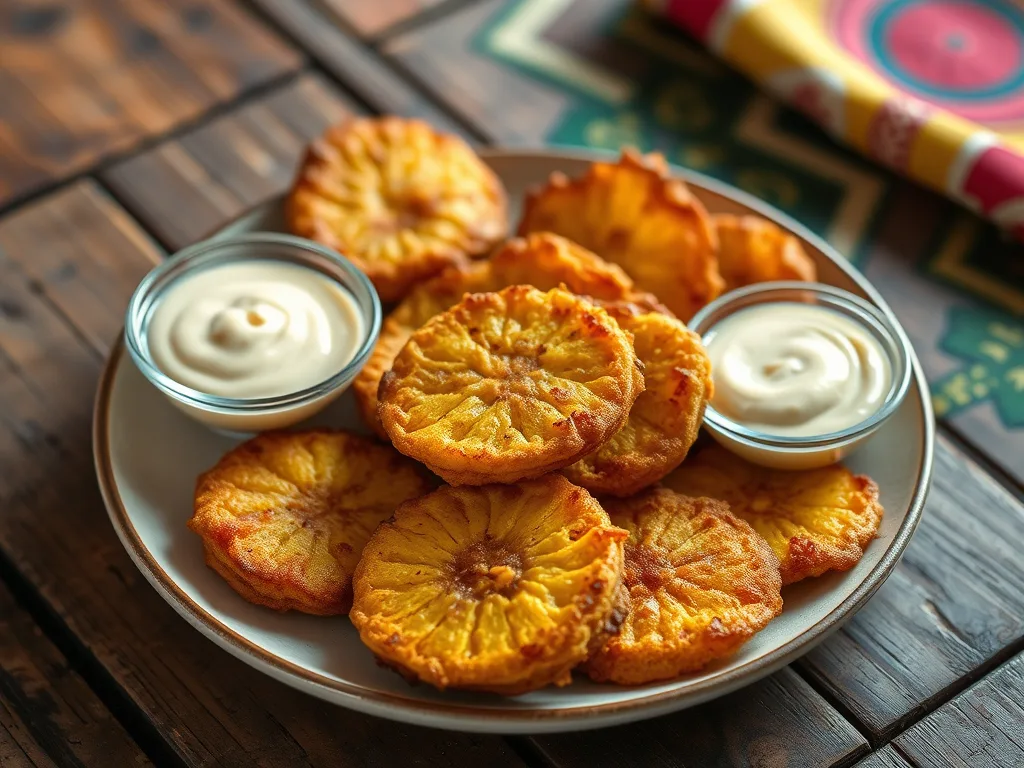
Tostones, those crispy twice-fried green plantain slices, are one of Puerto Rico's most iconic and universally loved foods. Crispy on the outside, tender and starchy within, and usually served with a garlicky dipping sauce, they are the ultimate Caribbean snack and side dish. No Puerto Rican meal feels quite complete without them. You can put a plate of rice and beans, pernil, pollo guisado, or fried fish on the table, and somehow the meal still feels like it is waiting for the tostones. Once that hot plate of golden plantains lands, everybody knows it is time to eat.
The tostón's deeper origin is tied to the movement of plantains across the Atlantic and the cooking traditions of West Africa, where frying starchy fruits and vegetables was already part of food culture. Enslaved Africans brought knowledge, technique, and resilience to the Caribbean, transforming available ingredients into dishes that became central to island cooking. Plantains thrived in the tropical climate, and over time they became one of the backbone ingredients of Puerto Rican cuisine. The twice-frying technique, frying once to soften, flattening, then frying again to crisp, is what gives tostones their signature texture.
As Chef Ruben, tostones feel personal to me because they are the kind of food that does not need an introduction in a Puerto Rican home. They show up at family meals, parties, beach days, roadside kiosks, and weeknight dinners. They are humble, but nobody treats them like an afterthought. When tostones are fresh and hot, they disappear fast. People reach for them before the main dish is even served. That is how you know a food has power. It is simple, but it commands attention.
The magic starts with green plantains. This is important. A ripe yellow plantain gives you maduros, sweet fried plantains, which are delicious but completely different. Tostones need green plantains because they are firm, starchy, and savory. Peeling them can be a little work because the skin clings tightly, but that is part of the ritual. You cut off the ends, score the peel, loosen it with your fingers or a knife, and slice the plantain into thick rounds. From there, the first fry softens the plantain and prepares it for flattening.
Flattening is where tostones become tostones. Traditionally, many cooks use a tostonera, a simple wooden press that smashes each piece into a disk. If you do not have one, the bottom of a glass, a plate, or even a small cutting board works. The goal is not to pulverize the plantain. You want to press it evenly so it widens while still holding together. Then it goes back into hot oil for the second fry, where the outside turns crisp and golden. That contrast between crisp edges and tender center is the whole reason tostones are so addictive.
Seasoning matters too. Tostones need salt as soon as they come out of the oil. That little sprinkle wakes them up. Some cooks also dip the smashed plantains briefly in salted garlic water before the second fry, which adds flavor and helps create a beautiful crust. Others keep the plantain plain and let the dipping sauce do the talking. Both ways are valid. The key is serving them hot. Tostones are at their best right out of the fryer, when they are still crackling, fragrant, and ready for mojo de ajo or mayoketchup.
Mojo de ajo, a garlicky sauce often made with garlic, oil, vinegar, citrus, and salt, is one of the classic partners for tostones. That sharp garlic flavor cuts through the starch and richness, making each bite brighter. In Puerto Rico, you may also see tostones served with mayo-ketchup, a pink sauce made with mayonnaise, ketchup, garlic, and sometimes a little hot sauce. It is casual, fun, and completely delicious. Tostones do not judge. They are just happy to be dipped.
One reason I respect tostones so much is that they represent the genius of everyday cooking. There are no luxury ingredients here, no complicated equipment required, no long list of seasonings. Yet the result is unforgettable. That is the beauty of Caribbean food. It takes what is available and turns it into something full of rhythm, texture, and soul. Tostones are proof that technique can elevate a simple ingredient into something people crave.
They also carry memory. For Puerto Ricans on the island and in the diaspora, tostones can taste like childhood, family kitchens, roadside food stands, and plates shared with people you love. They taste like home even when home is far away. Every time I make them, I think about how food travels with us. A green plantain, a little oil, some salt, and garlic sauce can bring back a whole table of memories.
Tostones are more than a side dish. They are a cultural staple, a snack, a comfort food, and a reminder of Puerto Rico's layered history. They carry African influence, Caribbean abundance, and island creativity in every crispy bite. Once you have had them fresh, hot, and properly salted, you understand why no other version will ever fully satisfy. They are simple, proud, and absolutely essential.
Time and Servings:
Prep Time: 5 minutes
Cook Time: 15 minutes
Total Time: 20 minutes
Servings: 4 servings
Nutrition (per serving):
Calories: 220 kcal
Protein: 1g
Fat: 14g
Carbohydrates: 25g
Fiber: 2g
Sugar: 0g
Sodium: 150mg
Ingredients:
- 3 green plantains, peeled and sliced into 1-inch rounds
- Vegetable oil (for frying)
- Salt, to taste
Instructions:
- Prepare Plantains:
- Peel the green plantains by cutting off the ends and making a shallow slit along the length of the plantain. Remove the skin carefully to avoid bruising the flesh. Slice into 1-inch thick rounds.
- First Fry:
- Heat vegetable oil in a deep skillet or frying pan over medium-high heat. Once the oil is hot (about 350°F), fry the plantain slices in batches for 2-3 minutes on each side, or until they turn light golden. Remove and place on a plate lined with paper towels.
- Flatten Plantains:
- Use a plantain press, the bottom of a flat cup, or a plate to gently flatten each fried plantain slice to about half its original thickness.
- Second Fry:
- Return the flattened plantains to the hot oil and fry for another 1-2 minutes on each side until crispy and golden brown. Remove and drain on fresh paper towels.
- Season and Serve:
- Sprinkle the fried plantains with salt while they”re still warm. Serve immediately with a garlic dipping sauce (mojo de ajo), ketchup-mayo sauce, or your favorite condiment.
Tips for Success:
- Choosing Plantains: Use firm, green plantains for the best texture. Avoid yellow or ripened plantains, as they”re too soft for tostones.
- Oil Temperature: Keep the oil hot but not smoking. If it”s too cold, the plantains will absorb too much oil and become greasy.
- Consistent Thickness: Slice and flatten the plantains evenly to ensure they cook uniformly.
- Serve Fresh: Tostones are best served immediately to maintain their crispiness.
Wine, Cocktail, Drink Pairing:
- Pair Tostones with a chilled Mojito or a crisp Pilsner beer. For a non-alcoholic option, serve with a refreshing citrus soda or limeade to complement the savory and salty flavors.