The Story Behind Mofongo
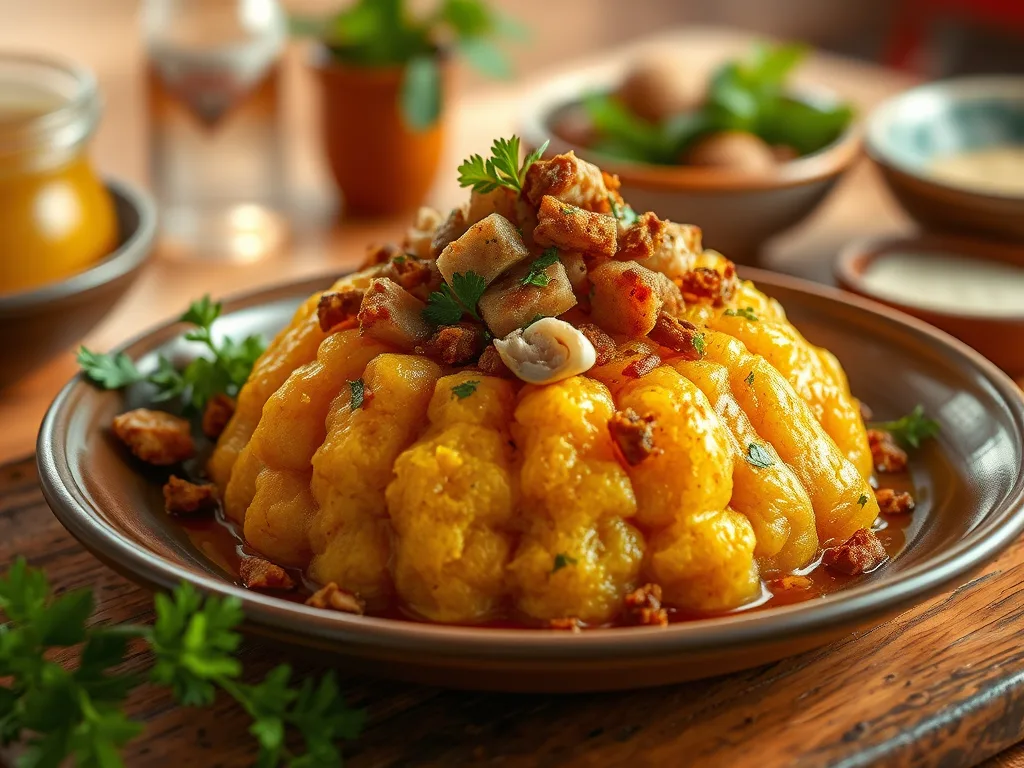
Mofongo is perhaps Puerto Rico's most iconic dish — a hearty, garlicky mash of fried green plantains and pork cracklings (chicharrón), pressed together in a wooden pilón (mortar) and served with a rich broth or topped with meat or shrimp. Its bold flavor and satisfying texture have made it a symbol of Puerto Rican culinary identity both on the island and in the diaspora.
The origins of Mofongo trace back to the West African fufu, a dish made by pounding starchy root vegetables or plantains into a smooth mass. Enslaved Africans brought this technique to Puerto Rico, where it merged with Spanish cooking methods and indigenous Taíno ingredients. The addition of chicharrón and garlic — quintessentially Spanish and Puerto Rican touches — transformed fufu into the mofongo we know today.
In Puerto Rico, mofongo is served at everything from casual lunch spots to upscale restaurants, with countless variations featuring different fillings and toppings. For Puerto Ricans away from the island, a perfectly made mofongo is often the dish they miss most — a taste of home that no other food can replicate.
What makes mofongo unforgettable is texture. The plantains are fried until firm and golden, then pounded while still hot with garlic, salt, oil, and crispy pork. The result should be rustic, not completely smooth — dense enough to hold together, but tender enough to break apart with a fork. A little broth served alongside or poured over the top keeps it moist and adds another layer of savory flavor.
As Chef Ruben, mofongo feels personal because it captures so much of Puerto Rican cooking in one bowl: plantains, garlic, pork, rhythm, strength, and comfort. It can be stuffed with shrimp, chicken, steak, vegetables, or seafood, but even plain mofongo has presence. The sound of the pilón, the smell of garlic, and the first bite of crispy, savory plantain all say the same thing: this is Puerto Rico on a plate.
The key is respecting the plantain. Green plantains are starchy and firm, which is exactly what mofongo needs. If they are too ripe, the texture changes and the dish loses that savory backbone. Frying them once softens the flesh while giving the outside structure, and pounding them while warm helps everything come together. I also think the broth is more important than people realize. A good garlicky chicken, beef, or seafood broth turns mofongo from dense and filling into juicy, comforting, and complete. That is the difference between a dry mound of plantain and a dish that makes you close your eyes after the first bite.
Time and Servings:
Prep Time: 10 minutes
Cook Time: 20 minutes
Total Time: 30 minutes
Servings: 4 servings
Nutrition (per serving):
Calories: 320 kcal
Protein: 6g
Fat: 15g
Carbohydrates: 42g
Fiber: 3g
Sugar: 2g
Sodium: 200mg
Ingredients:
- 4 green plantains, peeled and sliced
- 1/4 cup pork cracklings (chicharrón), crushed
- 4 cloves garlic, minced
- 1/4 cup olive oil
- Salt and pepper, to taste
- Vegetable oil (for frying)
Instructions:
- Fry Plantains:
- Heat vegetable oil in a deep skillet or fryer to medium-high heat.
- Fry the sliced plantains in batches until golden and tender, about 5-7 minutes.
- Remove and drain on paper towels.
- Mash Plantains:
- In a large mortar and pestle (pilón), mash the fried plantains with minced garlic, olive oil, and pork cracklings.
- Add salt and pepper to taste. Adjust the consistency by drizzling in more olive oil if needed.
- Shape and Serve:
- Shape the mashed mixture into individual balls or mound it onto a serving plate.
- Serve hot alongside roasted meats, grilled shrimp, or in a broth for added flavor.
Tips for Success:
- Plantain Texture: Use firm, green plantains for the perfect texture; ripe ones will be too soft for mashing.
- Garlic Intensity: Adjust the amount of garlic based on your preference for a milder or more robust flavor.
- Equipment: If you don”t have a mortar and pestle, use a sturdy bowl and a wooden spoon to mash the plantains.
- Enhance Flavor: Add a splash of chicken broth to the mash for extra moisture and richness.
Wine, Cocktail, Drink Pairing:
Pair Mofongo with a Malbec for its earthy, bold flavors that complement the savory plantains and garlic. Alternatively, a Mojito with its refreshing mint and lime notes offers a delightful contrast to the richness of the dish. For non-alcoholic options, a cold tamarind juice or sparkling water with lime works beautifully.