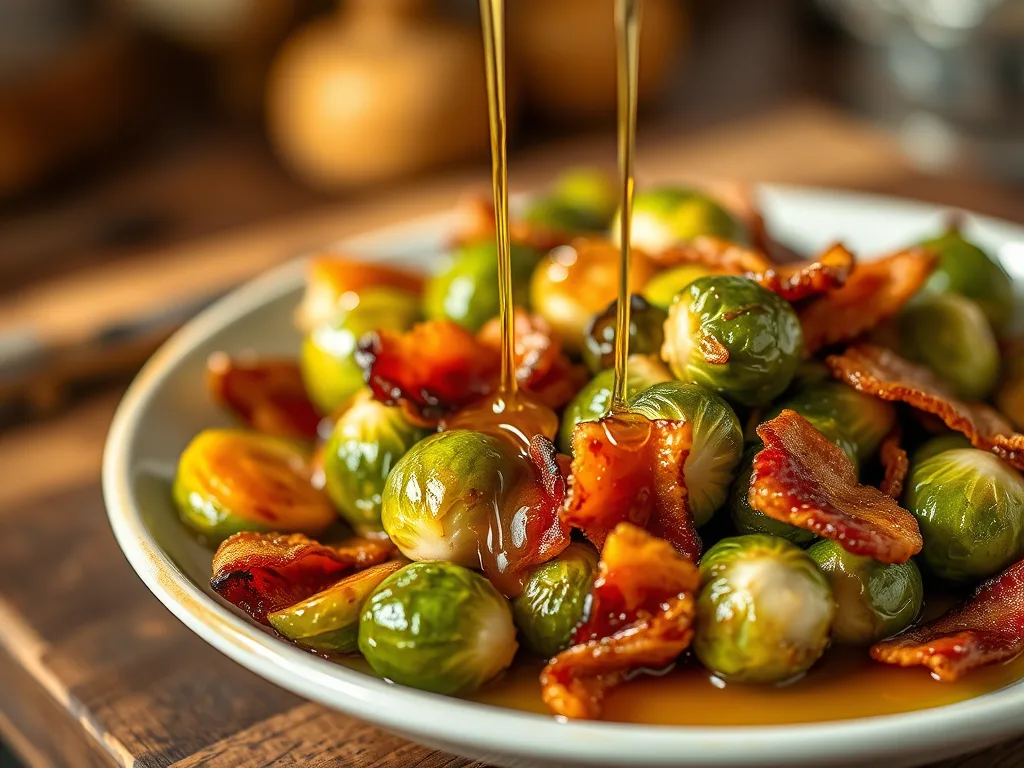
The Story Behind Maple Roasted Brussels Sprouts with Bacon
Brussels sprouts have undergone one of the most remarkable reputation rehabilitations in modern food history. For much of the 20th century they were synonymous with the worst of institutional cooking — overboiled, grey-green, sulfurous — the vegetable that children across Britain, America, and Northern Europe were forced to eat at Christmas and Thanksgiving while adults grimaced sympathetically. The scientific explanation came later: Brussels sprouts contain glucosinolate compounds that, when overcooked, break down into intensely bitter sulfurous compounds. When roasted at high heat in a dry oven instead of boiled in water, these compounds caramelize rather than dominate, and the sprout becomes nutty, sweet, and deeply savory. That one technique change transformed everything. Suddenly Brussels sprouts were not punishment. They were crispy, browned, sweet at the edges, and worthy of the holiday table.
The high-heat roasting revelation transformed Brussels sprouts from the most despised vegetable on many Western tables to a restaurant-menu darling in the 2000s and 2010s. Adding maple syrup — the concentrated sap of the sugar maple tree, which Indigenous peoples of northeastern North America had been harvesting and processing for centuries before European contact — and bacon creates the definitive modern Brussels sprout preparation: the maple caramelizes the cut surfaces of the sprout into something almost candy-like, while bacon adds smokiness and fat. It is a dish that has genuinely changed how several generations of people feel about a vegetable, which is arguably one of the most impressive things a recipe can accomplish. From Chef Ruben’s kitchen, I love this side dish because it has all the things people want at Thanksgiving: sweetness, saltiness, crunch, richness, and a little green on the plate so we can pretend we are behaving.
The technique is all about giving the sprouts room to roast. If they are crowded on the pan, they steam instead of brown, and you lose the crispy edges that make the dish special. Cutting them in half creates a flat surface that caramelizes beautifully against the hot pan. Bacon can be roasted right alongside them, letting the rendered fat coat the sprouts and deepen their flavor. Maple syrup should be added with care. Too early or too much, and it can burn before the sprouts are tender. I like adding it partway through or using just enough to glaze rather than drown. A splash of vinegar or lemon juice at the end can balance the sweetness and make the whole dish taste brighter. Black pepper, garlic, shallots, pecans, or a pinch of red pepper flakes can all add personality.
This dish also works because it bridges old and new Thanksgiving traditions. Brussels sprouts have European roots, maple syrup carries Indigenous North American history, and bacon brings that smoky American comfort-food energy. Together they create a side that feels familiar but not boring. It belongs next to turkey, mashed potatoes, stuffing, and cranberry sauce, but it can also hold its own on a weeknight dinner table with chicken, pork, salmon, or even a grain bowl. If you want the best texture, serve it soon after roasting while the edges are still crisp. If you need to reheat it, use the oven instead of the microwave. Maple roasted Brussels sprouts with bacon prove that the right technique can redeem an ingredient’s reputation and turn skeptics into believers.
One little detail that makes a big difference is finishing with contrast. Maple and bacon are rich, so a splash of acidity at the end keeps the dish from feeling heavy. Apple cider vinegar, lemon juice, or even a tiny drizzle of balsamic can sharpen everything. I also like leaving some loose leaves on the pan because they become the crispy bits people secretly pick at before serving. This is a side dish with personality: smoky, glossy, crisp, sweet, salty, and just green enough to feel balanced on a Thanksgiving plate. It is proof that vegetables do not have to be boring to be welcome at the holiday table.
Time and Servings:
- Prep Time: 10 minutes
- Cook Time: 30 minutes
- Total Time: 40 minutes
- Servings: 6 servings
Nutrition (per serving):
- Calories: 180 kcal
- Protein: 5g
- Fat: 10g
- Carbohydrates: 18g
- Fiber: 4g
- Sugars: 7g
Ingredients:
- 1 lb Brussels sprouts, trimmed and halved
- 4 slices bacon, chopped
- 2 tbsp olive oil
- 2 tbsp maple syrup
- Salt and pepper, to taste
Instructions:
Prepare the Ingredients:
- Preheat the Oven:
- Preheat your oven to 400°F (200°C).
- Line a baking sheet with parchment paper or lightly grease it for easy cleanup.
- Season the Brussels Sprouts:
- In a large mixing bowl, toss the halved Brussels sprouts with 2 tbsp of olive oil, salt, and pepper to taste.
- Ensure all the sprouts are evenly coated with the oil for even roasting.
Roast the Brussels Sprouts:
- Add Bacon:
- Spread the seasoned Brussels sprouts on the prepared baking sheet in a single layer.
- Scatter the chopped bacon pieces evenly over the sprouts.
- Initial Roasting:
- Roast the Brussels sprouts and bacon in the preheated oven for 20 minutes. Stir halfway through to ensure even cooking and crispiness.
Add Maple Syrup and Finish Roasting:
- Drizzle with Maple Syrup:
- After 20 minutes of roasting, remove the baking sheet from the oven.
- Drizzle 2 tbsp of maple syrup over the Brussels sprouts and bacon. Toss to coat evenly.
- Final Roasting:
- Return the baking sheet to the oven and roast for an additional 10 minutes, or until the Brussels sprouts are caramelized and the bacon is crispy.
Serve:
- Transfer and Serve:
- Transfer the maple roasted Brussels sprouts and bacon to a serving dish.
- Serve hot as a sweet-savory side dish for your Thanksgiving or holiday meal.
Tips for Success:
- Use fresh Brussels sprouts for the best flavor and texture.
- For extra crunch, sprinkle chopped pecans or walnuts during the final 10 minutes of roasting.
- Adjust the maple syrup to taste, adding more for a sweeter dish or less for a subtle glaze.
Wine, Cocktail, or Drink Pairing:
- Pair this dish with a light Pinot Noir, a sparkling Prosecco, or a warm apple cider for a balanced and festive accompaniment.