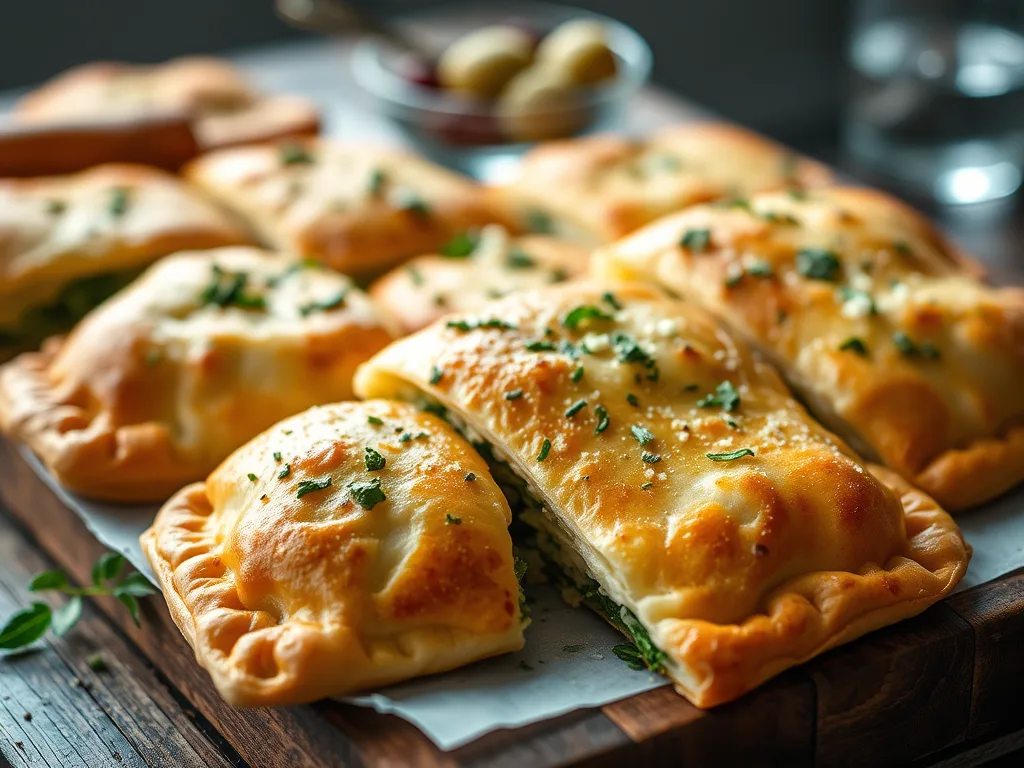
The Story Behind Greek Spanakopita
Spanakopita — spinach and feta cheese wrapped in paper-thin phyllo pastry — is one of the defining dishes of Greek cuisine, but its story is inseparable from the layered history of filo (phyllo) dough itself. Paper-thin pastry stretched over a large surface is a technique that originated in the Ottoman Empire and spread throughout the Balkans, Middle East, and Central Asia through Ottoman influence. The Turks call it yufka, the Armenians have their own version, and Viennese strudel — also stretched to translucent thinness — is a direct descendant of Ottoman filo brought west. In Greece, phyllo was adopted and perfected, becoming the basis of a wide range of savory and sweet pies collectively called pites.
Spinach was introduced to the Mediterranean by Arab traders in the medieval period, arriving in Spain around the 10th century and spreading through Italy and Greece by the 12th-13th centuries. Feta cheese — made from sheep's milk and aged in brine — has been produced in Greece for at least 3,000 years; Homer references a cheese-making process in the Odyssey. The combination of spinach, feta, and phyllo emerged as a distinctly Greek preparation, and today spanakopita is one of the most internationally recognized dishes in Greek cuisine — made for everyday snacking, packed into lunch boxes, served at Greek Easter celebrations, and found in Greek-owned bakeries from Melbourne to Montreal.
What makes spanakopita so beautiful is the contrast. The filling is soft, green, salty, and fragrant, while the phyllo bakes into crisp, golden layers that shatter when you cut into them. It looks delicate, but it is also practical food. A tray of spanakopita can feed a crowd, travel well, and taste good warm, room temperature, or even as leftovers the next day. That is one reason it has become such a dependable dish for gatherings, church events, holidays, and family tables.
The technique is all about moisture and layering. Spinach needs to be drained well so the pie does not become soggy, and the phyllo should be brushed with enough butter or olive oil to separate and crisp each sheet. Fresh herbs like dill, parsley, or mint brighten the filling, while the feta gives that unmistakable briny bite. In my kitchen, I think of spanakopita as one of those recipes that rewards care more than complication. You take humble greens, cheese, and pastry, and with a little patience, you create something elegant, comforting, and deeply tied to Greek hospitality.
Time and Servings:
- Prep Time: 20 minutes
- Cook Time: 40 minutes
- Total Time: 1 hour
- Servings: 8 servings
Nutrition (per serving):
- Calories: 280 kcal
- Protein: 9g
- Fat: 20g
- Carbohydrates: 20g
- Fiber: 2g
- Sugar: 2g
- Sodium: 480mg
Ingredients:
- 1 lb fresh spinach, chopped
- 1 small onion, finely chopped
- 2 cloves garlic, minced
- 8 oz feta cheese, crumbled
- 2 eggs, beaten
- 1/4 cup olive oil
- 1/4 cup fresh dill, chopped
- 1 pack phyllo dough
- Butter (for brushing)
Instructions:
- Prepare Filling:
- Heat olive oil in a skillet over medium heat.
- Sauté onion and garlic until softened, about 3-4 minutes.
- Add spinach and cook until wilted, about 5 minutes.
- Remove from heat and let cool. Stir in feta, eggs, and dill until combined.
- Layer Phyllo Dough:
- Preheat oven to 350°F (175°C).
- Brush a 9x13-inch baking dish with melted butter.
- Layer 6 sheets of phyllo dough, brushing each with butter.
- Spread spinach mixture evenly over the dough.
- Top with 6 more sheets of phyllo, brushing each with butter.
- Bake:
- Bake in preheated oven for 40 minutes, or until phyllo is golden and crispy.
- Serve:
- Let cool slightly before cutting into squares. Serve warm or at room temperature for an authentic Greek delight.
Tips for Success:
- Phyllo Tips: Keep phyllo covered with a damp towel to prevent it from drying out while layering.
- Make-Ahead: Assemble the pie ahead of time and bake just before serving.
- Substitutions: Use frozen spinach if fresh is unavailable; just ensure to drain thoroughly.
Wine, Cocktail, Drink Pairing:
Pair with a crisp white wine like Sauvignon Blanc or a light Greek Retsina for a complete Mediterranean experience.