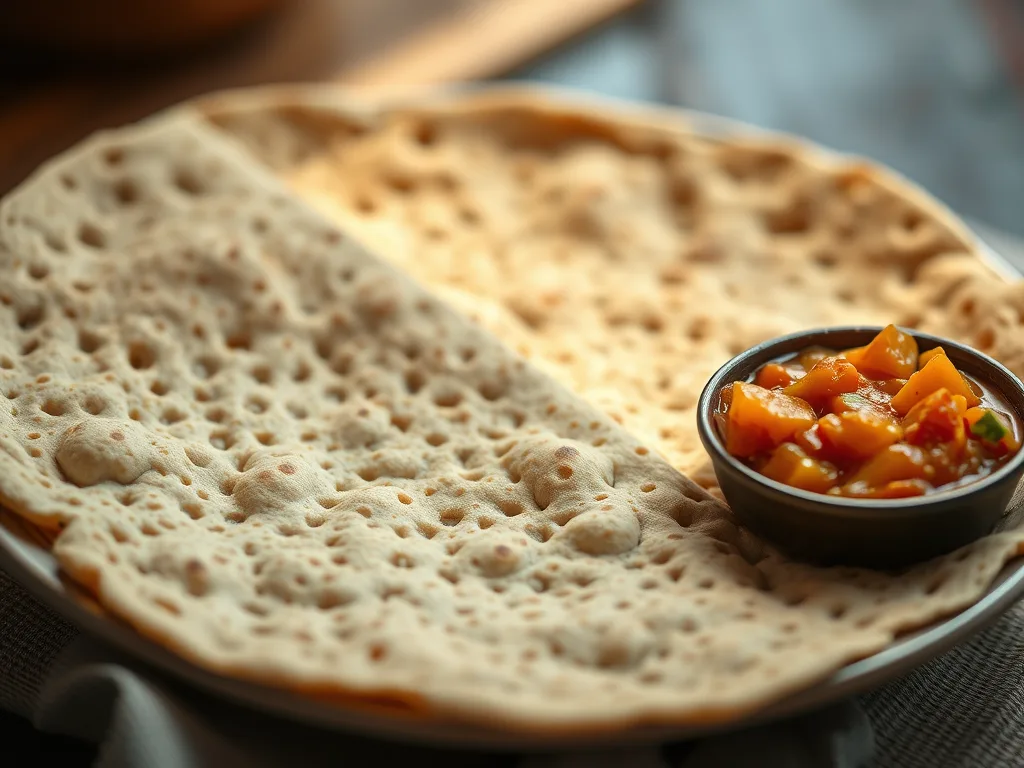
The Story Behind Ethiopian Injera
Injera is more than a bread — it is the plate, the utensil, and the centerpiece of Ethiopian and Eritrean cuisine simultaneously. This large, spongy, sour fermented flatbread is made from teff, the ancient grain native to Ethiopia's highlands, and its perforated, slightly rubbery surface is designed specifically to be torn and used to scoop up stews, salads, and legume dishes arranged on top of it. The communal nature of injera — one large bread shared by the whole table, eaten with the right hand, in a practice that is both deeply ritualistic and deeply convivial — makes it one of the most relationship-embedded foods in the world. To share injera is to share a bond. It changes the meal from something individual into something collective, where everyone reaches toward the same center and participates in the same experience.
Teff is one of the world's oldest cultivated grains — archaeological evidence suggests it was domesticated in Ethiopia 3,000 years ago or more — and Ethiopia remains the world's only major producer. The grain is extraordinarily nutritious: high in iron, calcium, and resistant starch, with a natural sweetness that turns intensely sour through the fermentation process used to make injera. The batter ferments for 24 to 72 hours, developing the lactobacillus bacteria that give injera its characteristic tang, similar to sourdough. Today injera has become an increasingly fashionable food outside Ethiopia, recognized both for its extraordinary flavor and for teff's exceptional nutritional profile. But in Ethiopia, injera has been unchanged for millennia — a living thread connecting modern Ethiopians to their distant ancestors. From Chef Ruben’s kitchen, I find that kind of continuity powerful. Some foods are trends; injera is heritage.
What fascinates me about injera is that it changes the whole way a meal works. Instead of separate plates and forks, the table becomes one shared landscape of color and flavor. Spiced lentils, slow-cooked meats, vegetables, greens, and sauces all rest on the injera, and every tear of bread becomes a bite of the meal itself. The bottom layer, softened by the stews, is often the most flavorful part because it has absorbed everything. That soaked injera at the end is almost like the reward for eating slowly. It carries berbere, clarified butter, lentils, onions, greens, and all the juices that have gathered during the meal.
For a home cook, injera teaches patience. The fermentation cannot be rushed if you want that true tang and airy texture. When the batter hits the hot pan, tiny bubbles form across the surface, creating the signature eyes that hold sauce so beautifully. As Chef Ruben, I appreciate foods that carry both technique and meaning, and injera does exactly that. It is humble, nourishing, communal, and deeply tied to identity. It reminds us that bread can be more than something served on the side — it can be the heart of the entire table. The pan temperature matters, too. Too cool, and the bubbles do not form properly. Too hot, and the bottom can overcook before the top sets. Injera is usually cooked on one side only, covered so the top steams gently until set.
There is also a rhythm to eating injera that I find beautiful. You tear, scoop, share, and sometimes offer a bite to someone else, a gesture of affection known as gursha. That turns the meal into an act of connection. The bread's sourness balances rich stews, spicy berbere, and earthy lentils, making it essential to the flavor of the whole spread. Injera is not just holding the meal together physically; it is holding the experience together emotionally. It is one of the world’s great breads because it refuses to be only bread. It is culture, nourishment, hospitality, and technique all in one soft, tangy circle.
Time and Servings:
Prep Time: 5 minutes (plus 24-48 hours fermentation time)
Cook Time: 20 minutes
Total Time: 25 minutes (active time) + 24-48 hours fermentation
Servings: 8 servings
Nutrition (per serving):
Calories: 90 kcal
Protein: 3g
Fat: 0.5g
Carbohydrates: 19g
Fiber: 2g
Sugar: 0g
Sodium: 150mg
Ingredients:
- 2 cups teff flour
- 3 cups water
- 1/2 tsp salt
- 1/4 tsp yeast (optional, for faster fermentation)
Instructions:
- Prepare the Batter:
- In a large mixing bowl, combine teff flour with water and mix until smooth. Cover with a clean cloth or plastic wrap and allow the batter to ferment at room temperature for 24-48 hours. Stir occasionally to promote even fermentation.
- Optional: Add a pinch of yeast to speed up the fermentation process if desired.
- Cook the Injera:
- After fermentation, stir in the salt. Heat a non-stick skillet over medium heat.
- Pour a ladleful of batter into the skillet, swirling to spread it into a thin layer. Cook for 2-3 minutes until bubbles form on the surface and the injera is set. Do not flip.
- Serve:
- Carefully remove the injera from the skillet and let cool. Repeat with the remaining batter.
- Serve alongside traditional Ethiopian stews like Doro Wat or Misir Wat for a complete experience.
Tips for Success:
- Teff Flour: Use 100% teff flour for a gluten-free version or mix with all-purpose flour for a milder flavor.
- Fermentation Time: Longer fermentation develops a stronger sourdough flavor. Taste and adjust based on preference.
- Cooking Surface: A non-stick skillet or traditional mitad ensures perfect, non-sticking injera.
Wine, Cocktail, Drink Pairing:
- Pair this dish with a refreshing dry white wine like Sauvignon Blanc, a light beer, or a traditional Ethiopian tej (honey wine) to balance the rich flavors of accompanying stews.