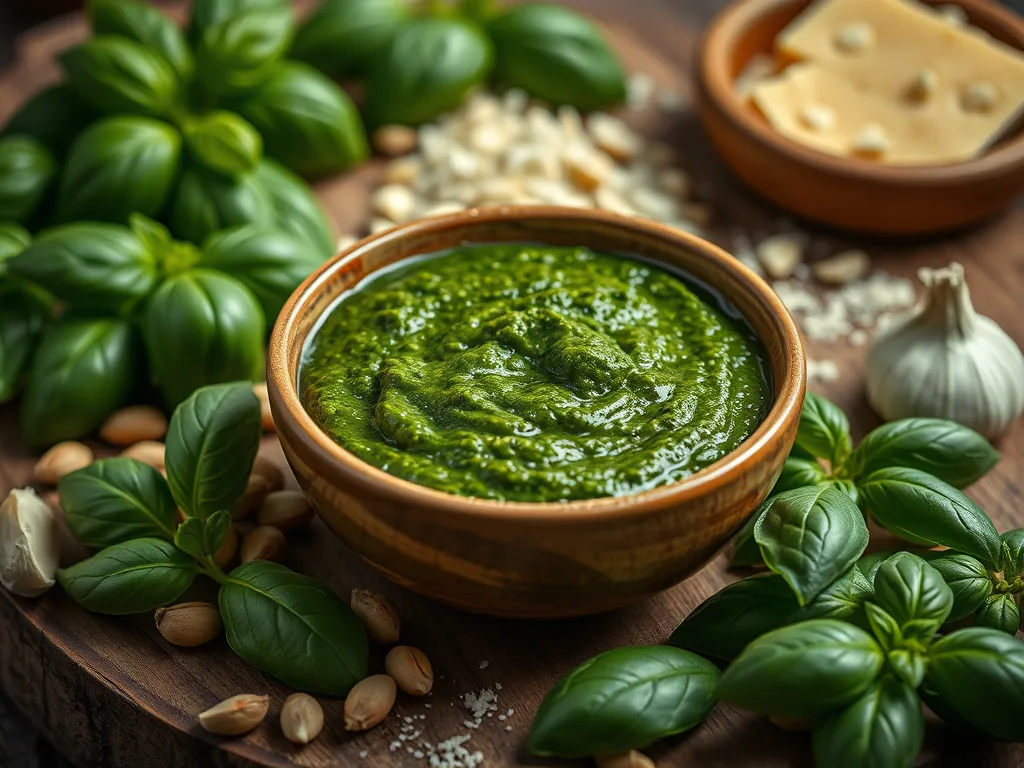
The Story Behind Pesto alla Genovese
Pesto alla Genovese is one of the most iconic sauces in Italian cuisine — and its story begins in the port city of Genova, or Genoa, in the Liguria region of northwestern Italy. The word "pesto" comes from the Genoese dialect "pestâ," meaning to pound or crush — a reference to the traditional marble mortar and wooden pestle used to make it. The original technique was purely mechanical: fresh basil leaves, Ligurian extra-virgin olive oil, Ligurian pine nuts, Parmigiano Reggiano, Pecorino Sardo, garlic, and coarse salt pounded together until emulsified into a vivid green sauce. That pounding matters. It bruises the basil gently, releases oils, and creates a texture that is different from a blender sauce. Traditional pesto is not just chopped basil; it is an emulsion built by patience.
The basil used in authentic pesto alla Genovese, designated with a Protected Designation of Origin since 2013, is a specific small-leafed Genoese variety with a delicacy and sweetness that sets it apart from other basils. Ligurian cooking has been shaped by the region's relationship with the sea and its mountainous terrain — unable to grow much livestock or grain, Ligurians became masters of herbs, olive oil, and pasta, creating dishes of extraordinary sophistication from simple ingredients. From Chef Ruben’s kitchen, I love pesto because it captures that genius perfectly. A handful of leaves, nuts, cheese, garlic, salt, and oil becomes something bright, fragrant, and unforgettable. It tastes like summer, but it also tastes like a place — cliffs, gardens, olive groves, and the sea air of Liguria.
The technique is where pesto can succeed or fail. Basil is delicate. Too much heat from a blender can darken it and make the flavor harsh. That is why many cooks pulse briefly, chill the blade, or add oil gradually. A mortar and pestle gives the most traditional texture, but a food processor can still make a beautiful pesto if handled gently. Garlic should be present but not overwhelming. Pine nuts add sweetness and body. The cheeses bring salt, depth, and savory richness. Good olive oil ties everything together, so this is not the place for a bland oil. Salt helps break down the basil and sharpen the flavors. A squeeze of lemon is not traditional, but some home cooks use it to preserve color; if used, it should be subtle.
Pesto is most famously paired with trofie or trenette pasta, often with potatoes and green beans cooked in the same pot — a classic Ligurian preparation that makes the meal feel complete. But pesto is also wonderful on sandwiches, grilled vegetables, fish, chicken, eggs, soups, and roasted potatoes. The key is not to cook it aggressively. Pesto should usually be warmed by the food, not fried in a pan, because high heat dulls its fresh basil flavor. I like stirring it into pasta with a little pasta water until it becomes glossy and coats every piece. Pesto alla Genovese is one of those sauces that reminds us simple does not mean easy and rustic does not mean careless. It is a recipe of restraint, technique, and ingredient respect. When made well, it is green, aromatic, creamy without cream, and full of life — one of Italy’s great gifts to the world.
Time and Servings:
- Prep Time: 10 minutes
- Total Time: 10 minutes
- Servings: 8 servings
Nutrition (per serving):
- Calories: 120 kcal
- Fat: 12g
- Carbohydrates: 2g
- Protein: 3g
Ingredients:
- 2 cups fresh basil leaves
- 1/4 cup pine nuts
- 1/2 cup Parmesan cheese, grated
- 2 cloves garlic
- 1/2 cup olive oil
- Salt and pepper, to taste
Instructions:
- Blend the Ingredients:
- In a food processor, combine 2 cups of fresh basil leaves, 1/4 cup of pine nuts, 1/2 cup of grated Parmesan cheese, and 2 cloves of garlic.
- Pulse until the mixture is finely chopped.
- Add the Olive Oil:
- While the food processor is running, slowly drizzle in 1/2 cup of olive oil.
- Blend until the mixture becomes smooth and creamy, scraping down the sides as needed.
- Season and Serve:
- Taste the pesto and season with salt and pepper to your preference.
- Serve immediately with pasta, spread on bread, or drizzle over grilled meats and vegetables.
Tips for Success:
- Use high-quality, fresh basil and Parmesan for the best flavor.
- Lightly toast the pine nuts before blending for a richer, nuttier taste.
- Store leftovers in an airtight container in the refrigerator, topped with a thin layer of olive oil to prevent discoloration, for up to 5 days.
Wine, Cocktail, or Drink Pairing:
- Pair this pesto with a crisp Italian Pinot Grigio or a refreshing Aperol Spritz for a delightful Italian meal.