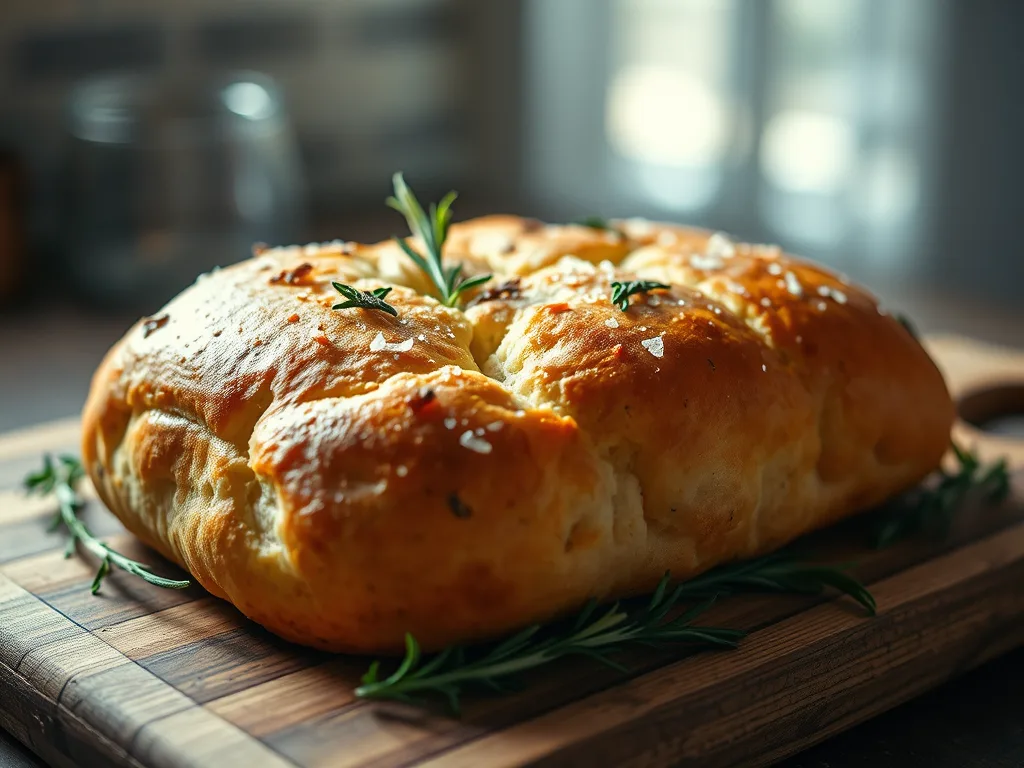
The Story Behind Focaccia with Rosemary Flatbread
Italian Focaccia is one of the world's oldest breads, with roots that trace back to ancient Ligurian and Etruscan baking traditions long before the Roman Empire. The word "focaccia" likely derives from the Latin "focus" — meaning hearth or fireplace — reflecting its origins as a flatbread baked directly on the hearth stones. Ancient Romans made a flatbread called "panis focacius" that is widely considered the ancestor of modern focaccia. That connection to fire, stone, flour, oil, and salt is what makes focaccia feel so timeless. It is simple bread, but it carries a lot of history in every dimple. Every time I press my fingers into the dough, I think about how many bakers across centuries have made that same motion, turning humble ingredients into something warm, fragrant, and generous.
The Ligurian city of Genova has the strongest claim to the definitive version — "focaccia alla genovese" — a golden, olive oil-drenched flatbread dimpled with fingertips and scattered with coarse salt, simple and perfect. Rosemary — a herb native to the Mediterranean whose name means "dew of the sea" — has been paired with focaccia since antiquity, its resinous, pine-like fragrance complementing the olive oil and salt in a combination that has remained essentially unchanged for thousands of years. Few foods connect the modern kitchen so directly to the ancient world. I love making focaccia because it rewards patience but does not demand perfection. The dough is soft, almost playful, and those little fingertip dimples are not just for looks. They catch olive oil, create texture, and help the surface bake into that beautiful mix of crisp edges and tender interior. From Chef Ruben’s kitchen, this is the bread I would make when I want the house to smell warm and welcoming. Give the dough enough time to rise, use more olive oil than you think you need, and do not be shy with the salt. Rosemary can be pressed gently into the dough so it perfumes the bread without burning too quickly. Serve it with soup, slice it for sandwiches, or tear it straight from the pan. Focaccia is rustic, generous, and impossible not to love.
One of the best things about focaccia is how forgiving it can be when you understand what the dough wants. It likes hydration, time, and oil. A wetter dough may feel strange at first, but that moisture helps create the airy interior that makes focaccia so satisfying. The rise is where the flavor develops, and even a simple dough becomes more interesting when it has time to relax and ferment. The olive oil is not just a topping; it is part of the bread’s character. It fries the bottom slightly as the focaccia bakes, giving you that golden, crisp underside that contrasts with the soft crumb. The dimples help hold little pools of oil and salt, so every bite has texture and flavor. You can keep it classic with rosemary and coarse salt, or add garlic, olives, tomatoes, onions, or herbs depending on the meal. But even plain focaccia has presence. It belongs beside pasta, salads, roasted meats, and soups, but it also stands beautifully on its own. Fresh from the oven, it has that pull-apart softness and perfume that makes people gather in the kitchen before dinner is ready. That is real bread magic.
Time and Servings:
- Prep Time: 15 minutes
- Cook Time: 25 minutes
- Total Time: 1 hour (including rise time)
- Servings: 8 servings
Nutrition (per serving):
- Calories: 250 kcal
- Protein: 5g
- Fat: 12g
- Carbohydrates: 30g
Ingredients:
- 2 1/4 cups all-purpose flour
- 1 tsp salt
- 1 tsp sugar
- 1 packet active dry yeast (2 1/4 tsp)
- 1/2 cup warm water (about 110°F)
- 1/4 cup olive oil (plus extra for brushing)
- 2 tbsp fresh rosemary, chopped
- Sea salt, for topping
Instructions:
- Make the Dough:
- In a small bowl, combine 1/2 cup of warm water and 1 packet of active dry yeast. Stir gently and let sit for 5 minutes until foamy.
- In a large mixing bowl, combine 2 1/4 cups of all-purpose flour, 1 tsp of salt, and 1 tsp of sugar.
- Add the yeast mixture and 1/4 cup of olive oil to the dry ingredients.
- Mix until a dough forms, then transfer to a floured surface and knead for 5-7 minutes until smooth and elastic.
- Let the Dough Rise:
- Place the dough in a lightly oiled bowl, cover with a clean kitchen towel or plastic wrap, and let it rise in a warm place for 45 minutes or until it doubles in size.
- Prepare for Baking:
- Preheat your oven to 400°F (200°C).
- Grease a baking pan or line it with parchment paper.
- Punch down the dough to release air and press it evenly into the prepared baking pan.
- Add Toppings:
- Brush the surface of the dough generously with olive oil.
- Sprinkle 2 tbsp of chopped fresh rosemary and a pinch of sea salt evenly over the top.
- Use your fingers to create dimples in the dough, pressing lightly across the surface.
- Bake:
- Bake in the preheated oven for 20-25 minutes, or until the focaccia is golden brown and the edges are crisp.
- Remove from the oven and let cool slightly before slicing.
- Serve:
- Slice into squares or strips and serve warm as a side dish, appetizer, or snack.
Tips for Success:
- For an extra-fluffy texture, allow the dough to rise a second time for 15 minutes after pressing it into the pan.
- Experiment with toppings like cherry tomatoes, garlic, or olives for added variety.
- Store leftovers in an airtight container at room temperature for up to 2 days. Reheat before serving for the best texture.
Wine, Cocktail, or Drink Pairing:
- Pair this rosemary focaccia with a dry Italian white wine like Pinot Grigio or a refreshing Aperol Spritz for a classic Italian experience.