The Story Behind Cacio e Pepe Sauce Creamy Cheese and Pepper Sauce
Cacio e Pepe — “cheese and pepper” in Roman dialect — is one of the most deceptively simple and technically demanding pasta sauces in all of Italian cuisine. Along with amatriciana, carbonara, and gricia, it is one of the four canonical pasta dishes of Rome. Its origins lie in the traditions of Roman shepherds, known as pecorari, who would travel with their flocks into the countryside for months. They carried with them cured Pecorino Romano, which kept without refrigeration, dried pasta, and black peppercorns, and combined them with pasta water over a fire. That is the genius of the dish: a few durable ingredients transformed through technique into something luxurious. It is the kind of food that reminds you Italian cooking is often not about abundance, but about knowing exactly what to do with what you have.
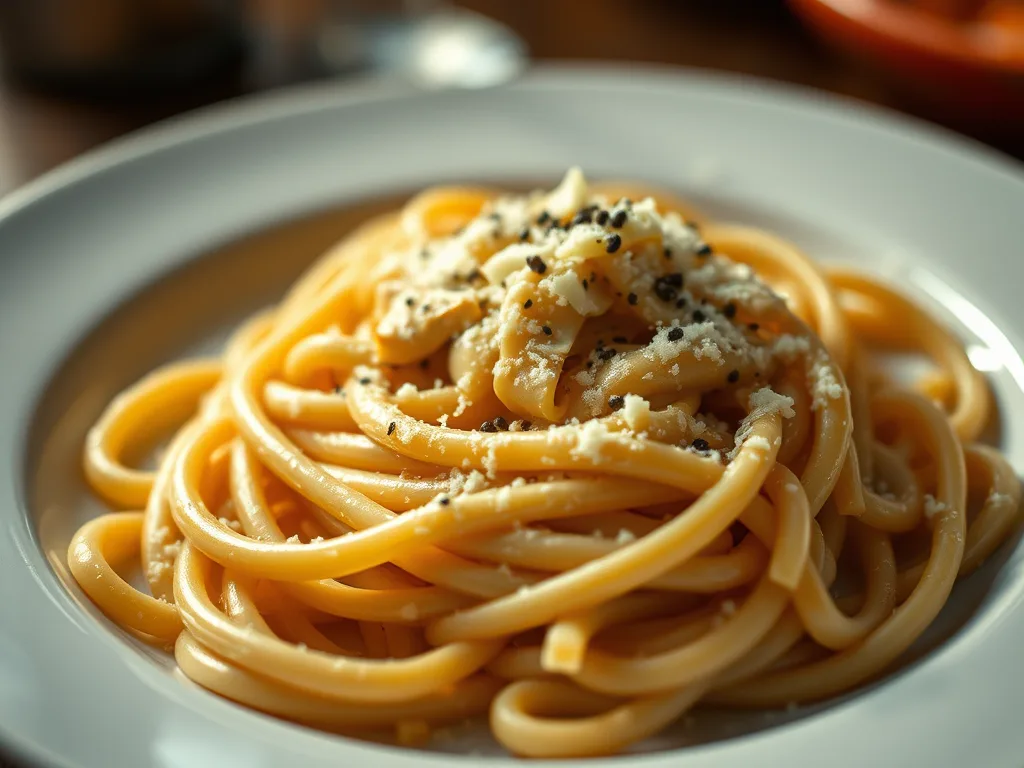
The result, when properly executed, is a sauce of extraordinary creaminess achieved without a drop of butter or cream — only the emulsification of starchy pasta water with aged cheese and the aromatic bite of black pepper. In the hands of a skilled Roman cook, Cacio e Pepe is a minor miracle of technique; the sauce should be glossy, coating the pasta in a fluid, creamy ribbon. It has become one of the most obsessed-over dishes on the internet for good reason: it looks simple, and it is extraordinarily difficult to get exactly right. From Chef Ruben’s kitchen, I respect this sauce because it teaches one of the most important cooking lessons: simple food exposes everything. There is nowhere to hide. The cheese, pepper, pasta water, heat, and timing all have to work together. When they do, the result tastes like much more than the sum of its parts.
The biggest mistake is treating Cacio e Pepe like macaroni and cheese. Pecorino Romano does not behave like processed cheese. If the pan is too hot, the cheese clumps. If there is not enough starch in the pasta water, the sauce breaks. If the cheese is grated too coarsely, it refuses to melt smoothly. Fine-grated cheese, freshly cracked pepper, and reserved pasta water are the foundation. Toasting the pepper lightly in the pan wakes up its oils and makes the sauce more fragrant. Then the pasta and starchy water create the base, and the cheese is worked in carefully off direct heat. Some cooks make a paste with cheese and pasta water first to reduce the risk of clumping. Either way, patience matters. I like to move slowly at the end, adding water a little at a time until the sauce turns glossy instead of tight.
Cacio e Pepe also teaches restraint. It is tempting to add garlic, cream, butter, herbs, or extra cheese, but the Roman beauty of the dish is its discipline. Every ingredient has a job. The pepper provides aroma and heat. The Pecorino provides salt, sharpness, and body. The pasta water provides starch and movement. The pasta itself gives structure. When you toss everything together, you are not just mixing; you are building an emulsion. That is why the sauce can go from perfect to clumpy in seconds if the heat is wrong. But when it works, the sauce tastes almost impossible: sharp, salty, creamy, peppery, and elegant with only a handful of ingredients. Cacio e Pepe is proof that technique can be just as important as a long ingredient list.
Time and Servings:
- Prep Time: 5 minutes
- Cook Time: 10 minutes
- Total Time: 15 minutes
- Servings: 4 servings
Nutrition (per serving):
- Calories: 180 kcal
- Fat: 10g
- Carbohydrates: 5g
- Protein: 14g
Ingredients:
- 1 cup Pecorino Romano cheese, grated
- 1 tsp black pepper, freshly ground
- 1/4 cup pasta water
Instructions:
- Cook the Pasta:
- Boil your pasta of choice (e.g., spaghetti or bucatini) in a large pot of salted water until al dente.
- Reserve 1/4 cup of the hot pasta water before draining.
- Prepare the Sauce:
- In a large mixing bowl, combine 1 cup of grated Pecorino Romano cheese and 1 tsp of freshly ground black pepper.
- Gradually add the reserved hot pasta water to the cheese and pepper mixture while stirring vigorously.
- Continue stirring until the cheese melts and forms a smooth, creamy sauce.
- Toss with Pasta:
- Add the hot, drained pasta to the bowl with the sauce.
- Toss immediately to coat the pasta evenly with the cheese and pepper sauce.
- Serve hot and enjoy the rich, simple flavors of this Italian classic.
Tips for Success:
- Use high-quality Pecorino Romano cheese for the best flavor and texture.
- Stir the sauce quickly to prevent clumping and ensure a creamy consistency.
- Serve immediately, as the sauce thickens as it cools.
Wine, Cocktail, or Drink Pairing:
- Pair this creamy Cacio e Pepe with a light Italian Pinot Grigio or a bold Chianti Classico for a classic dining experience.