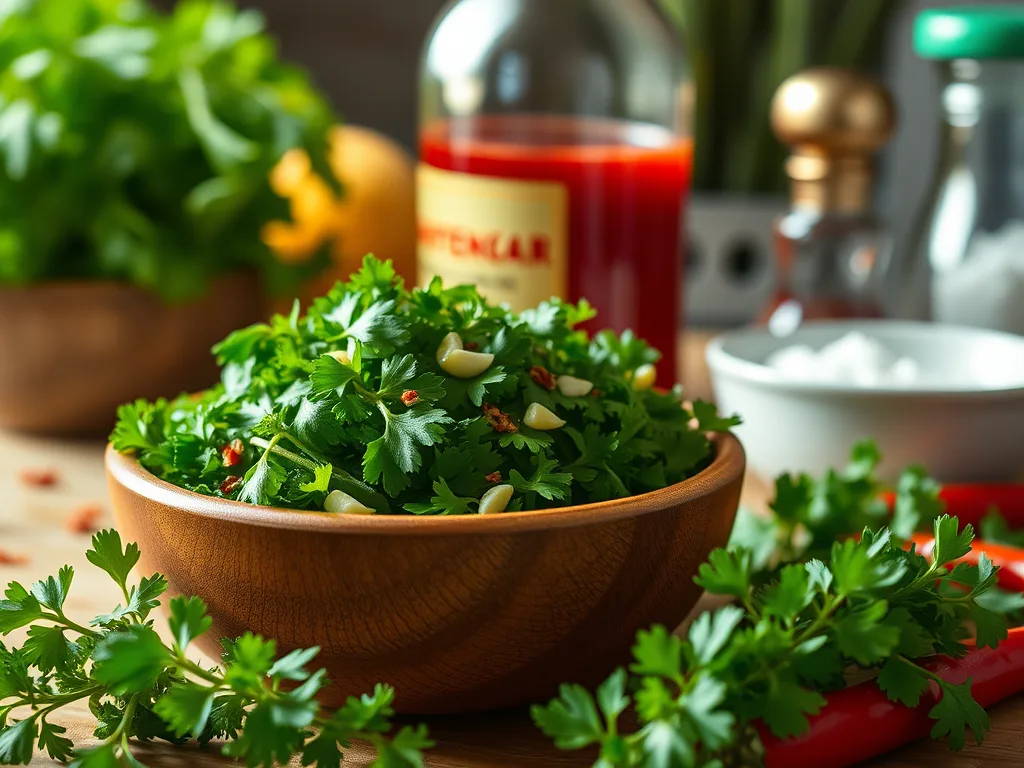
The Story Behind Argentinian Chimichurri
Chimichurri is Argentina's national condiment — a bright, punchy sauce of fresh parsley, oregano, garlic, red wine vinegar, and olive oil that is as inseparable from Argentinian asado as the grill itself. Its origins are debated: one theory credits Basque immigrants who settled in Argentina in the 19th century, since a similar herb sauce exists in the Basque country, while another traces it to a British or Irish immigrant named Jimmy McCurry whose name became phonetically rendered as chimichurri. What's certain is that by the early 20th century, chimichurri was fully embedded in the gaucho tradition. The cattle herders of the pampas would make it from dried herbs carried on long journeys, mixed with vinegar and whatever oil was available. The sauce is designed to cut through the richness of grilled beef, and it does this so perfectly that it is nearly impossible to imagine an Argentinian asado without it.
What I love about chimichurri is that it is bold without being heavy. It does not cover grilled meat the way a thick barbecue sauce might. Instead, it sharpens it. The vinegar brings acidity, the garlic brings bite, the herbs bring freshness, and the oil carries everything across the palate. From Chef Ruben’s kitchen, I see chimichurri as one of the great examples of balance in a raw sauce. It has heat, tang, aroma, and texture, but it still lets the meat speak. That is why it works so well with steak, sausages, chicken, fish, vegetables, potatoes, and even sandwiches. Once you have a jar ready, you start finding reasons to spoon it on everything.
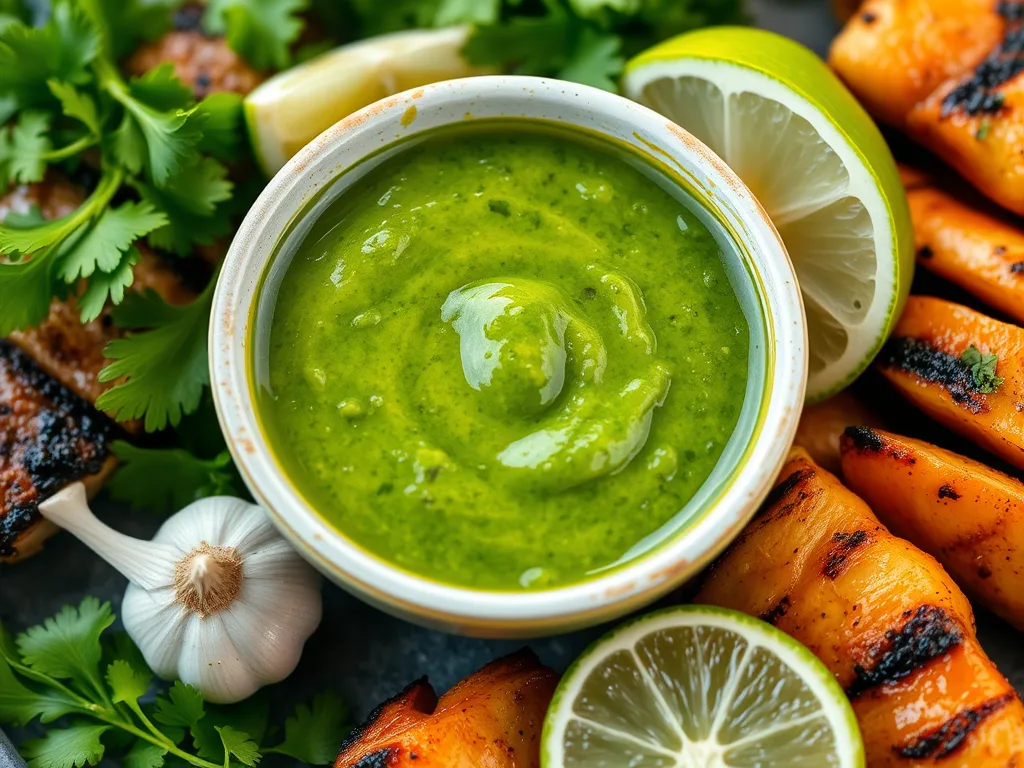
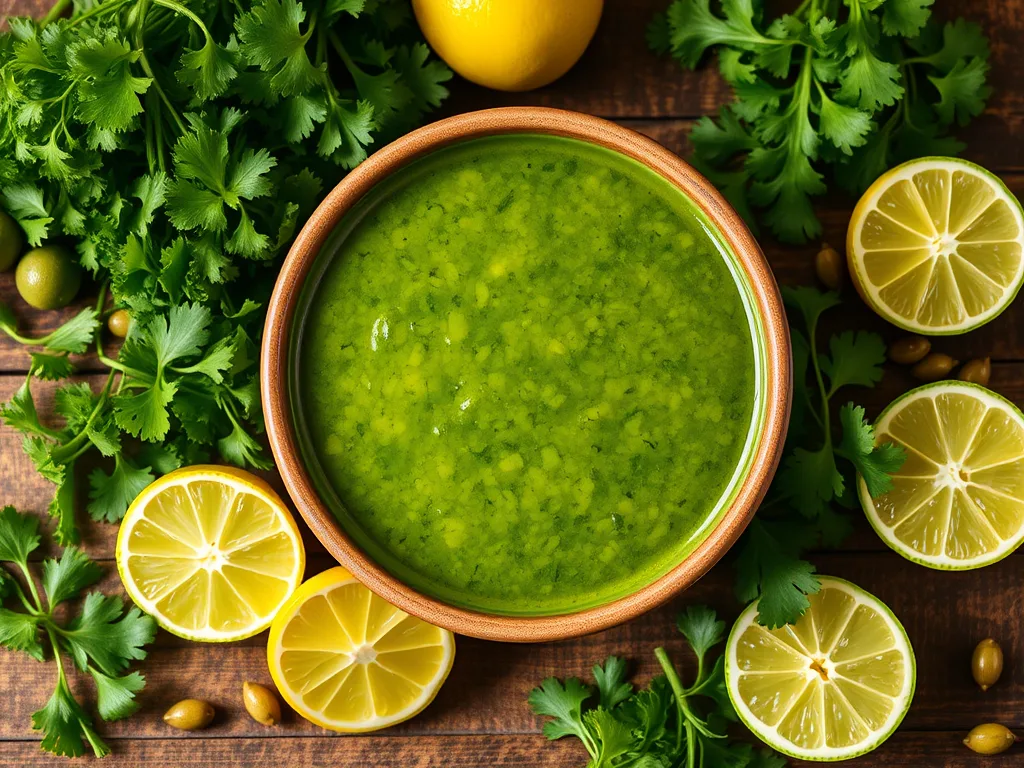
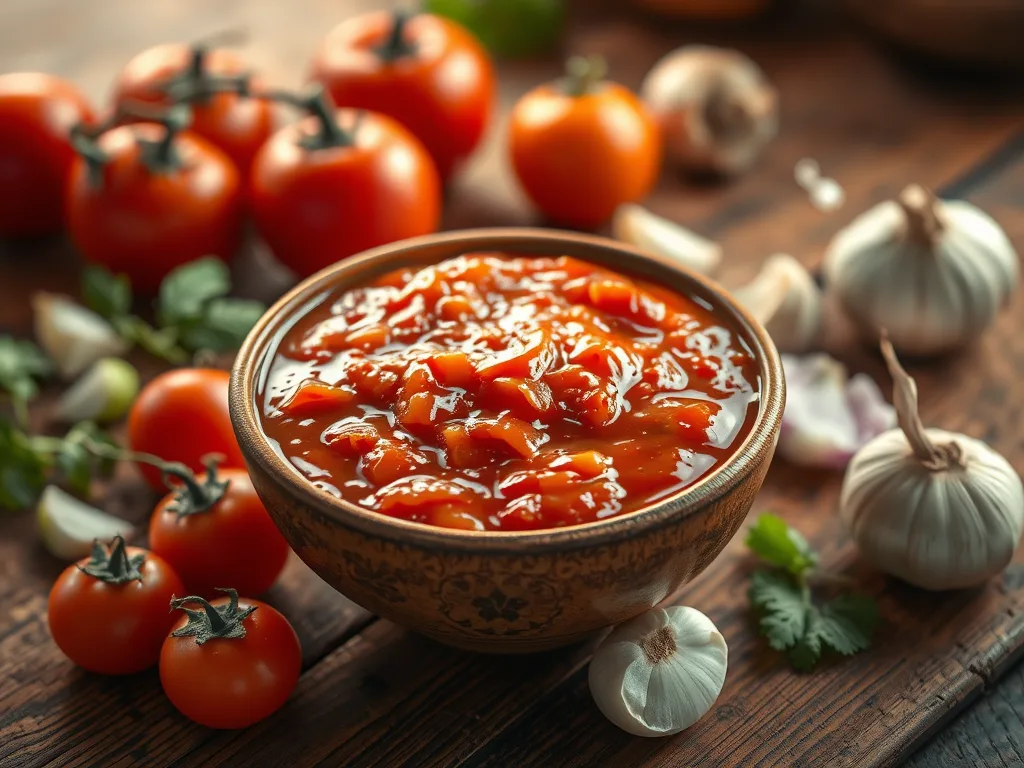
The technique is more about chopping and resting than cooking. Parsley should be fresh and finely chopped, not turned into a smooth purée. Chimichurri should have texture. Oregano can be fresh or dried, and dried oregano gives a traditional earthy note. Garlic should be strong but not overwhelming. Red wine vinegar gives the classic acidity, while olive oil rounds it out. Crushed red pepper adds heat, though the sauce should be lively rather than brutally spicy. Resting the sauce for at least an hour allows the flavors to marry, and it often tastes even better the next day. Some versions are green and herb-forward, while chimichurri rojo adds paprika or red pepper for a deeper color and flavor. The sauce also tells the story of Argentina’s food culture: cattle, open fire, immigration, rural tradition, and social gathering. Asado is not just grilling; it is an event, a slow meal built around fire and conversation. Chimichurri is the bright green spark that ties it together. It reminds me that the right sauce can define an entire cuisine. Simple herbs, garlic, vinegar, and oil become a national flavor because they do exactly what they need to do: make grilled food taste alive.
Time and Servings:
- Prep Time: 5 minutes
- Total Time: 5 minutes
- Servings: 8 servings
Nutrition (per serving):
- Calories: 90 kcal
- Fat: 9g
- Carbohydrates: 1g
- Protein: 1g
Ingredients:
- 1 cup fresh parsley, finely chopped
- 4 cloves garlic, minced
- 1/4 cup red wine vinegar
- 1/2 cup olive oil
- 1 tsp red pepper flakes
- Salt and pepper, to taste
Instructions:
- Mix the Ingredients:
- In a medium-sized bowl, combine 1 cup of finely chopped fresh parsley, 4 minced garlic cloves, 1/4 cup of red wine vinegar, 1/2 cup of olive oil, and 1 tsp of red pepper flakes.
- Stir the ingredients together until well combined.
- Season the Sauce:
- Taste the mixture and season with salt and pepper to your preference.
- Adjust the balance of vinegar and oil as desired for your preferred flavor profile.
- Serve:
- Use Chimichurri as a marinade for meats or as a vibrant topping for grilled meats, vegetables, or bread.
- Serve fresh and enjoy its zesty and herbaceous flavors!
Tips for Success
- Chop Finely: Ensure parsley and other herbs are very finely chopped by hand to achieve the authentic rustic texture, avoiding a pesto-like consistency.
- Mince Garlic Well: Mince garlic cloves very finely or use a grater to ensure its potent flavor is evenly distributed throughout the sauce without large chunks.
- Let Flavors Meld: Allow the chimichurri to rest for at least 30 minutes at room temperature before serving, as this significantly deepens and harmonizes the flavors.
- Proper Storage: Store leftover chimichurri in an airtight container in the refrigerator for up to one week; a layer of olive oil on top can help preserve freshness.
- Avoid Blending: Resist the urge to use a food processor for a smooth texture; hand-chopping maintains the traditional rustic consistency and vibrant fresh herb flavor.
Wine, Cocktail, or Drink Pairing:
- Pair this Chimichurri with a glass of Argentinian Malbec or enjoy alongside a traditional Asado (Argentinian BBQ) for an authentic experience.