The Story Behind Thai Mango Sticky Rice
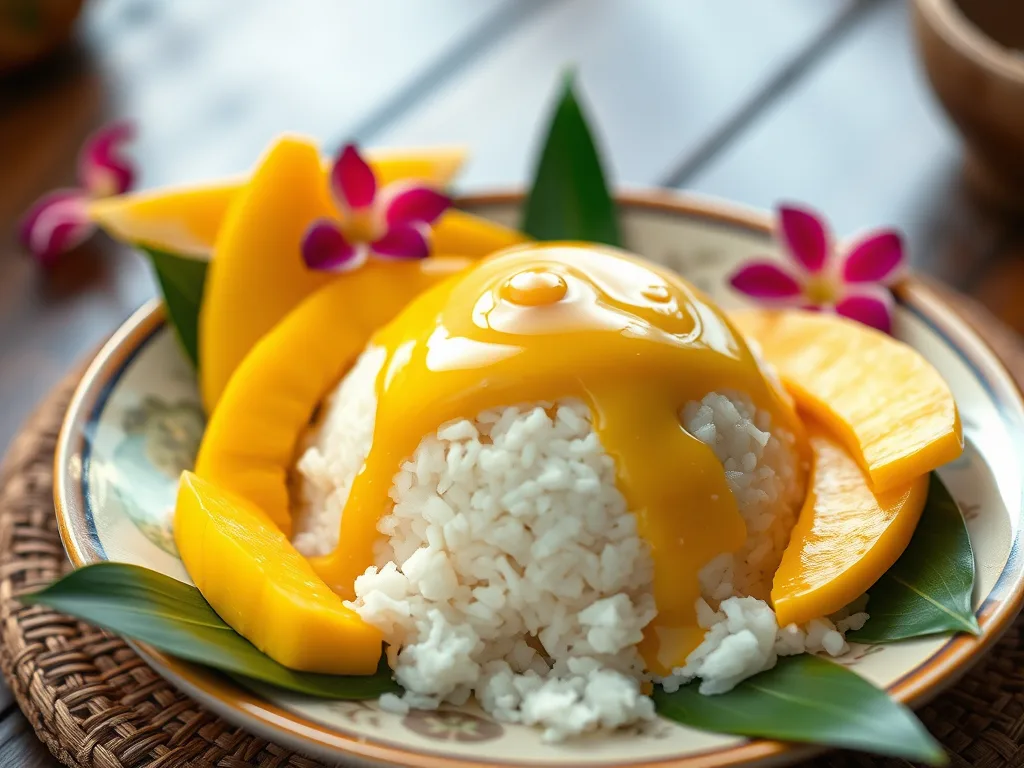
Khao niao mamuang — mango with sticky rice — is the most beloved dessert in Thailand and one of the most celebrated dishes in all of Southeast Asian cuisine. Its appeal is devastatingly simple: ripe mango, coconut-cream-soaked glutinous rice, and a thin drizzle of salted coconut sauce. The interplay of flavors — the floral, tropical sweetness of perfectly ripe mango against the richly savory-sweet coconut rice — is so perfect that it seems less like a recipe than a discovery: the kind of combination that tastes as though it could not have been invented, only found. The dish is eaten as street food, as restaurant dessert, as family celebration food, and as a seasonal indulgence tied to mango season (April through June in Thailand), when the country's best mangoes — the Nam Dok Mai variety, long, golden, and intensely fragrant — are at their peak.
Glutinous rice (sticky rice, khao niao) is the staple grain of northeastern Thailand (Isan) and much of mainland Southeast Asia, where it has been cultivated for at least 4,000 years. Unlike standard long-grain rice, glutinous rice has virtually no amylose starch — only amylopectin — which is what gives it its characteristic sticky, cohesive texture when cooked. In Thailand, glutinous rice is traditionally steamed in a conical bamboo basket over boiling water, a technique that produces the perfect texture for mango sticky rice: each grain cooked through but still slightly firm, the rice able to absorb the coconut cream without becoming soggy. The coconut cream used in this dish is the thick, rich first pressing of the coconut — higher in fat and flavor than the thinner coconut milk extracted by subsequent pressings.
What makes this dessert so elegant is restraint. There are only a few components, so each one must be treated well. The mango should be ripe enough to perfume the whole plate, the rice should be soaked and steamed properly, and the coconut sauce needs that tiny touch of salt to make the sweetness bloom. Without the salt, the dessert can taste flat. With it, the mango tastes more mango-like and the coconut becomes deeper.
As Chef Ruben, I think mango sticky rice is one of the best examples of a dessert that does not need decoration to feel luxurious. The color alone is beautiful: golden mango beside glossy white rice, finished with coconut cream and sometimes toasted mung beans or sesame seeds. It tastes tropical, creamy, floral, and clean. It is simple enough to eat from a street stall and special enough to end a celebration. That balance is what makes it unforgettable.
Time and Servings:
- Prep Time: 10 minutes (plus 1 hour soaking time)
- Cook Time: 20 minutes
- Total Time: 1 hour 30 minutes
- Servings: 4 servings
Nutrition (per serving):
- Calories: 310 kcal
- Protein: 4g
- Fat: 14g
- Carbohydrates: 42g
- Fiber: 2g
- Sugar: 18g
- Sodium: 140mg
Ingredients:
- 1 cup glutinous rice
- 1 can (14 oz) coconut milk
- 1/4 cup sugar
- 1/2 tsp salt
- 2 ripe mangoes, sliced
Instructions:
- Cook Sticky Rice:
- Rinse glutinous rice under cold water until the water runs clear. Soak the rice for 1 hour.
- Drain and steam the rice in a bamboo or metal steamer lined with cheesecloth for about 20 minutes, or until tender and sticky.
- Prepare Coconut Sauce:
- In a saucepan, combine coconut milk, sugar, and salt. Heat over medium heat, stirring constantly, until sugar dissolves. Do not let it boil; it should be warm but not scorching.
- Combine Rice and Sauce:
- Place the steamed rice in a large bowl. Pour half the warm coconut sauce over the rice and gently mix to coat evenly. Cover and let sit for 10 minutes to absorb the flavors.
- Assemble and Serve:
- Divide the sticky rice among serving plates. Arrange mango slices alongside the rice. Drizzle remaining coconut sauce over the top for a creamy finish.
Tips for Success:
- Use Fresh Mangoes: Choose ripe, sweet mangoes for the best flavor.
- Rice Texture: Ensure the rice is soft and sticky, not mushy, for authentic results.
- Customizable: Add sesame seeds or mung beans for extra texture.
Wine, Cocktail, Drink Pairing:
- Pair with a refreshing Thai iced tea or a tropical fruit smoothie to complement the dessert's flavors.