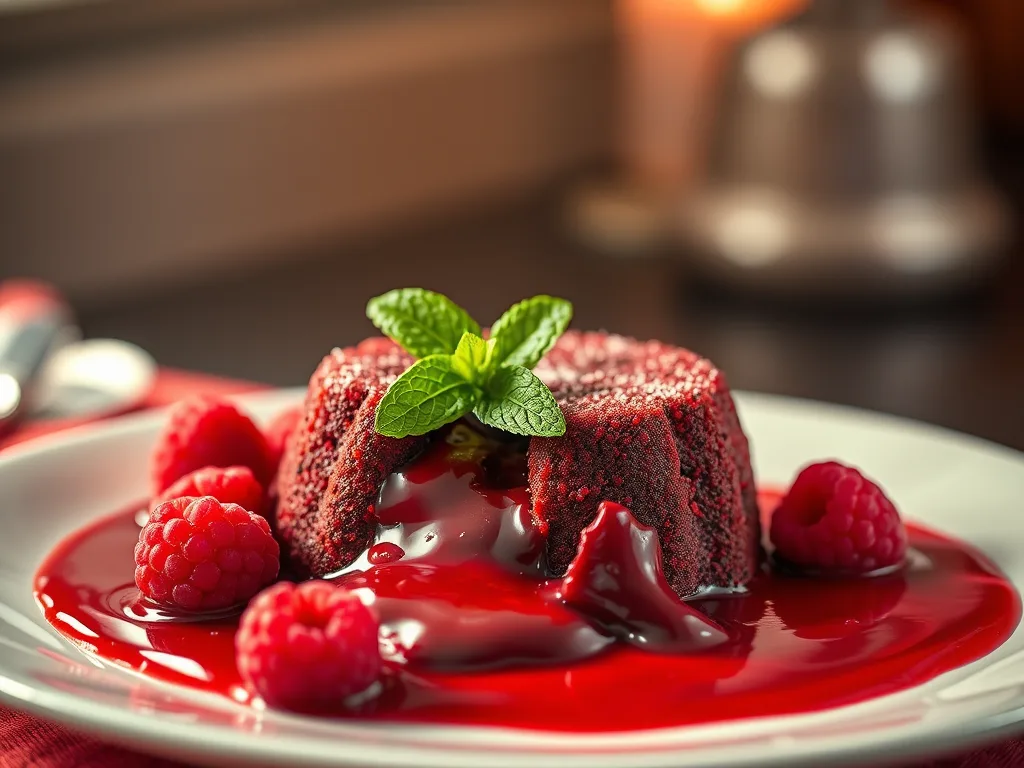
The Story Behind Red Velvet Lava Cakes
The story of red velvet cake is one of America's most debated food origin myths. The "velvet" cakes of the Victorian era were fine-crumbed cakes with a softer texture than the coarse cakes that came before them. The red version likely developed in the early 20th century, when cocoa, acidic buttermilk, and vinegar could create a subtle reddish tint through natural chemical reactions. Later, the Adams Extract Company of Texas helped popularize the bold red food-coloring version in the 1940s by marketing red velvet cake to home bakers. Other stories connect red velvet to the Waldorf-Astoria Hotel in New York, while many people rightly associate it with African American Southern baking traditions, where it became a proud celebration cake with deep cultural affection.
The molten chocolate lava cake comes from a different culinary path. French chef Jean-Georges Vongerichten famously claimed to have discovered it by accident in 1987 at Lafayette in New York, when a chocolate cake was pulled from the oven before the center fully set. Another important claim belongs to French chef Michel Bras, whose coulant au chocolat used a frozen ganache center as early as 1981. Either way, lava cake became a restaurant icon because it offers drama in a small package. You cut into the cake, the center flows, and suddenly dessert feels like a performance.
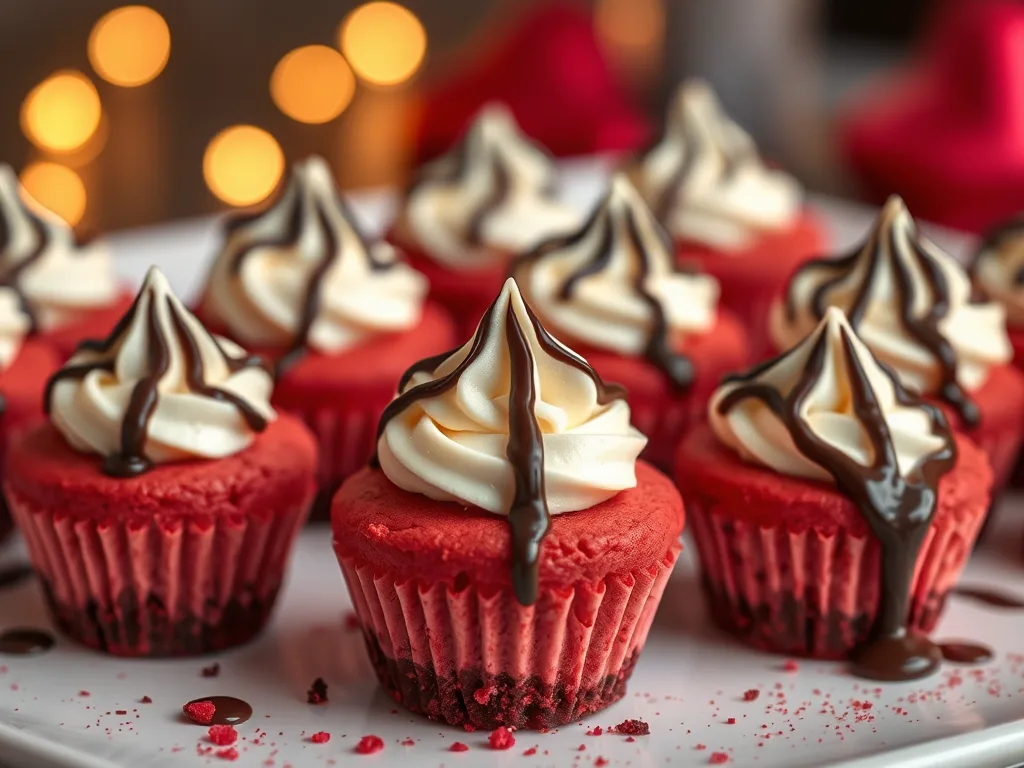
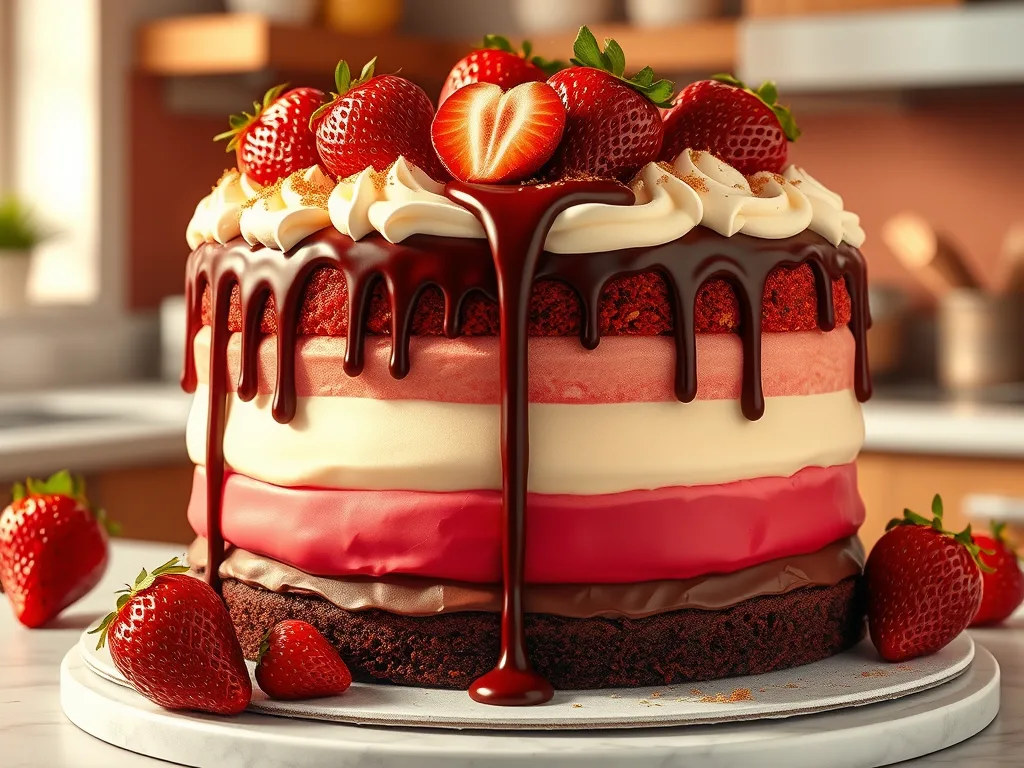
Combining red velvet with lava cake creates a dessert that feels tailor-made for Valentine's Day. Red velvet already carries romance because of its color, its soft crumb, and its association with celebration. Lava cake adds anticipation and surprise. Raspberry coulis brings bright acidity that cuts through the richness and makes the plate feel elegant instead of overly sweet. Together, the dessert becomes a mix of American cake tradition, French technique, and modern restaurant-style presentation.
As Chef Ruben, I love this dessert because it has personality. It is not just a cupcake in a fancy ramekin. It gives you color, texture, contrast, and that little moment of excitement when the spoon breaks through the cake. That moment matters. Food is not only about flavor; it is about experience. A red velvet lava cake turns dessert into something memorable, especially when served warm with a glossy raspberry sauce on the plate.
The flavor of red velvet is often misunderstood. It should not taste like plain vanilla cake dyed red, and it should not taste like a full chocolate cake either. The best red velvet lives somewhere in between. A little cocoa gives depth, buttermilk gives tang, vinegar sharpens the crumb, and vanilla rounds everything out. The color is dramatic, but the flavor should be balanced and gently chocolatey. When turned into a lava cake, that balance becomes even more important because the center is rich and soft.
The technique depends on timing. Lava cakes are not difficult, but they do ask you to pay attention. The outside needs to set enough to hold its shape, while the center stays molten. Overbake them and you have a delicious little cake, but no lava. Underbake them too much and they may collapse. Ramekins should be properly buttered and dusted so the cakes release cleanly. The batter should be portioned evenly so each cake bakes at the same rate. And once they come out of the oven, they should rest briefly before unmolding. That short rest lets the structure settle without cooking the center too much.
Raspberry coulis is the perfect partner because raspberries bring tartness, color, and freshness. A coulis is a smooth fruit sauce, often strained for elegance, and it has long been used in French-style plating. With red velvet lava cake, the coulis does several things at once. It echoes the red color, brightens the richness, and gives every bite a little sparkle. Without it, the cake is rich and romantic. With it, the dessert feels complete.
This recipe also speaks to the way modern desserts borrow across traditions. Red velvet belongs to American food memory, especially Southern and celebration baking. Lava cake belongs to restaurant drama and French-inspired technique. Raspberry coulis brings classic pastry elegance. Put them together and you get something contemporary without losing the emotional pull of the original elements. That is the kind of fusion I enjoy: not random, not forced, but built from flavors that actually understand each other.
For Valentine's Day, anniversaries, birthdays, or any dinner where you want dessert to feel special, these cakes are a strong move. They are individually portioned, which always feels thoughtful. Nobody has to fight over the corner piece or the biggest slice. Each person gets their own warm cake, their own molten center, and their own little pool of raspberry sauce. That makes the dessert feel intimate, which is exactly what a romantic dessert should do.
When I make red velvet lava cakes, I think about the balance between comfort and surprise. Red velvet feels familiar and nostalgic. Lava cake feels exciting. Raspberry coulis feels bright and refined. Together they create a dessert that is beautiful, playful, and deeply satisfying. It is rich without being boring, dramatic without being difficult, and romantic without trying too hard. That is why this recipe works. It takes three beloved dessert ideas and lets them flirt on the same plate.
Time and Servings
- Prep Time: 15 minutes
- Cook Time: 12 minutes
- Total Time: 27 minutes
- Servings: 4 cakes
Nutrition (per serving)
Calories: 420 kcal | Carbohydrates: 45g | Protein: 6g | Fat: 22g
Ingredients
For the Lava Cakes:
- 1/2 cup (115g) unsalted butter, plus extra for greasing
- 4 oz (115g) white chocolate, chopped
- 2 large eggs
- 2 large egg yolks
- 1/3 cup granulated sugar
- 1 tsp vanilla extract
- 2 tsp red food coloring
- 1/4 cup all-purpose flour
- 2 tbsp unsweetened cocoa powder
- A pinch of salt
For the Raspberry Coulis:
- 1 cup fresh or frozen raspberries
- 2 tbsp sugar
- 1 tbsp lemon juice
Instructions
- Prepare the Baking Molds:
Preheat the oven to 425°F (220°C). Grease 4 ramekins with butter and lightly dust with cocoa powder. - Melt Butter and Chocolate:
Melt the butter and white chocolate in a heatproof bowl over a double boiler or in the microwave. Stir until smooth and let cool. - Mix the Batter:
In a bowl, whisk eggs, egg yolks, sugar, and vanilla until thick and pale. Add red food coloring and gently fold in the melted chocolate mixture.
Sift in the flour, cocoa powder, and salt, folding until combined. - Fill and Bake:
Divide the batter between the ramekins. Bake for 10-12 minutes until the edges are set but the centers remain soft. - Prepare the Raspberry Coulis:
Simmer raspberries, sugar, and lemon juice in a saucepan for 5 minutes. Strain to remove seeds. - Serve:
Cool cakes for 1 minute before inverting onto plates. Drizzle with raspberry coulis and garnish with fresh raspberries.
Tips for Success
- Watch Oven Closely: Overbaking even by a minute will solidify the molten center, so test for jiggly edges and a firm rim.
- Prep Ramekins Well: Thoroughly butter and dust ramekins with cocoa powder or flour to ensure easy unmolding of the delicate cakes.
- Gel Food Coloring: Opt for gel food coloring over liquid to achieve a vibrant red hue without altering the batter's consistency.
- Strain Coulis Smoothly: After simmering, press raspberries through a fine-mesh sieve to remove seeds, ensuring a velvety, elegant sauce.
- Make Coulis Ahead: Prepare the raspberry coulis up to two days in advance and refrigerate it, allowing for quicker assembly and serving.
Drink Pairing
- Pair with a sparkling rosé, raspberry martini, or rich hot chocolate for an indulgent Valentine's Day experience.