The Story Behind Tembleque
Tembleque, Puerto Rico's iconic coconut pudding, takes its delightful name from the Spanish word temblar, meaning to tremble or shake. That name is perfect because a good tembleque should have a gentle wobble when unmolded, soft and silky but firm enough to hold its shape. Made with coconut milk, sugar, cornstarch, and cinnamon, it is one of those desserts that proves elegance does not have to be complicated. It is cool, creamy, tropical, and comforting all at once, which is why it has earned such a beloved place in Puerto Rican cooking.
Coconut sweets have deep roots throughout the Caribbean, shaped by indigenous foodways, African culinary traditions, Spanish colonial influence, and the abundance of coconut palms in tropical climates. In Puerto Rico, tembleque developed into a dessert that feels both humble and special. The ingredients are simple, but the result feels festive. Coconut milk gives it richness, sugar gives gentle sweetness, cornstarch creates that signature set, and cinnamon adds warmth. When chilled, the pudding becomes smooth and refreshing, perfect for the island's climate and perfect for holiday tables.
As Chef Ruben, I love tembleque because it is a dessert with personality. It does not sit stiffly on the plate like a heavy custard. It moves a little. It trembles. It almost flirts with you, which makes it perfect for Flirty Foods. There is something joyful about unmolding it and watching it jiggle just enough to make people smile. Food should taste good, of course, but sometimes it should also have a little charm. Tembleque has charm for days.
Tembleque is especially connected to Christmas in Puerto Rico, where it often appears alongside arroz con dulce, coquito, pasteles, lechón, and other holiday favorites. Puerto Rican Christmas is not a one-day situation. It stretches, sings, visits, cooks, and celebrates. Tembleque fits beautifully into that season because it can be made ahead and served chilled after a rich meal. After savory foods, roasted meats, rice dishes, and holiday drinks, a cool coconut pudding dusted with cinnamon feels like the perfect sweet finish.
The technique is simple, but it demands attention. Cornstarch must be dissolved properly so the pudding stays smooth instead of lumpy. The coconut milk mixture needs steady stirring as it heats, because once the starch activates, it thickens quickly. You are looking for a texture that coats the spoon and leaves a trail when stirred. If you stop too soon, the tembleque may not set. If the heat is too high or the stirring uneven, lumps can form. This is one of those recipes where the ingredients are few, so technique matters.
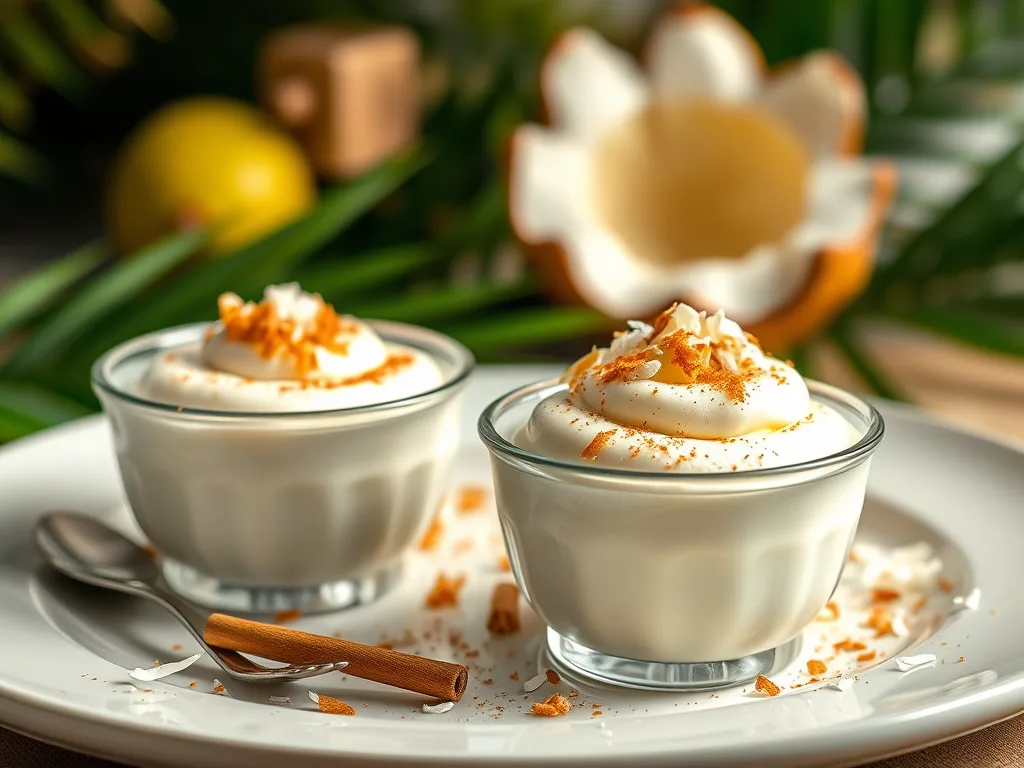
One of my favorite things about tembleque is the way cinnamon works with coconut. Coconut milk is rich and mellow, while cinnamon brings warmth and fragrance. The cinnamon on top is not just decoration. It gives the first aroma when the plate comes close, and it balances the cool creaminess underneath. Some families dust the top simply, while others use stencils or decorative patterns. Either way, that cinnamon finish makes the dessert instantly recognizable.
Tembleque also tells the story of resourceful island cooking. Coconut milk can become savory sauces, rice dishes, drinks, candies, and desserts. In tembleque, it becomes something almost custard-like without eggs or heavy cream. That matters because it shows how Puerto Rican cooking often builds richness from ingredients already close at hand. The dessert feels luxurious, but it comes from pantry basics and technique. That is the kind of cooking I respect deeply.
There are variations from family to family. Some cooks add a pinch of salt to sharpen the flavor. Some use a little vanilla. Some add orange blossom water, lime zest, or cloves for a different fragrance. Some make it very firm so it slices cleanly, while others prefer a softer, spoonable set. The classic version remains beautifully simple, but the recipe leaves room for personal memory. In many homes, the "right" tembleque is the one that tastes like the version made by a mother, grandmother, aunt, or neighbor during the holidays.
When I think of tembleque, I think of the refrigerator opening after dinner, someone bringing out a chilled mold, and the table getting quiet for a second because everyone wants to see if it unmolds cleanly. Then comes the cinnamon, the slicing, the first spoonful. It is sweet but not too heavy, creamy but not overwhelming, familiar but still elegant. It is one of those desserts that feels like a love letter to coconut.
For Puerto Ricans everywhere, tembleque is more than pudding. It is a taste of home, a holiday memory, and a celebration of simple ingredients treated with care. It carries Caribbean history, family tradition, and that unmistakable little wobble that makes the dessert so lovable. Every chilled bite reminds me that some of the best recipes do not need to be complicated. They just need to be made with patience, pride, and enough cinnamon to make the whole plate feel like Christmas.
Time and Servings:
Prep Time: 5 minutes
Cook Time: 10 minutes
Total Time: 2 hours 15 minutes (including chilling)
Servings: 4 servings
Nutrition (per serving):
Calories: 280 kcal
Carbohydrates: 30g
Protein: 2g
Fat: 18g
Fiber: 1g
Sugar: 18g
Sodium: 110mg
Ingredients:
- 2 cans coconut milk (13.5 oz each)
- 1/2 cup sugar
- 1/4 cup cornstarch
- 1/4 tsp salt
- 1/2 tsp cinnamon (for garnish)
Instructions:
- Prepare Coconut Mixture:
- In a medium saucepan, whisk together the coconut milk, sugar, cornstarch, and salt until the cornstarch is fully dissolved and the mixture is smooth.
- Cook Pudding:
- Place the saucepan over medium heat. Continuously stir with a whisk to prevent lumps as the mixture heats up.
- Once it begins to thicken and reaches a boil, reduce the heat to low and continue stirring for an additional 2-3 minutes.
- Pour into Molds:
- Remove the saucepan from the heat. Pour the pudding into individual ramekins or a single serving dish. Smooth the surface with a spatula.
- Chill:
- Cover the molds with plastic wrap and refrigerate for at least 2 hours or until set.
- Serve:
- Before serving, loosen the edges of the pudding with a knife if using a mold, then invert onto a plate. Dust with cinnamon on top for a traditional touch.
Tips for Success:
- Smooth Texture: Whisk constantly while cooking to avoid lumps forming in the pudding.
- Customizable Flavor: Add a splash of vanilla or a pinch of nutmeg for extra depth.
- Perfect Garnish: For a festive twist, top with shredded coconut or a drizzle of caramel.
Wine, Cocktail, Drink Pairing:
- Pair this tropical dessert with a chilled Moscato for a light, fruity balance or enjoy with a creamy Piña Colada for an authentic Caribbean experience.