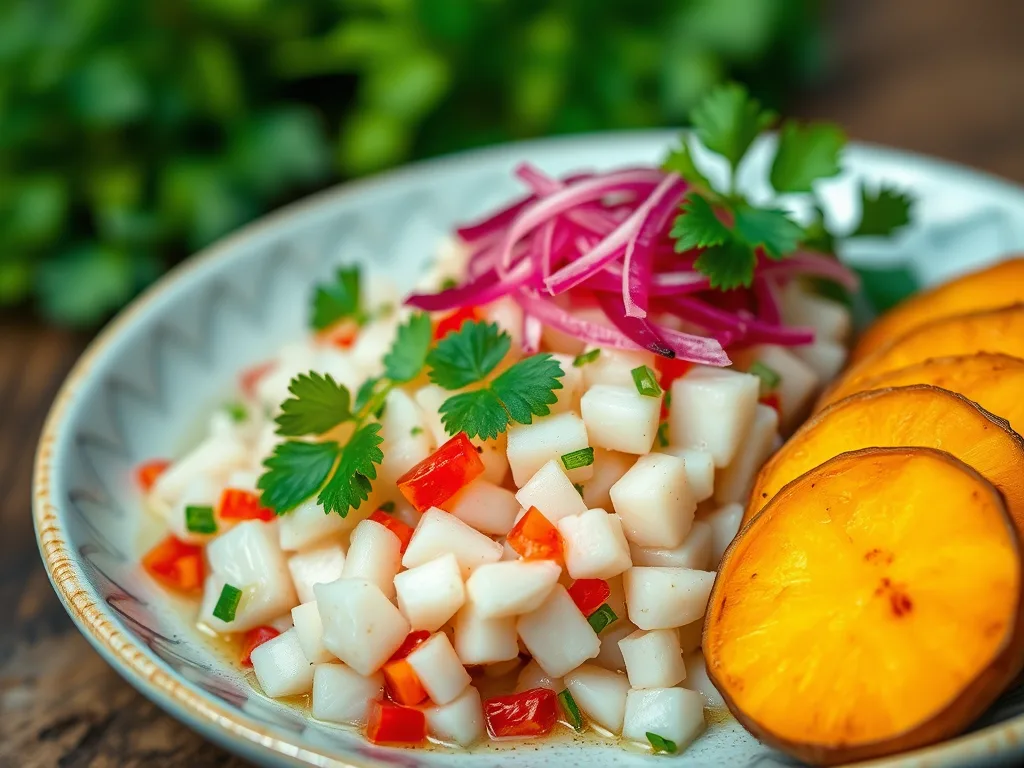
The Story Behind Peruvian Ceviche
Peruvian ceviche is arguably the most important dish in South America — a UNESCO-protected cultural heritage, a source of fierce national pride, and a preparation that fundamentally changed how the world thinks about cooking fish. The technique of "cooking" raw fish in citrus juice (leche de tigre — tiger's milk) exploits the denaturation of fish proteins by acid: the lime juice changes the structure of the proteins in exactly the same way that heat would, firming and opacifying the flesh, but leaving it with a clean, bright freshness that fire cannot replicate. The origins of the technique are pre-Incan: coastal cultures in what is today Peru were curing fish in tumbo (a native Amazonian citrus fruit) and chicha (fermented corn beer) thousands of years before the Spanish arrived.
The Spanish colonization of Peru in the 16th century brought limes — which replaced the pre-Columbian souring agents — and red onions, which became the other essential element of the dish. Japanese immigration to Peru beginning in the 1890s had a transformative effect on Peruvian ceviche: Nikkei chefs applied their sushi culture's precision to fish handling, insisting on the freshest possible fish and dramatically shorter marinating times. The modern Peruvian ceviche marinates for only minutes, not hours, preserving a raw freshness that differs radically from the older, long-marinated style. In 2004, Peru designated ceviche a National Cultural Heritage; in 2023, UNESCO added it to the Representative List of the Intangible Cultural Heritage of Humanity.
What makes ceviche powerful is its immediacy. This is not a dish that improves after sitting all day. It is at its best when the fish is fresh, the lime juice is sharp, the onions are crisp, and the leche de tigre tastes electric. That milky-looking marinade is not a byproduct; it is the soul of the dish. It carries fish juices, lime, chili, onion, cilantro, salt, and sometimes celery or garlic, becoming so flavorful that many people drink it straight from the bowl.
As Chef Ruben, I think ceviche teaches respect for ingredients. Because the preparation is so minimal, the fish must be excellent, the knife cuts clean, and the seasoning precise. Sweet potato, corn, cancha, or plantain chips often accompany Peruvian ceviche, giving sweetness and crunch against the bright acidity. The balance is unforgettable: cold fish, hot chili, sour lime, sweet potato, crisp onion, and that bracing leche de tigre. It is refreshing, bold, and proof that cooking is not always about heat — sometimes it is about timing, freshness, and restraint.
Time and Servings:
Prep Time: 10 minutes
Marinating Time: 20 minutes
Total Time: 30 minutes
Servings: 4 servings
Nutrition (per serving):
Calories: 220 kcal
Protein: 25g
Fat: 3g
Carbohydrates: 24g
Fiber: 4g
Sugar: 7g
Sodium: 300mg
Ingredients:
- For the Ceviche:
- 1 lb fresh white fish (e.g., sea bass), diced
- Juice of 4 limes
- 1 red onion, thinly sliced
- 1 red chili, finely chopped
- 1/4 cup fresh cilantro, chopped
- Salt and pepper, to taste
- For Serving:
- 1 sweet potato, boiled and sliced
Instructions:
- Marinate the Fish:
- In a medium bowl, combine the diced fish with lime juice, ensuring all pieces are well-coated. Add the red onion, chili, and cilantro. Season with salt and pepper to taste.
- Gently stir to combine and let the mixture marinate for 15-20 minutes, allowing the lime juice to "cook" the fish.
- Prepare the Sweet Potato:
- While the ceviche marinates, boil the sweet potato until tender. Peel and slice into rounds for serving.
- Serve the Ceviche:
- Transfer the marinated fish mixture to a serving dish. Arrange the boiled sweet potato slices on the side. Garnish with additional cilantro or chili if desired.
Tips for Success:
- Use Fresh Fish: The key to great ceviche is the freshest fish possible. Ensure it’s sushi-grade if eating raw.
- Balance the Lime: Adjust the lime juice to your taste””too much can overpower the dish.
- Optional Additions: Include corn kernels or lettuce leaves for added texture and authenticity.
Wine, Cocktail, Drink Pairing:
- Pair this dish with a crisp Sauvignon Blanc, a Pisco Sour, or a light sparkling water with lime for a refreshing complement to the citrusy flavors.