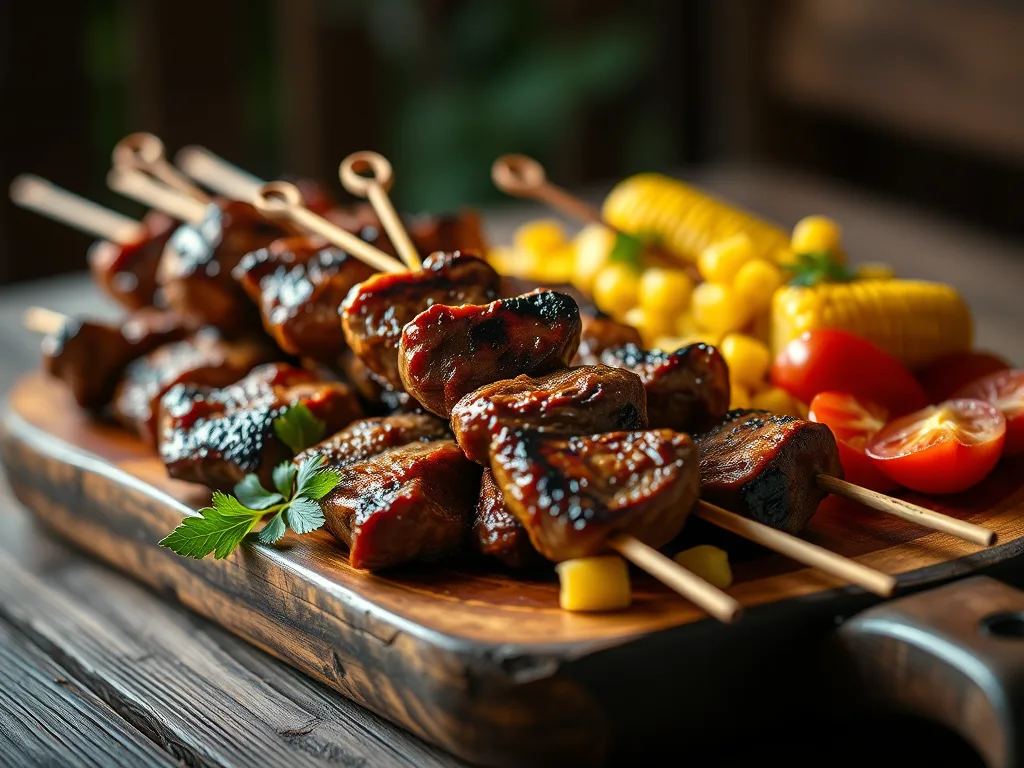
The Story Behind Anticuchos Grilled Beef Heart Skewers
Peruvian Anticuchos are one of the great street foods of the world, and their history reaches back to pre-Columbian Peru. Long before the Spanish arrived, Indigenous people in the Andes were skewering and grilling meat over fire. When Spanish colonizers came in the 16th century, they brought cattle and a new social order that divided food by class and power. Wealthier households kept the prized cuts of meat, while offal, including beef heart, was often left to enslaved African and Indigenous communities. Those communities transformed what they were given into something extraordinary: marinated, skewered, charcoal-grilled beef heart seasoned with ají panca, vinegar, garlic, cumin, and fire. That is the power of anticuchos. They are not just delicious; they are a story of resilience and culinary genius.
What makes anticuchos so important is that they turned an overlooked ingredient into a national treasure. Beef heart is lean, flavorful, and firm, with a deep meaty taste that can surprise people who have never tried it. It is not strange when handled properly. It is bold, juicy, and satisfying. The marinade is what unlocks it. Ají panca, a deep red Peruvian chile, brings mild heat, smoky fruitiness, and beautiful color. Vinegar helps tenderize and brighten the meat. Garlic gives punch, cumin adds warmth, and the grill brings everything together with char and smoke.
As Chef Ruben, I respect dishes like anticuchos because they tell the truth about food history. Some of the world's greatest recipes were created by people who had to be creative with what was available to them. These dishes were not born from luxury. They were born from survival, adaptation, and skill. Over time, they became so good that everyone wanted them. That is a pattern you see across cultures, and anticuchos are one of the strongest examples.
In Peru, anticuchos are deeply tied to street food culture, especially in Lima. When evening comes, the smell of charcoal and sizzling marinade can pull people toward anticucheras, the skilled vendors who grill skewers over open flames. The skewers are often served with boiled potatoes, choclo or corn, and a spicy sauce. The plate is simple, but complete. You get smoky meat, soft potato, sweet corn, and heat from the sauce. It is food meant to be eaten fresh, standing near the grill or sitting with friends while the city moves around you.
The technique requires respect for the ingredient. Beef heart should be trimmed properly, removing tough connective tissue, then cut into pieces that are even enough to cook quickly. The marinade needs time to work, often several hours or overnight. Because the meat is lean, it should not be overcooked. High heat is your friend. You want a quick sear, some charred edges, and a juicy center. Cook it too long and it can become tough. Cook it right and it is tender, smoky, and full of flavor.
Ají panca is one of the defining flavors of anticuchos. It is not a chile that simply attacks with heat. It has depth, almost like dried fruit, smoke, and earth. That is why it works so well with grilled meat. It stains the marinade a deep reddish color and gives anticuchos their unmistakable look. If you want the dish to taste Peruvian, this ingredient matters. Substitutions can get you close, but ají panca gives the skewers their soul.
Anticuchos are also connected to celebration and faith. In Peru, they are especially associated with festivals, religious processions, and October's Señor de los Milagros celebrations, when street vendors sell anticuchos to crowds. That connection between food and public gathering matters. These skewers are not only home cooking. They are part of the rhythm of Peruvian streets, markets, and communal life.
I also love how anticuchos challenge people to rethink what is considered valuable in the kitchen. Modern diners can be picky about cuts of meat, but traditional cooks understood that flavor is everywhere if you know how to treat it. Heart is a hardworking muscle, and that gives it character. With the right marinade and fire, it becomes something unforgettable. That lesson applies far beyond this recipe. Good cooking is not always about buying the most expensive ingredient. It is about knowing what to do with what you have.
When serving anticuchos at home, I like to keep the experience close to the street-food spirit. Serve them hot off the grill. Add potatoes or corn. Offer a bright, spicy sauce. Do not make the plate too precious. The beauty is in the smoke, the char, the marinade dripping slightly, and that first bite when the beef heart proves itself. If someone at the table is unsure, give them one skewer and let the flavor do the convincing.
Peruvian Anticuchos carry history in every smoky bite. They speak of pre-Columbian grilling, colonial hardship, African and Indigenous creativity, Lima street vendors, and a national love for bold flavor. They are humble and proud at the same time. That is why I love them. They remind us that food can preserve memory, honor struggle, and still taste so good that people line up on the street just to get one more skewer.
Time and Servings
- Prep Time: 2 hours (includes marinating)
- Cook Time: 15 minutes
- Total Time: 2 hours 15 minutes
- Servings: 4 servings
Nutrition (per serving)
- Calories: 300 kcal
- Fat: 20g
- Carbohydrates: 5g
- Protein: 25g
Ingredients
- 1 lb beef heart, cubed
- 1/4 cup aji panca paste
- 2 tbsp red wine vinegar
- 3 cloves garlic, minced
- 1 tbsp cumin
- Salt and pepper, to taste
- Skewers
- Boiled potatoes and corn (for serving)
Instructions
1. Prepare the Beef Heart
- Trim any fat, connective tissue, or membranes from the beef heart. Cut it into uniform, bite-sized cubes for even cooking.
2. Make the Marinade
- In a mixing bowl, combine the aji panca paste, red wine vinegar, minced garlic, cumin, salt, and pepper. Whisk together until smooth.
3. Marinate the Beef Heart
- Add the beef heart cubes to the marinade, ensuring each piece is fully coated. Cover and refrigerate for at least 2 hours, or overnight for deeper flavor. Stir occasionally to redistribute the marinade.
4. Prepare the Grill
- Preheat a grill or grill pan to high heat. Lightly oil the grates to prevent sticking.
5. Assemble the Skewers
- Thread the marinated beef heart cubes onto skewers, leaving small gaps between each piece to allow even cooking.
6. Grill the Anticuchos
- Place the skewers on the hot grill and cook for 5-7 minutes per side, or until the beef heart is charred on the outside and tender on the inside. Avoid overcooking, as the meat can become tough.
7. Serve
- Remove the skewers from the grill and serve immediately with traditional accompaniments like boiled potatoes, corn on the cob, and aji sauce on the side.
Tips for Success
- Selecting Beef Heart: Ensure the beef heart is fresh and of high quality. Ask your butcher to clean and trim it for you if you're unsure how to handle it.
- Marinating Time: While 2 hours is sufficient, marinating overnight enhances the flavors and tenderness of the meat.
- Skewer Choice: If using wooden skewers, soak them in water for 30 minutes before threading the meat to prevent burning on the grill.
- Grill Temperature: Maintain high heat for the perfect char, but avoid flames that could scorch the meat.
- Aji Panca Substitute: If you can't find aji panca paste, use mild chili paste or smoked paprika for a similar flavor profile.
- Pairing Suggestion: Serve with a refreshing Peruvian drink like chicha morada to complement the dish.
Wine, Cocktail, or Drink Pairing:
Wine Pairing:
A Malbec from Argentina or a Cabernet Sauvignon pairs beautifully with the smoky, charred flavors of the grilled beef heart skewers. The bold tannins complement the robust taste of the meat.
Cocktail Pairing:
A Pisco Sour is an excellent cocktail choice, providing a bright citrusy contrast to the deep, savory flavors of the anticuchos.
Non-Alcoholic Option:
A refreshing Chicha Morada (a Peruvian purple corn drink) enhances the smoky and spicy notes with its sweet and fruity undertones, offering a traditional pairing.