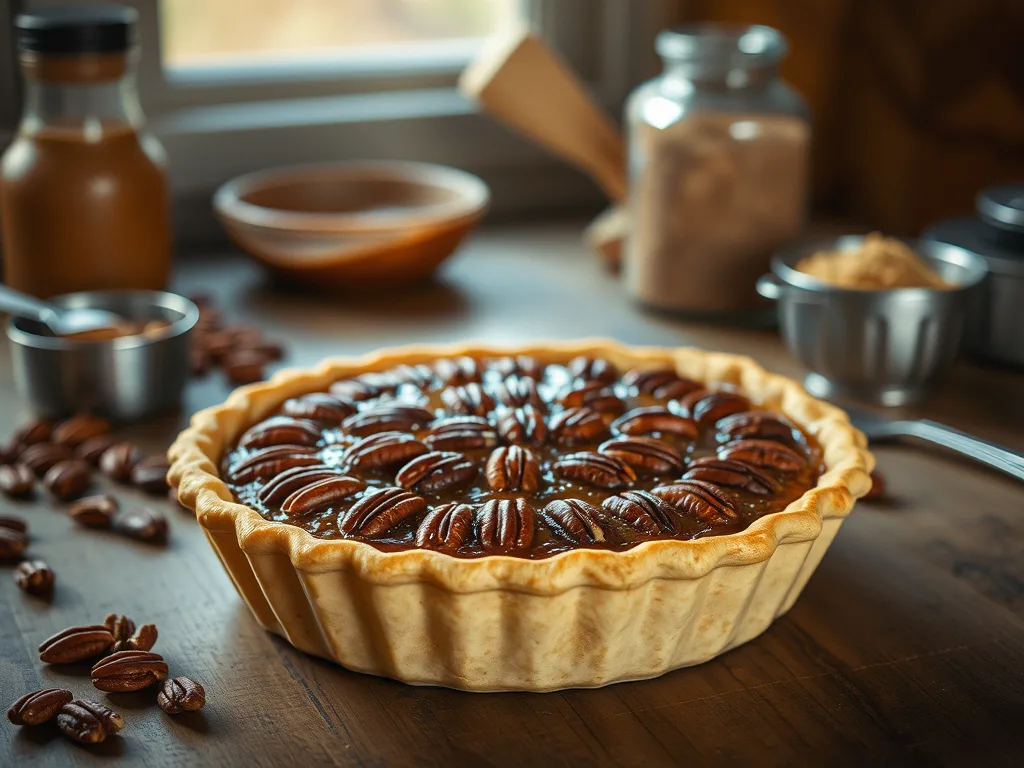
The Story Behind Pecan Pie
Pecan Pie is a purely American dessert, and the pecan itself is the only major nut tree native to North America. Long before it became the glossy, sweet centerpiece of Thanksgiving tables, the pecan was a staple food for indigenous peoples throughout the Mississippi River Valley and the Gulf Coast, where wild pecan trees grew in abundance. Pecans were valued because they were nutritious, rich, easy to store, and naturally delicious. Early European settlers quickly recognized their value, and Thomas Jefferson was among the early American figures who cultivated pecan trees at Monticello. That history matters because pecan pie is not just a dessert with American ingredients. It is a dessert rooted in the land itself.
The pie as we know it most likely emerged in the American South in the late 19th century, when cooks began combining pecans with a sweet custard-like filling made from eggs, sugar, butter, and syrup. Printed recipes appeared in the early 20th century, and by the 1930s and 1940s, Karo Corn Syrup helped push pecan pie into national popularity through aggressive recipe promotion. That is one of the reasons so many families still associate pecan pie with corn syrup today. Whether made with corn syrup, cane syrup, maple syrup, brown sugar, or a combination, the idea is the same: pecans suspended in a rich, caramel-like filling baked inside a flaky crust.
As Chef Ruben, I see pecan pie as one of those desserts that proves simple ingredients can carry a whole season. It is sweet, yes, but it is also nutty, buttery, toasty, and deeply comforting. The top layer of pecans gets beautifully roasted in the oven, the filling turns glossy and soft, and the crust gives every bite structure. A good pecan pie should not be just sugar. It should have contrast. You want the toasted pecans to bring a little bitterness and crunch, the filling to be smooth and rich, and the crust to stay sturdy enough to hold everything together.
There is something special about the way pecan pie shows up at Thanksgiving. Pumpkin pie may get a lot of attention, and apple pie certainly has its place, but pecan pie brings a different kind of energy to the dessert table. It feels Southern, generous, and a little indulgent. It is the pie people cut into small slices because they know it is rich, then somehow go back for another sliver later. That is part of its charm. It does not pretend to be light. It is a celebration pie.
The technique behind pecan pie is simple, but a few details make all the difference. Toasting the pecans before baking can deepen their flavor, even though they will toast more in the oven. Using a properly chilled pie crust helps prevent shrinking and keeps the bottom from turning greasy. The filling should be mixed until smooth, but not whipped with too much air. And the pie needs time to cool completely before slicing. That last part is hard, especially when the kitchen smells like butter, brown sugar, and roasted nuts, but it matters. If you slice too early, the filling may run. Letting it cool allows the custard to set into that classic clean wedge.
Pecan pie also carries the story of Southern hospitality. In many homes, it is the pie made for company, church gatherings, reunions, and holidays. It travels well, holds up on a buffet, and tastes good at room temperature. It does not need much decoration. Maybe a little whipped cream, maybe a scoop of vanilla ice cream, maybe nothing at all. The pie is confident enough on its own. That confidence is one reason it has lasted.
What I appreciate most is how personal pecan pie becomes from family to family. Some people add bourbon for warmth. Some use dark corn syrup for a deeper molasses note. Some add chocolate chips, which turns the pie into something closer to a candy bar in the best way. Some families arrange the pecans in perfect circles on top, while others stir them right into the filling and let the oven decide the pattern. None of those versions are wrong. Pecan pie has a strong identity, but it still leaves room for memory and tradition.
When I think about pecan pie, I think about the end of a big meal, when everyone is full but still waiting to see what desserts appear. I think about a table crowded with plates, coffee cups, foil-covered leftovers, and somebody asking for "just a small piece." I think about the first bite, when the fork breaks through toasted pecans into that soft amber filling. It tastes like Thanksgiving because it tastes like abundance. It is sweet because the holiday is sweet, rich because the table is rich, and simple because the best family desserts usually are.
Pecan pie has earned its place as a Thanksgiving classic because it brings together native ingredients, Southern cooking, American baking history, and family ritual in one beautiful dish. It is humble and luxurious at the same time. It reminds us that food does not have to be complicated to be meaningful. Sometimes all you need is a good crust, a bowl of pecans, a sweet filling, and enough patience to let the pie cool before you cut the first slice.
Time and Servings:
- Prep Time: 15 minutes
- Cook Time: 1 hour
- Total Time: 1 hour 15 minutes
- Servings: 8 servings
Nutrition (per serving):
- Calories: 450 kcal
- Protein: 5g
- Fat: 25g
- Carbohydrates: 55g
- Fiber: 3g
- Sodium: 250mg
Ingredients:
- 1 unbaked pie crust (9-inch)
- 1 cup pecans, chopped (plus extra for garnish if desired)
- 1 cup corn syrup
- 1/2 cup brown sugar
- 3 large eggs
- 1/4 cup melted butter
- 1 tsp vanilla extract
- 1/4 tsp salt
Instructions:
- Preheat the Oven:
- Preheat your oven to 350°F (175°C).
- Place the unbaked pie crust in a 9-inch pie pan and crimp the edges as desired.
- Prepare the Filling:
- In a large mixing bowl, whisk together 1 cup of corn syrup, 1/2 cup of brown sugar, 3 eggs, 1/4 cup of melted butter, 1 tsp of vanilla extract, and 1/4 tsp of salt until smooth and fully combined.
- Stir in 1 cup of chopped pecans, ensuring they are evenly distributed.
- Assemble the Pie:
- Pour the pecan filling mixture into the prepared pie crust.
- If desired, arrange whole pecan halves on top for a decorative finish.
- Bake the Pie:
- Place the pie on the center rack of the preheated oven.
- Bake for 50-60 minutes, or until the center is set and no longer jiggly. The pie filling should puff up slightly as it bakes.
- Cool and Serve:
- Remove the pie from the oven and let it cool completely on a wire rack, about 2 hours.
- Slice and serve at room temperature or slightly warmed with a dollop of whipped cream or a scoop of vanilla ice cream.
Tips for Success:
- Cover the edges of the crust with foil or a pie shield halfway through baking to prevent over-browning.
- For extra flavor, toast the pecans before adding them to the filling.
- Make the pie a day ahead to allow the flavors to meld beautifully.
Wine, Cocktail, or Drink Pairing:
- Pair this indulgent dessert with a sweet dessert wine like Sauternes, a rich bourbon, or a warm spiced latte for a comforting treat.