The Story Behind Malaysian Kuih Lapis
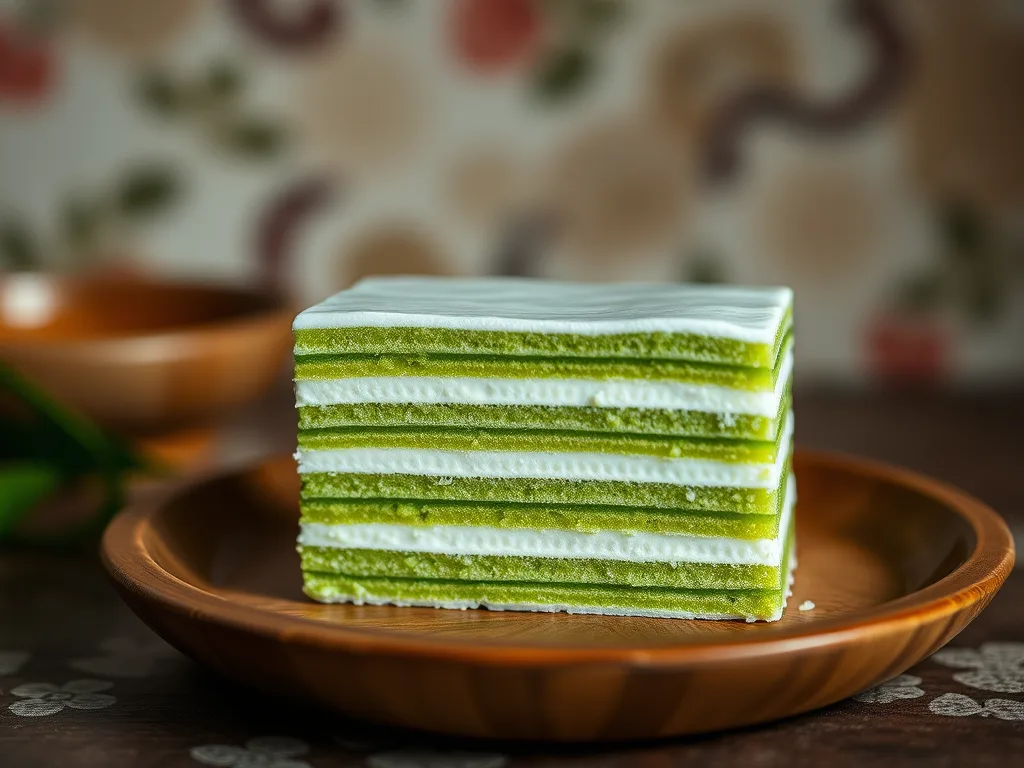
Kuih lapis — layered steamed rice cake — is one of the most visually striking confections in Southeast Asian cuisine: thin alternating layers of brightly colored steamed batter, each layer set before the next is added, creating a cross-section of perfectly parallel stripes when sliced. The making of kuih lapis requires extraordinary patience — as many as 15 to 20 individual layers, each steamed for several minutes before the next is poured, means the process can take hours for a single cake. This patience is considered a reflection of the maker's character: in Peranakan culture, elaborate kuih-making was one of the skills by which a nyonya (Peranakan woman) demonstrated her culinary excellence.
Kuih lapis belongs to the tradition of Peranakan (Nyonya or Baba-Nyonya) cooking — the unique culinary culture that emerged when 15th and 16th century Chinese merchants who settled in the Malay Archipelago married local Malay women. Their descendants developed a hybrid culture combining Chinese ingredients and techniques with Malay flavors and aromatics, producing some of Southeast Asia's most sophisticated food. The Dutch colonial presence in the region also contributed: the Indonesian version of layered cake (kue lapis legit, or spekkoek) shows clear Dutch influence in its use of butter and European spices like nutmeg. Today, kuih lapis in its various forms is central to celebrations across Malaysia, Singapore, and Indonesia, a confection that carries the memory of a remarkable cultural convergence.
What I love about kuih lapis is that it turns patience into something you can actually see. Every stripe tells you the cook waited, poured carefully, steamed gently, and repeated the process again and again. The texture is soft, springy, and slightly chewy, with coconut milk giving richness and pandan adding that unmistakable grassy-vanilla aroma that defines so many Southeast Asian desserts. It is not a cake in the Western sense; it is more delicate, more fragrant, and more playful.
As Chef Ruben, I appreciate desserts that invite interaction, and kuih lapis is famous for that. Many people peel it layer by layer instead of eating it in one bite, especially as children. That small act makes the dessert feel fun and personal. The colors are festive, the flavor is gentle, and the technique carries generations of kitchen wisdom. It is a celebration dessert, but also a reminder that some of the most beautiful foods are built slowly, one careful layer at a time.
Time and Servings:
- Prep Time: 15 minutes
- Cook Time: 45 minutes
- Total Time: 1 hour
- Servings: 10 servings
Nutrition (per serving):
- Calories: 180 kcal
- Protein: 2g
- Fat: 8g
- Carbohydrates: 26g
- Fiber: 0g
- Sugar: 12g
- Sodium: 15mg
Ingredients:
- For the Batter:
- 1 cup rice flour
- 1/2 cup tapioca flour
- 1 can coconut milk (14 oz)
- 1/2 cup sugar
- For Flavor and Color:
- 1/4 cup pandan juice (made from pandan leaves)
- Food coloring (optional, for vibrant layers)
Instructions:
- Prepare Batter:
Combine rice flour, tapioca flour, sugar, and coconut milk in a mixing bowl. Whisk until smooth and lump-free. Divide the batter into two portions. Mix pandan juice into one portion for a green layer. Add food coloring to intensify the hues, if desired. - Layer and Steam:
Grease a square or round steaming pan. Pour a thin layer (about 1/4 cup) of white batter into the pan and steam for 5 minutes until set. Add a thin layer of the green batter and steam for another 5 minutes. Repeat this process, alternating layers, until all batter is used. - Cool and Slice:
Remove the pan from the steamer and let the kuih lapis cool completely at room temperature. Use a lightly oiled knife to slice into diamond or square shapes for clean cuts.
Tips for Success:
- Pandan Juice: Blend fresh pandan leaves with a little water, then strain to extract the juice.
- Steam Control: Keep the steamer lid covered with a towel to prevent water droplets from dripping onto the cake.
- Storage: Store leftovers in an airtight container in the refrigerator for up to 3 days.
Wine, Cocktail, or Drink Pairing:
- Pair this vibrant dessert with a cup of jasmine tea or a refreshing pandan iced latte for a full Malaysian experience.