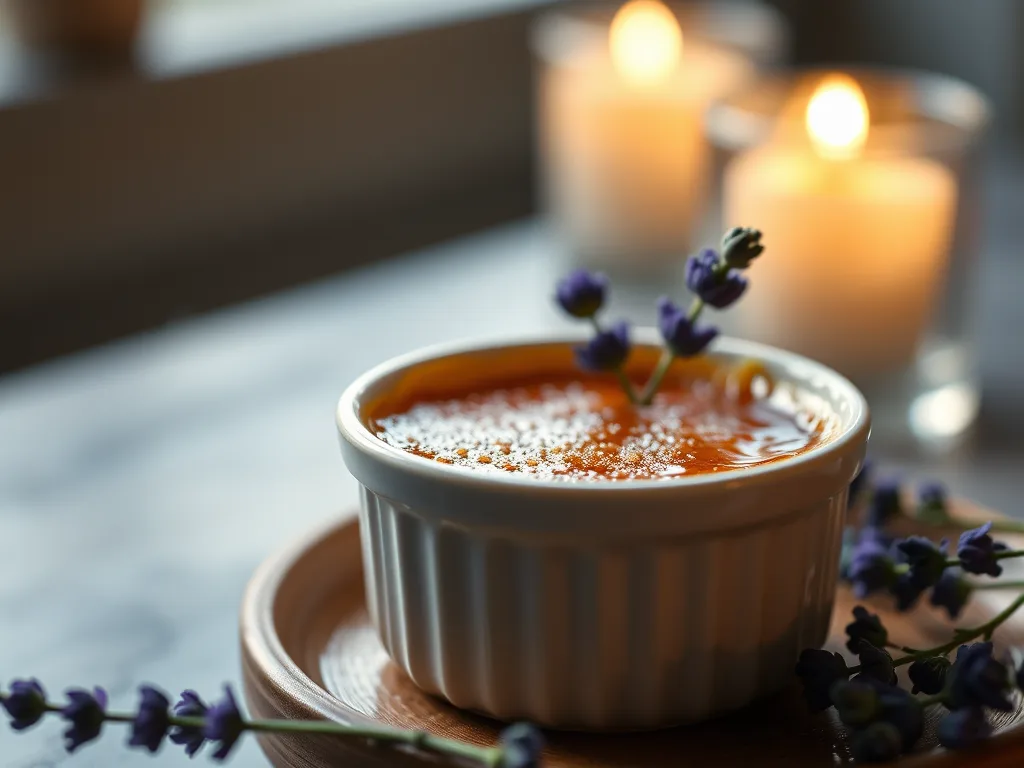
The Story Behind Lavender Honey Crème Brûlée
Crème Brûlée is one of the most perfect desserts ever conceived — a silky vanilla custard beneath a thin, brittle shell of caramelized sugar that shatters with a satisfying crack. Despite its quintessentially French character, the origin of Crème Brûlée is disputed between France, England, where a similar dessert is known as Trinity Cream at Cambridge, and Spain, with Crema Catalana. The first printed recipe for "Burnt Cream" appeared in an English cookbook in 1691, while the first French recipe appeared in François Massialot's 1691 cookbook published the same year. However tangled the history may be, the dessert has become a symbol of French elegance because it captures contrast so beautifully: cold creamy custard, warm caramelized sugar, soft texture, and crisp glassy top.
The dish has been embraced as French by the culinary world, and the French bistro tradition of torch-caramelizing the sugar to order — the dramatic tableside presentation — has made it an icon of restaurant dining. Lavender and honey together invoke the landscape of Provence, where fields of lavender have been harvested for perfume and culinary use for centuries and where local lavender honey is a prized product. The addition of these flavors transforms the classic into something breathtakingly fragrant and distinctly southern French. From Chef Ruben’s kitchen, I see lavender honey crème brûlée as a dessert that walks a fine line. Done well, it is delicate, floral, creamy, and romantic. Done poorly, lavender can taste like soap. The key is restraint. Lavender should perfume the custard, not take it hostage. Honey should add warmth and depth, not overpower the vanilla and cream.
The technique of crème brûlée is all about gentleness. Cream is infused with flavor, egg yolks are whisked with sugar, and the two are combined carefully so the eggs do not scramble. Baking in a water bath helps the custard cook evenly, protecting it from harsh heat and giving it that silky texture. The custards should be set around the edges but still have a slight wobble in the center when they come out of the oven. Then they need time to chill, because crème brûlée is as much about patience as it is about richness. The sugar topping should be thin and even. Too much sugar creates a thick, hard layer; too little leaves patchy caramelization. A kitchen torch gives the best control, melting the sugar into a crisp amber shell. That crack of the spoon is part of the experience, almost like opening a tiny dessert present. Lavender and honey make this version feel special for spring dinners, bridal showers, anniversaries, or any meal where you want a quiet showstopper. It is elegant without being loud. Every spoonful gives creamy custard, floral aroma, honeyed sweetness, and caramel crunch. For me, this dessert proves that refinement is not about making food complicated. It is about taking a few beautiful ingredients and treating them with care.
Time and Servings:
- Prep Time: 15 minutes
- Cook Time: 45 minutes (plus 2 hours chilling)
- Total Time: 3 hours
- Servings: 4 servings
Nutrition (per serving):
- Calories: 380 kcal
- Protein: 5g
- Fat: 28g
- Carbohydrates: 28g
- Fiber: 0g
- Sugar: 25g
- Sodium: 60mg
Ingredients:
- 2 cups heavy cream
- 1 tbsp dried culinary lavender
- 1/4 cup honey
- 4 egg yolks
- 1/4 cup granulated sugar (plus extra for topping)
- 1 tsp vanilla extract
Instructions:
Infuse the Cream:
- Heat Cream and Lavender: In a medium saucepan over low heat, combine heavy cream and dried lavender. Heat gently, stirring occasionally, until the cream is just steaming (do not let it boil).
- Infuse and Strain: Remove from heat and allow the lavender to steep for 15 minutes. Strain the mixture through a fine mesh sieve to remove the lavender buds.
Prepare the Custard Base:
- Mix Egg Yolks and Honey: In a mixing bowl, whisk together egg yolks and honey until the mixture is pale and slightly thickened. Gradually whisk in the strained cream, followed by vanilla extract.
Bake the Crème Brûlée:
- Preheat Oven and Prepare Dishes: Preheat your oven to 325°F (165°C). Place four ramekins in a deep baking dish.
- Fill and Bake: Divide the custard mixture evenly among the ramekins. Fill the baking dish with hot water until it reaches halfway up the sides of the ramekins. Bake for 40-45 minutes, or until the edges are set and the center jiggles slightly when shaken.
Cool and Chill:
- Cool Down: Remove ramekins from the water bath and let them cool to room temperature. Cover and chill in the refrigerator for at least 2 hours, or overnight.
Caramelize the Sugar:
- Sprinkle Sugar: Just before serving, sprinkle a thin layer of granulated sugar over each custard.
- Torch the Sugar: Using a kitchen torch, caramelize the sugar until it forms a golden, crisp crust. Allow to cool for a minute to harden.
Tips for Success:
- Lavender Balance: Use culinary-grade lavender sparingly to avoid an overpowering floral flavor.
- Even Caramelization: For best results, hold the kitchen torch a few inches away from the sugar and move it in circular motions.
- Perfect Custard Texture: If the custard appears too wobbly after baking, let it set longer during chilling for the ideal creamy consistency.
Wine, Cocktail, or Drink Pairing:
- Wine Pairing: Pair with a light dessert wine like Moscato or a late-harvest Riesling.
- Cocktail Pairing: A Lavender French 75 complements the floral notes beautifully.
- Non-Alcoholic Option: Lavender lemonade or chamomile tea enhances the dessert’s soothing flavors.