The Story Behind Tiramisu Classic Coffee and Mascarpone Dessert
Italian Tiramisu is one of the most beloved desserts in the world, but its history is surprisingly recent and surprisingly contentious. For a dessert that feels ancient, elegant, and permanently stitched into Italian food culture, tiramisu most likely began in the Veneto region of northeastern Italy in the 1960s or early 1970s. The most famous origin claim belongs to Le Beccherie, a restaurant in Treviso, where chef Roberto Linguanotto and owner Alba Campeol are often credited with creating it around 1969. The name means "pick me up" or "lift me up" in Italian, a perfect little promise of what the dessert delivers through espresso, sugar, cocoa, and that cool cloud of mascarpone cream.
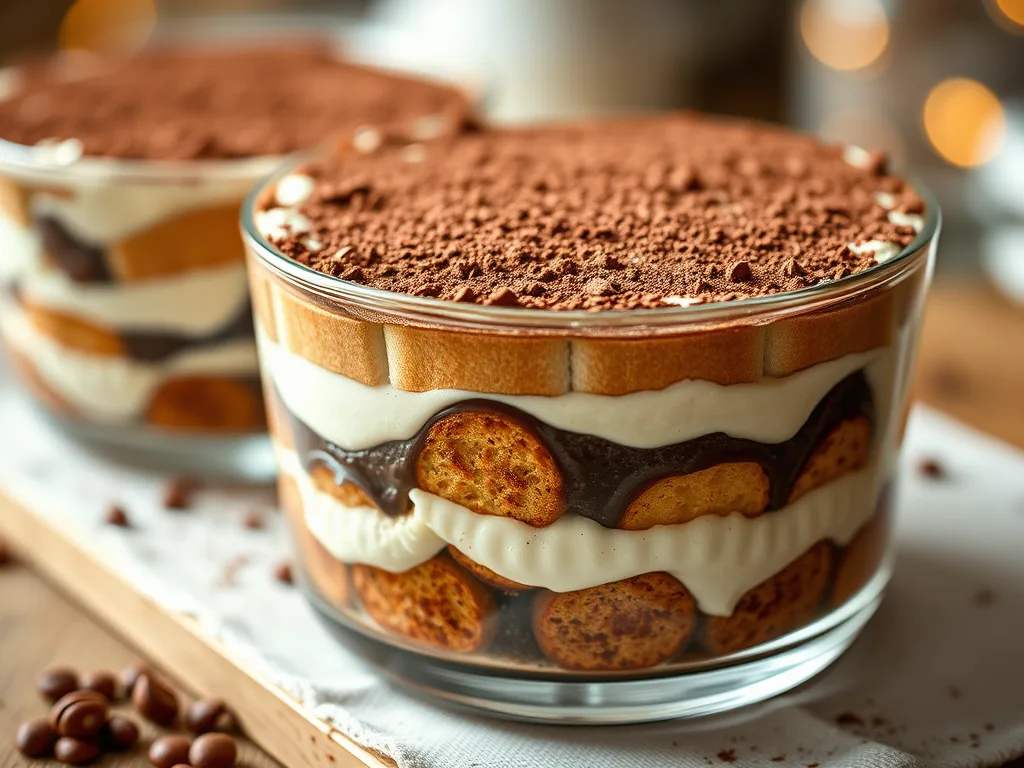
What I love about tiramisu is that it is not flashy in the way some desserts try to be flashy. It does not need flames, towering layers, or complicated decorations. Its beauty is in balance. You have savoiardi, those dry and delicate ladyfinger biscuits, briefly touched with strong coffee so they soften without collapsing. You have mascarpone, a rich cream cheese from Lombardy, whipped into something smooth and luxurious. You have eggs and sugar creating body and sweetness, then cocoa on top adding that slightly bitter finish that keeps the whole dessert from becoming too sweet. It is simple, but it is not careless. Every layer has a job.
The genius of tiramisu is also in its texture. A great tiramisu should not taste like wet cake, and it should not taste like plain cream. The ladyfingers need just enough espresso to become tender while still holding their shape. The mascarpone filling should be thick, silky, and light at the same time. When you spoon into it, the layers should give way softly, almost like the dessert has been waiting patiently for you. That resting time in the refrigerator is not optional in my kitchen. It is where the magic happens. The coffee settles into the biscuits, the cream firms up, and all the flavors stop acting like separate ingredients and start acting like tiramisu.
There is also something very Italian about the way tiramisu uses everyday pleasures and turns them into something memorable. Espresso after a meal is already a ritual. Mascarpone is already rich and comforting. Cocoa is already familiar. Ladyfingers are humble and light. But stack them together with intention, and suddenly you have a dessert that feels romantic, grown-up, and celebratory without being fussy. That is the kind of food I appreciate most as Chef Ruben: food that understands confidence. Tiramisu does not have to shout. It walks into the room quietly and everyone still pays attention.
Over the years, tiramisu has traveled far beyond Treviso. It became popular across Italy in the 1980s, then spread around the world, showing up in restaurants, bakeries, wedding menus, holiday tables, and home kitchens everywhere. With that popularity came countless variations: chocolate tiramisu, strawberry tiramisu, limoncello tiramisu, pistachio tiramisu, eggless tiramisu, trifle-style tiramisu, and even frozen versions. I enjoy creative spins, but the classic still has a special place because it proves how powerful restraint can be. Coffee, mascarpone, ladyfingers, cocoa, and time. That is enough.
For me, tiramisu feels like the kind of dessert you make when you want to impress people without stressing yourself out at the last minute. It is a make-ahead dessert, which already makes it a gift to the cook. You can prepare it the night before, let it chill, and bring it out when the meal is done. By then, everyone is full, conversations have slowed down, and the room is ready for something cool, creamy, and comforting. That first spoonful wakes everybody back up. The espresso gives depth, the cocoa gives elegance, and the mascarpone makes it feel like a soft landing after dinner.
There are a few technique details that make a big difference. Use strong coffee or espresso and let it cool before dipping the ladyfingers. Dip quickly, because savoiardi are thirsty and can go from perfect to soggy in seconds. Use good mascarpone, because it is the heart of the dessert. Dust the cocoa right before serving if you want the top to look fresh and dramatic. And most importantly, give the dessert time. Tiramisu is one of those recipes that teaches patience in the sweetest way.
Italian tiramisu may be young compared to other classic desserts, but it has earned its place. It carries the comfort of coffee, the richness of cream, the elegance of cocoa, and the joy of a dessert that feels both homemade and restaurant-worthy. Every bite reminds me why some recipes become classics so quickly. When a dish is balanced, beautiful, and deeply satisfying, it does not need centuries to prove itself. Tiramisu did it in just a few decades, and honestly, that feels right.
Time and Servings:
- Prep Time: 25 minutes
- Chill Time: 4 hours
- Total Time: 4 hours 25 minutes
- Servings: 8 servings
Nutrition (per serving):
- Calories: 350 kcal
- Protein: 7g
- Fat: 25g
- Carbohydrates: 25g
Ingredients:
- 16 ladyfingers
- 2 cups strong coffee (cooled)
- 1/2 cup sugar
- 3 egg yolks
- 1 cup mascarpone cheese
- 1 cup heavy cream
- Cocoa powder (for dusting)
Instructions:
- Prepare the Coffee and Ladyfingers:
- Brew 2 cups of strong coffee and allow it to cool to room temperature.
- Lightly dip each ladyfinger into the coffee, ensuring they are soaked but not falling apart.
- Arrange half of the soaked ladyfingers in a single layer at the bottom of a 9x9-inch dish or similar container.
- Make the Mascarpone Cream:
- In a mixing bowl, whisk 3 egg yolks and 1/2 cup of sugar together until the mixture is pale and creamy.
- Add 1 cup of mascarpone cheese and gently fold until smooth.
- In a separate bowl, whip 1 cup of heavy cream until stiff peaks form.
- Carefully fold the whipped cream into the mascarpone mixture until fully incorporated.
- Assemble the Tiramisu Layers:
- Spread half of the mascarpone cream mixture evenly over the layer of soaked ladyfingers.
- Add another layer of coffee-soaked ladyfingers on top of the cream.
- Spread the remaining mascarpone cream over the second layer of ladyfingers, smoothing the top with a spatula.
- Chill and Serve:
- Cover the dish with plastic wrap and refrigerate for at least 4 hours, or overnight for best results.
- Just before serving, dust the top with cocoa powder using a fine mesh sieve.
- Slice and serve chilled.
Tips for Success:
- For added flavor, mix a tablespoon of coffee liqueur or Marsala wine into the coffee before soaking the ladyfingers.
- Ensure the mascarpone and cream are chilled before preparing the cream mixture for optimal consistency.
- Use high-quality cocoa powder for the best flavor and presentation.
Wine, Cocktail, or Drink Pairing:
- Pair this Tiramisu with a glass of sweet Marsala wine, an espresso martini, or a freshly brewed cup of espresso for an authentic Italian pairing.