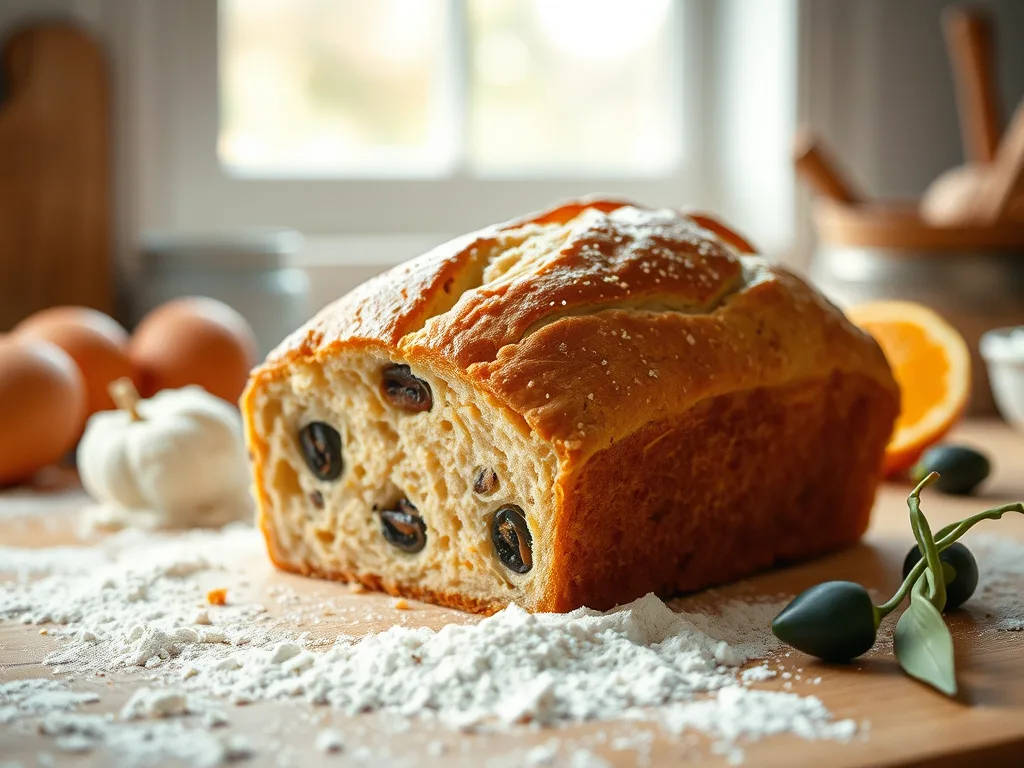
The Story Behind Panettone
Italian Panettone is one of the world’s great Christmas breads — a towering, dome-shaped sweet loaf studded with candied fruits and raisins that has become synonymous with the holiday season in Italy and across the Italian diaspora. Its origins are fiercely claimed by Milan, where legend holds that the bread was created in the 15th century. One popular story involves a young nobleman named Ughetto who, to win the hand of a baker’s daughter, worked in her father’s bakery and invented a luxurious new bread enriched with butter, eggs, sugar, and dried fruits. Another legend says the name comes from “Pan de Toni,” the bread of a kitchen helper named Toni who saved a holiday feast with an improvised sweet loaf. Whether the legends are true or not, they tell us something important: panettone has always felt special enough to deserve a story. It is not just bread. It is celebration shaped into a tall golden dome.
By the early 20th century, Milanese bakers Angelo Motta and Gioacchino Alemagna had industrialized panettone production, transforming it from a regional specialty into a national icon. The process of making authentic panettone is extraordinarily complex — requiring a natural yeast, known as lievito madre, and up to three days of fermentation — which explains why the best ones are still made by skilled artisans. From Chef Ruben’s kitchen, I see panettone as one of those recipes that teaches patience. This is not a quick loaf. It is a celebration bread. The dough is enriched, delicate, and demanding, but when it rises properly and bakes into that tall golden dome, it feels like a holiday centerpiece all by itself. There is something beautiful about a recipe that refuses to be rushed in a season when everyone is already moving too fast.
The flavor of panettone is built in layers. Butter gives richness, eggs give color and tenderness, sugar gives sweetness, and slow fermentation gives the bread its signature aroma. Candied orange, citron, lemon peel, and raisins bring bursts of fruit throughout the soft crumb. The texture should be light and shreddable, not dense like a cake. That is why kneading, resting, and fermentation matter so much. In Italian homes, panettone is often served simply in slices with coffee, espresso, sweet wine, or hot chocolate. It can also be toasted with butter, turned into French toast, layered into bread pudding, or served with mascarpone cream. Around Christmas, the wrapped boxes of panettone become gifts, decorations, and edible symbols of the season.
What I love most is that panettone feels both humble and luxurious. The ingredients are familiar — flour, eggs, butter, sugar, fruit — but time transforms them. A good loaf should smell like citrus, vanilla, butter, and holiday warmth before you even cut it. If you are making it at home, patience is the real ingredient. Let the dough rise fully. Do not rush the fermentation. Use good fruit, and give the loaf time to cool before slicing so the crumb stays tender. Even if you make a simplified version, you are participating in a beautiful tradition that connects Milanese bakeries, Christmas morning tables, and families sharing sweet bread across generations. Panettone reminds us that holiday baking is not only about sweetness. It is about time, patience, generosity, and the joy of placing something tall, golden, and fragrant in the center of the table.
One practical thing I always tell home bakers is to treat panettone more like a living dough than a standard sweet bread. Enriched doughs move slowly because butter, eggs, and sugar soften the structure and slow fermentation. That means the dough needs warmth, time, and gentle handling. If the rise looks slow, do not panic and force it with too much heat. Give it time to develop flavor. The fruit should be folded in carefully so it stays distributed throughout the loaf instead of sinking to the bottom. When the bread is done, cooling matters too; rushing the slice can make the crumb feel gummy. Served simply, panettone is already special, but leftovers are a gift. Toast a slice with butter, dip it into coffee, or turn it into a holiday bread pudding. That is the beauty of this bread: it keeps giving long after Christmas morning.
Time and Servings:
- Prep Time: 40 minutes
- Cook Time: 50 minutes
- Resting Time: 8-12 hours
- Total Time: 10-14 hours
- Servings: 8-10 slices
Nutrition (per serving):
- Calories: 300 kcal
- Protein: 7g
- Fat: 10g
- Carbohydrates: 48g
Ingredients:
For the Dough:
- 4 cups all-purpose flour
- 1/3 cup sugar
- 1 tsp salt
- 1 packet (2 1/4 tsp) active dry yeast
- 1/2 cup warm milk
- 3 large eggs
- 1 tsp vanilla extract
- 1/2 cup unsalted butter, softened
For the Filling:
- 1/2 cup raisins
- 1/2 cup candied orange peel
- 1/4 cup chopped almonds (optional)
- 2 tbsp rum (optional)
For Garnish:
- Powdered sugar
Instructions:
1. Activate Yeast:
- In a small bowl, combine warm milk, 1 tablespoon of sugar, and yeast. Let sit for 5-10 minutes until frothy.
2. Prepare Dough:
- In a large mixing bowl, combine flour, remaining sugar, and salt. Add eggs, vanilla extract, and the yeast mixture. Mix until a sticky dough forms.
- Gradually add softened butter, one tablespoon at a time, kneading until the dough is smooth and elastic (about 10 minutes by hand or 5 minutes with a dough hook).
3. Incorporate Filling:
- If using, soak raisins and candied orange peel in rum for 10 minutes, then drain. Knead them and almonds into the dough until evenly distributed.
4. First Rise:
- Place the dough in a greased bowl, cover with plastic wrap, and let it rise in a warm place for 6-8 hours or overnight, until doubled in size.
5. Shape the Dough:
- Punch down the dough and shape it into a ball. Place it into a greased panettone mold or a deep round baking dish lined with parchment paper.
6. Second Rise:
- Cover loosely with plastic wrap and let it rise again in a warm place for 2 hours, or until it reaches the top of the mold.
7. Bake:
- Preheat the oven to 350°F (175°C). Bake the panettone for 40-50 minutes, or until the top is golden and a skewer inserted into the center comes out clean.
8. Cool and Serve:
- Let the panettone cool completely on a wire rack. Dust with powdered sugar before serving.
Tips for Success:
- Plan Ahead: Start preparation the night before to account for the long rising times.
- Perfect Dough Consistency: The dough should be slightly sticky but manageable. Add small amounts of flour if too wet.
- Distribute Fruits Evenly: Toss raisins and candied peel in a little flour before kneading them into the dough to prevent sinking.
- Monitor Baking: If the top browns too quickly, cover it loosely with aluminum foil during baking.
- Storage: Store panettone in an airtight container for up to a week or freeze for longer storage.
Wine, Cocktail, or Drink Pairing:
- Pair with a glass of Moscato d'Asti, hot mulled wine, or an espresso for a perfect festive treat.