The Story Behind Indonesian Klepon
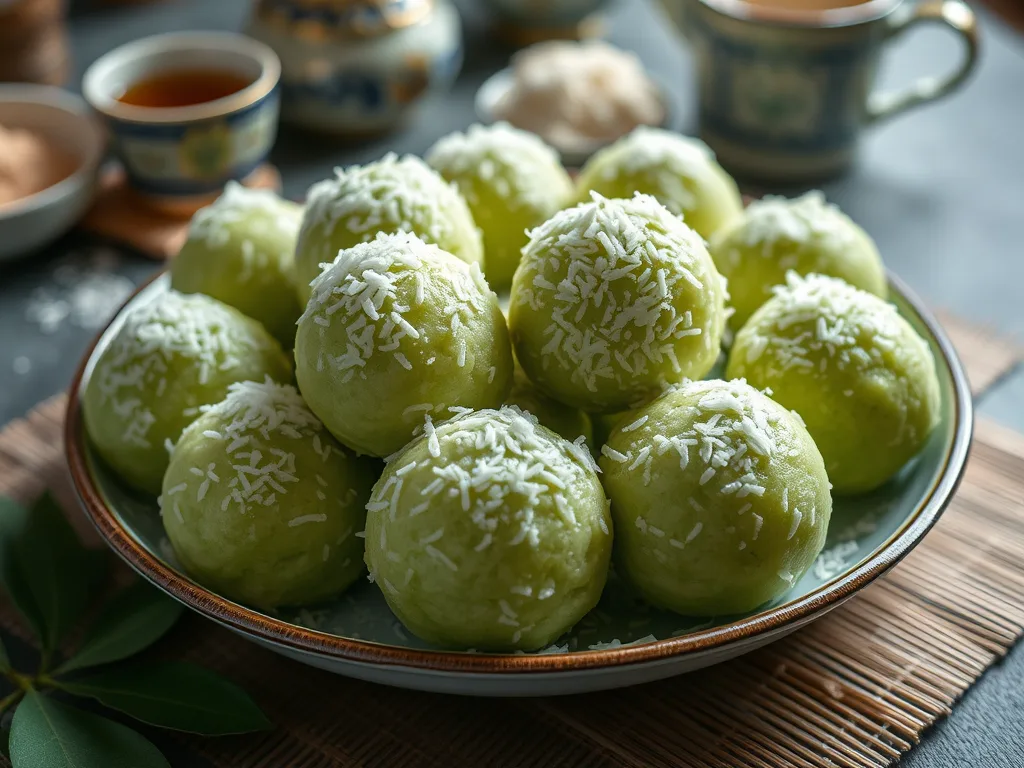
Klepon is one of Indonesia's most delightful culinary surprises — a small, vibrantly green rice ball that hides a molten core of liquid palm sugar inside, rolled in freshly grated coconut. The first bite releases a burst of warm, caramel-sweet gula jawa (Javanese palm sugar) that is simultaneously simple and astonishing. The color comes from pandan (screwpine) leaf juice — the vanilla of Southeast Asian cooking — which gives klepon its distinctive grassy-sweet aroma and vivid jade-green hue. This tiny confection is a perfect example of Indonesian kuih (traditional confectionery): visually striking, technically thoughtful, and deeply tied to specific ingredients that grow nowhere else on earth.
Klepon is considered part of the Javanese jajan pasar tradition — literally "market sweets" — the colorful array of small, handmade confections sold at morning markets (pasar pagi) throughout Java, Bali, and beyond. The making of klepon is a communal activity in Javanese villages, where women gather to roll and stuff hundreds of the small balls for festivals, weddings, and temple offerings. Klepon is closely related to the Malaysian onde-onde, reflecting the shared culinary heritage of Austronesian cultures across maritime Southeast Asia. Despite being a confection of extraordinary simplicity in its ingredients — glutinous rice flour, pandan, palm sugar, coconut — klepon requires considerable skill: the palm sugar must remain molten without bursting through the dough, and the balance of sweet, aromatic, and chewy must be exactly right.
What I love about klepon is that it turns one bite into a little moment of surprise. From the outside, it looks like a soft green coconut-covered ball. Then you bite in and the palm sugar syrup pops open, warm and caramel-like. That contrast is the whole joy of the dessert. The dough needs to be sealed carefully so the sugar stays hidden until the right moment, and the balls must be cooked just long enough to become tender and chewy without breaking apart.
As Chef Ruben, I appreciate sweets that feel playful but still deeply traditional. Klepon is colorful, fragrant, and fun, but it is also tied to market culture, family gatherings, and handmade skill. Freshly grated coconut gives a clean richness, pandan adds that unmistakable Southeast Asian aroma, and palm sugar brings a deep sweetness almost like smoky caramel. It is proof that a dessert can be small in size but huge in personality.
Time and Servings:
- Prep Time: 15 minutes
- Cook Time: 10 minutes
- Total Time: 25 minutes
- Servings: 12 pieces
Nutrition (per serving):
- Calories: 50 kcal
- Protein: 1g
- Fat: 1g
- Carbohydrates: 10g
- Fiber: 0g
- Sugar: 5g
- Sodium: 3mg
Ingredients:
- 1 cup glutinous rice flour
- 1/2 cup water
- 1/2 cup palm sugar, chopped into small pieces
- 1/2 cup grated coconut (for coating)
Instructions:
Make Dough
- In a mixing bowl, combine glutinous rice flour with water.
- Mix and knead until a smooth, pliable dough forms.
- Add more water gradually, a teaspoon at a time, if the dough feels too dry.
Assemble Klepon
- Pinch off small portions of dough and flatten them into discs.
- Place a small piece of chopped palm sugar in the center of each disc.
- Carefully wrap the dough around the sugar, sealing the edges.
- Roll gently to form smooth balls.
Cook and Coat
- Bring a pot of water to a boil.
- Gently drop the rice balls into the boiling water.
- Cook until the balls float to the surface (approximately 3–4 minutes).
- Use a slotted spoon to remove the cooked Klepon.
- Roll the warm Klepon in grated coconut, coating them evenly.
Serve:
Enjoy these sweet, chewy rice balls with a burst of molten palm sugar as a snack or a perfect pairing with tea!
Tips for Success:
- Palm Sugar Handling: Chop the palm sugar into small, uniform pieces to ensure easy filling and even melting.
- Avoid Overfilling: Use a small amount of sugar to prevent the Klepon from breaking during cooking.
- Serving Suggestion: Best enjoyed warm when the palm sugar is molten for a delightful experience.
Wine, Cocktail, or Drink Pairing:
- Pair this dish with a light jasmine tea or iced lemongrass drink to balance the sweetness.