The Story Behind Black Sesame Tangyuan
Tangyuan (汤圆) are glutinous rice dumplings filled with sweet or savory fillings and served in hot soup — one of the most ancient and symbolically significant foods in Chinese culture. The word "tangyuan" is a near-homophone for "tuányuán" (团圆), meaning "family reunion," which explains why the dish is central to the Lantern Festival, the final day of Chinese New Year, and the Winter Solstice festival. The black sesame filling — ground black sesame seeds blended with lard or butter and sugar into a dense, bittersweet paste — is the most traditional and arguably the most beloved variety. It is the kind of dessert that feels simple when you look at it, then surprises you the moment you bite in and the warm filling begins to flow. That contrast between quiet appearance and rich center is part of the magic.
Black sesame’s earthy, nutty depth against the neutral chewiness of the glutinous rice wrapper creates one of the most satisfying textural and flavor contrasts in Chinese dessert cooking. The wrapper’s pure white color against the inky black filling is also visually striking — not accidental, since Chinese festive foods have always been as much about visual symbolism as flavor. The round shape represents completeness, unity, and family togetherness. That symbolism is why tangyuan is more than dessert. It is a food that says, "Come together, sit close, share warmth, and remember who you belong to." From Chef Ruben’s kitchen, I love recipes like this because they remind us that food can carry emotion in its shape, color, texture, and timing. A bowl of tangyuan is gentle, but it has meaning.
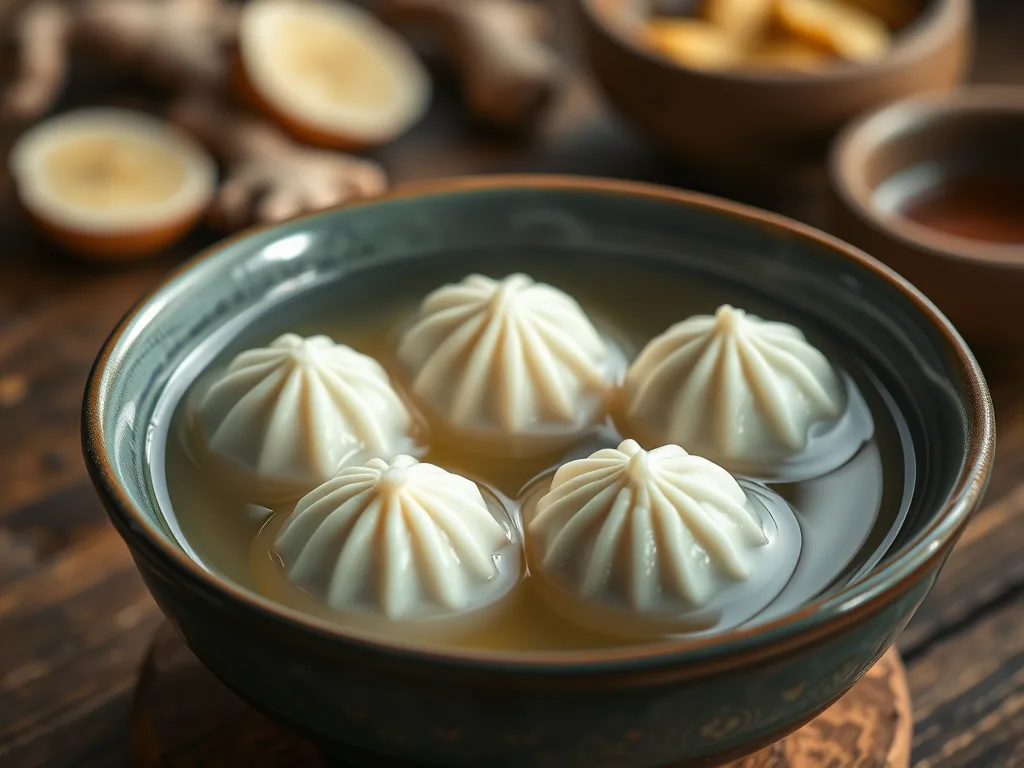
The technique requires patience because glutinous rice flour behaves differently from wheat flour. It has no gluten, but it becomes stretchy and chewy when mixed with water. The dough should be soft and pliable, not crumbly and not wet. If it cracks when you shape it, it needs a touch more water. If it sticks aggressively, it may need a little more flour. The filling should be chilled until firm so it is easier to wrap. Once the dumplings are sealed, they are simmered gently until they float, which tells you the wrapper is cooked through. The soup can be plain hot water, ginger syrup, sweet rice wine broth, or a lightly sweetened syrup. I like ginger because it adds warmth and balances the richness of sesame. The best bite has a tender chewy wrapper and a molten center that tastes roasted, sweet, nutty, and slightly bitter in the best way.
There is also a quiet beauty in making tangyuan by hand. Rolling the dough, portioning the filling, sealing each dumpling, and watching them float in the pot slows the cook down. This is not a dessert you rush through. It is a small ritual. Families often make them together, and even imperfect dumplings still carry the spirit of the dish. If a dumpling leaks, it is not a failure; it just means the soup gets a little richer. If you want a smoother filling, grind the sesame finely and mix it thoroughly with fat and sugar. If you want deeper flavor, toast the sesame seeds before grinding. Black Sesame Tangyuan is a celebration dessert, a comfort dessert, and a family dessert all at once. It teaches that sweetness does not have to be loud to be unforgettable.
Time and Servings:
- Prep Time: 20 minutes (plus 30 minutes freezing time)
- Cook Time: 10 minutes
- Total Time: 1 hour
- Servings: 6 servings
Nutrition (per serving):
- Calories: 200 kcal
- Protein: 3g
- Fat: 9g
- Carbohydrates: 28g
- Fiber: 2g
- Sugar: 10g
- Sodium: 10mg
Ingredients:
- 1 cup glutinous rice flour
- 1/2 cup black sesame seeds, toasted
- 1/4 cup sugar
- 2 tbsp butter, melted
- 1 tbsp water (for sesame paste)
- 1 tbsp ginger, sliced
- 4 cups water (for boiling)
Instructions:
- Make Sesame Filling:
- In a food processor, grind toasted black sesame seeds, sugar, melted butter, and 1 tablespoon of water into a thick, smooth paste.
- Freeze the paste for 30 minutes to make it easier to handle when filling the dumplings.
- Make Dough:
- Combine glutinous rice flour with enough water to form a smooth, pliable dough. Knead until soft but not sticky.
- Divide the dough into small balls, about 1 inch in diameter.
- Assemble Tangyuan:
- Flatten each dough ball into a disc. Add a small spoonful of the chilled sesame paste in the center.
- Wrap the dough around the filling, sealing the edges completely. Roll into smooth balls.
- Cook:
- Bring 4 cups of water and sliced ginger to a boil.
- Add tangyuan to the boiling water, stirring occasionally to prevent sticking.
- Cook until the tangyuan float to the surface, about 3-4 minutes.
- Serve:
- Serve hot in the ginger-infused boiling water for a warm and flavorful dessert.
Tips for Success:
- Chilled Filling: Freezing the sesame paste makes it easier to handle and prevents it from leaking during cooking.
- Seal Dough Well: Ensure the dough completely seals around the filling to avoid it breaking apart in the water.
Wine, Cocktail, Drink Pairing:
- Pair this dessert with a cup of hot jasmine tea or a soothing chrysanthemum tea to complement the nutty and sweet flavors.