The Story Behind Bûche de Noël
The French Bûche de Noël, or Yule Log Cake, is one of the most theatrical desserts in all of European cuisine, and its story begins long before the invention of cake. The original Yule log was a massive wooden log ceremonially burned in the fireplace throughout Christmas Eve and Christmas Day in pre-Christian Northern European traditions. It symbolized warmth, light, protection, and the return of the sun after the winter solstice. As Christianity spread through Europe, older winter customs blended with Christmas celebrations. Later, as large hearths disappeared and smaller stoves and ovens became common, the burning log slowly transformed from a household ritual into an edible symbol. In France, by the 19th century, pastry chefs began creating rolled sponge cakes decorated to resemble wooden logs, and the Bûche de Noël became a Christmas classic.
What makes this dessert so special is that it is both cake and storytelling. A traditional Bûche de Noël begins with a light sponge cake, often a génoise, baked thin enough to roll. It is spread with buttercream, ganache, whipped cream, or another filling, then carefully rolled into a cylinder. The outside is frosted with chocolate buttercream or ganache and textured to look like bark. Some versions include a cut branch effect, where a small piece of cake is attached to the side. Then come the decorations: meringue mushrooms, powdered sugar snow, sugared cranberries, rosemary sprigs, chocolate curls, or tiny woodland details. It is dessert as theater, but with meaning behind every flourish.
As Chef Ruben, I love Bûche de Noël because it asks the cook to slow down and have fun. Not every recipe has to be rustic and quick. Some recipes invite you to play, decorate, and create a moment. This cake does that. It turns the holiday table into a scene. When you bring out a Yule log cake, people notice. Children lean closer. Adults smile. Someone always asks how you made the bark texture. That reaction is part of the recipe. The cake is not only meant to be eaten; it is meant to be admired first.
The technique can sound intimidating, but it is really a lesson in patience and confidence. The sponge needs to be flexible enough to roll without cracking, which is why it should not be overbaked. Many bakers roll the cake while it is still warm, using a towel dusted with cocoa or powdered sugar, so it learns the shape before the filling goes in. Once cooled, it is unrolled gently, filled, and rolled again. A few cracks are not a disaster. In fact, this is one of the most forgiving fancy cakes because frosting can cover imperfections, and bark texture makes everything look intentional.
French pâtisseries have elevated the Bûche de Noël into an art form. In Paris and across France, holiday bakery windows often display stunning versions in flavors far beyond classic chocolate. You may see chestnut, coffee, hazelnut, raspberry, praline, citrus, pistachio, or modern mousse-based versions with mirror glazes and sculptural decorations. Some are traditional and rustic, while others look like luxury architecture. But the heart of the dessert remains the same: a sweet tribute to warmth and light during the darkest season of the year.
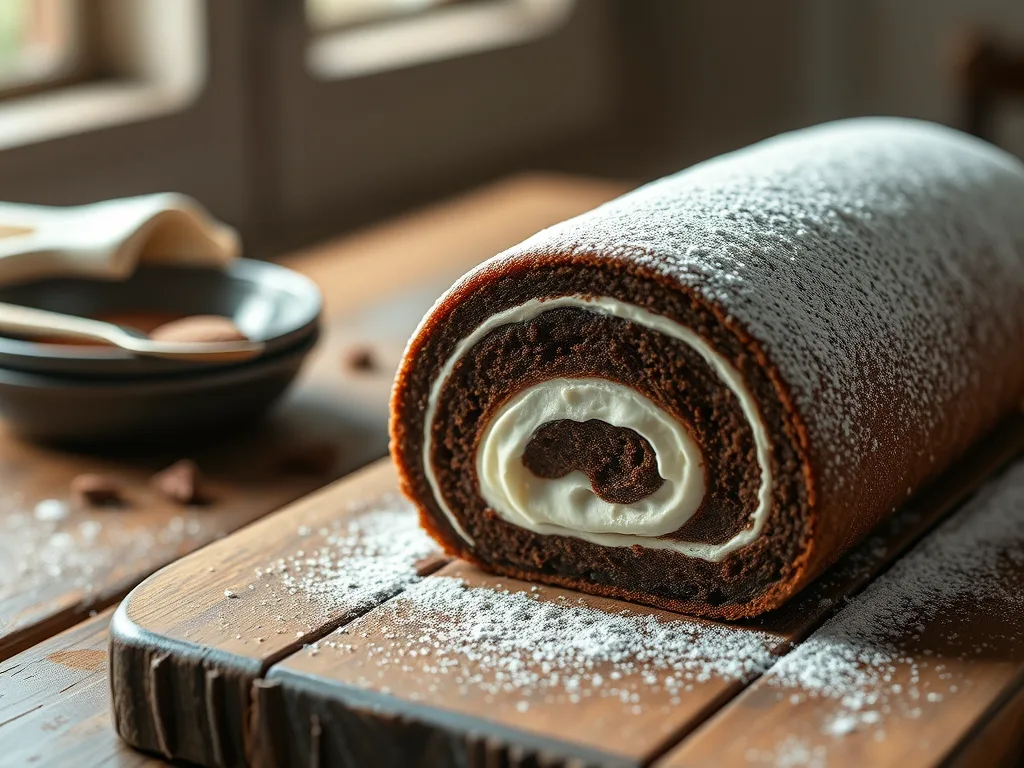
Classic chocolate remains beloved for a reason. Chocolate frosting naturally resembles bark, and its richness pairs beautifully with a delicate sponge. A filling of vanilla buttercream, chocolate cream, coffee cream, or whipped mascarpone can create contrast. The flavor should feel festive but balanced. Because the cake is rolled, every slice reveals a spiral, and that spiral is one of the great joys of this dessert. It shows the work. It tells you there is filling in every bite. It looks elegant without needing to be perfect.
There is also a beautiful connection between this cake and the idea of gathering. The original Yule log was burned in the hearth, the center of the home, where family and community gathered for warmth. The cake version keeps that spirit alive at the table. It is served after the meal, often when the lights are low, coffee is poured, and everyone is lingering. That is the kind of dessert memory that stays with people. It is not just sugar and flour; it is atmosphere.
If you are making Bûche de Noël at home, my best advice is to enjoy the process instead of chasing perfection. Let the cake cool properly. Do not overfill it. Use the frosting to create texture with a fork or spatula. Add decorations that make you happy. Meringue mushrooms are classic, but even a simple dusting of powdered sugar can look magical. The cake should feel like a winter forest, not a factory product. A little rustic charm belongs here.
Bûche de Noël is a dessert that carries ancient symbolism, French pastry tradition, and Christmas joy in one beautiful roll. It reminds us that food can preserve old rituals even when the original customs have changed. We may not burn a giant log in the fireplace anymore, but we can still bring a sweet version to the table, slice into its spiral, and celebrate warmth, light, family, and the pleasure of making something memorable with our own hands.
Time and Servings:
- Prep Time: 45 minutes
- Cook Time: 10 minutes
- Total Time: 55 minutes
- Servings: 8 servings
Nutrition (per serving):
- Calories: 320 kcal
- Protein: 5g
- Fat: 18g
- Carbohydrates: 34g
Ingredients:
- 4 large eggs
- 1/2 cup sugar
- 1/2 cup all-purpose flour
- 1/4 cup cocoa powder
- 1 cup whipped cream (or chocolate buttercream)
- Powdered sugar (for dusting)
Instructions:
Prepare the Batter:
- Preheat Oven:
- Preheat your oven to 350°F (175°C). Line a 10x15-inch jelly roll pan with parchment paper, ensuring the edges are covered for easy release.
- Beat Eggs and Sugar:
- In a mixing bowl, beat eggs and sugar on high speed for about 5 minutes until the mixture is pale, fluffy, and triples in volume. This creates the airy texture for the sponge cake.
- Sift Dry Ingredients:
- In a separate bowl, sift together the flour and cocoa powder to remove lumps.
- Combine Ingredients:
- Gently fold the dry ingredients into the egg mixture in small batches using a spatula. Take care not to deflate the batter.
Bake the Cake:
- Spread Batter:
- Spread the batter evenly onto the prepared jelly roll pan, smoothing the top with a spatula.
- Bake:
- Bake for 10 minutes, or until the cake springs back when lightly touched in the center. Do not overbake, as this can make the cake difficult to roll.
Roll the Cake:
- Roll While Warm:
- While the cake is still warm, invert it onto a clean kitchen towel lightly dusted with powdered sugar. Peel off the parchment paper.
- Shape the Roll:
- Starting from the shorter side, gently roll the cake (with the towel) into a log shape. Let it cool completely in the rolled position to set the shape.
Fill and Assemble:
- Unroll and Fill:
- Once cooled, unroll the cake carefully and spread an even layer of whipped cream or chocolate buttercream over the surface.
- Re-roll:
- Re-roll the cake tightly (without the towel). Trim the edges for a clean presentation.
Decorate:
- Dust and Decorate:
- Dust the cake with powdered sugar for a snow-dusted effect. Add decorations like chocolate shavings, berries, or festive toppers for extra charm.
- Chill and Serve:
- Refrigerate the assembled Bûche de Noël for at least an hour before slicing.
Tips for Success:
- Fluffy Batter: Thoroughly beat eggs and sugar until pale and voluminous to achieve a light sponge cake.
- Sift Ingredients: Sift the cocoa powder and flour to prevent lumps.
- Gentle Handling: Roll the warm cake with light pressure to avoid cracking.
- Avoid Overbaking: Monitor the cake closely to prevent dryness.
- Professional Look: Pipe ganache or buttercream decorations on the log, and dust with powdered sugar or cocoa powder.
- Firm Texture: Chill the cake before serving for cleaner slices.
Wine, Cocktail, or Drink Pairing:
- Pair this rich dessert with a glass of Prosecco, a cup of espresso, or a festive hot mulled wine to complement its flavors.