The Story Behind Tteok-bokki
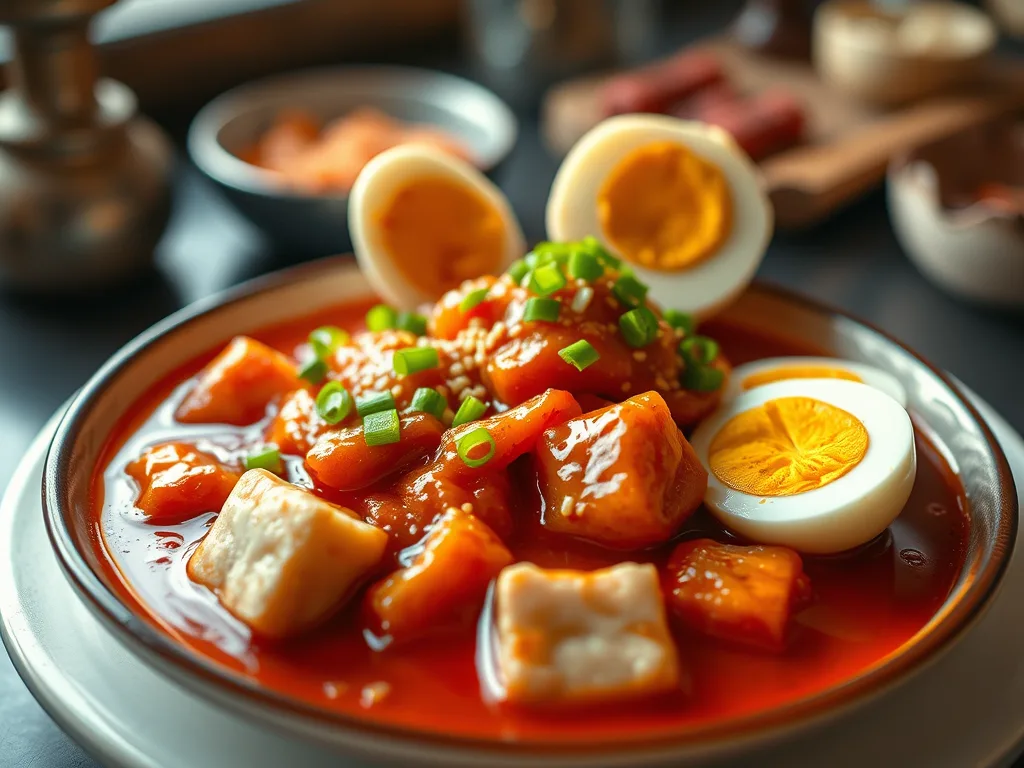
Korean Tteokbokki is the quintessential Korean street food — chewy rice cakes simmered in a fiery, sweet gochujang sauce that is utterly addictive. The dish has a surprisingly aristocratic history: the original tteokbokki was a court dish of the Joseon Dynasty made with beef, soy sauce, and sesame oil — a savory, non-spicy preparation favored by royalty. The modern red, spicy version we know today was invented in the 1950s, when a woman named Ma Bok-lim accidentally dropped rice cakes into a pot of gochujang and spicy broth at a Seoul market. That happy accident changed Korean snack culture. What had once been refined court food became bold, saucy, affordable street food with a flavor that people could crave every day.
The result was so delicious that it launched a street food phenomenon. Today, Tteokbokki is inseparable from Korean food culture — served in pojangmacha, street food tents, bunshikjip, snack shops, and increasingly at upscale restaurants, often with additions of fish cakes, eggs, and ramen noodles. From Chef Ruben’s kitchen, I love tteokbokki because it is comfort food with attitude. It is chewy, spicy, sweet, savory, and messy in the best possible way. The rice cakes have a texture that makes the dish special: soft but springy, tender but satisfyingly chewy. The sauce clings to every piece, and that combination of gochujang, gochugaru, sugar, soy sauce, garlic, and broth creates a flavor that keeps pulling you back for another bite.
The technique depends on the rice cakes. Fresh or refrigerated rice cakes cook faster and become tender quickly, while frozen ones may need soaking or a little extra time. The sauce should simmer until glossy and thick enough to coat, but not so reduced that it becomes pasty. Fish cakes add savory depth, boiled eggs soak up the sauce beautifully, and scallions add freshness. Some modern versions include cheese, ramen noodles, dumplings, cabbage, sausages, or even cream, showing how flexible the dish has become. I like adding a little broth gradually because it gives control over the sauce texture. Tteokbokki is often eaten standing at a stall with toothpicks or shared from a steaming pan among friends. That social feeling is part of its identity. It is not delicate food. It is food that warms you, stains the sauce red, and makes you reach for water while still wanting more. It also tells a story about modern Korea — postwar markets, street vendors, youth culture, late-night snacks, and the national love of bold flavor. Tteokbokki may have royal roots, but its heart belongs to the street. That journey is exactly what makes it so special.
Time and Servings:
- Prep Time: 10 minutes
- Cook Time: 20 minutes
- Total Time: 30 minutes
- Servings: 4 servings
Nutrition (per serving):
- Calories: 350 kcal
- Protein: 6g
- Fat: 4g
- Carbohydrates: 72g
- Fiber: 3g
- Sodium: 1000mg
Ingredients:
- 1 lb Korean rice cakes (tteok)
- 3 tbsp gochujang (Korean chili paste)
- 1 tbsp gochugaru (Korean chili flakes)
- 1 tbsp soy sauce
- 1 tbsp sugar
- 2 cloves garlic, minced
- 3 cups water or dashi broth
- 1/2 cup fish cakes, sliced (optional)
- 1 green onion, chopped
- 1 boiled egg, halved (for garnish)
- Sesame seeds (for garnish)
Instructions:
- Soak the Rice Cakes:
- If the rice cakes are firm or refrigerated, soak them in warm water for 10 minutes to soften.
- Drain the water and set the rice cakes aside.
- Prepare the Sauce:
- In a large pot or deep skillet, combine 3 tbsp of gochujang, 1 tbsp of gochugaru, 1 tbsp of soy sauce, 1 tbsp of sugar, and 2 cloves of minced garlic.
- Add 3 cups of water or dashi broth and stir to combine.
- Bring the mixture to a simmer over medium heat.
- Cook the Rice Cakes:
- Add the softened rice cakes and 1/2 cup of sliced fish cakes (if using) to the simmering sauce.
- Stir occasionally to prevent sticking and cook for 10-15 minutes, or until the rice cakes become chewy and the sauce thickens to a glossy consistency.
- Add Garnishes:
- Stir in the chopped green onion during the last minute of cooking for a fresh flavor.
- Remove the pot from heat and garnish with sesame seeds and halved boiled eggs.
- Serve:
- Serve the Tteok-bokki hot as a main dish or snack. Enjoy the chewy rice cakes and spicy, savory sauce!
Tips for Success:
- Use fresh rice cakes for the best texture, or soak refrigerated rice cakes as needed.
- Adjust the spice level by using less gochujang or omitting gochugaru.
- For added flavor, include vegetables like cabbage or carrots in the dish.
Wine, Cocktail, or Drink Pairing:
- Pair Tteok-bokki with a refreshing Korean barley tea (boricha), an ice-cold soju cocktail, or a fizzy sparkling water to balance the heat.