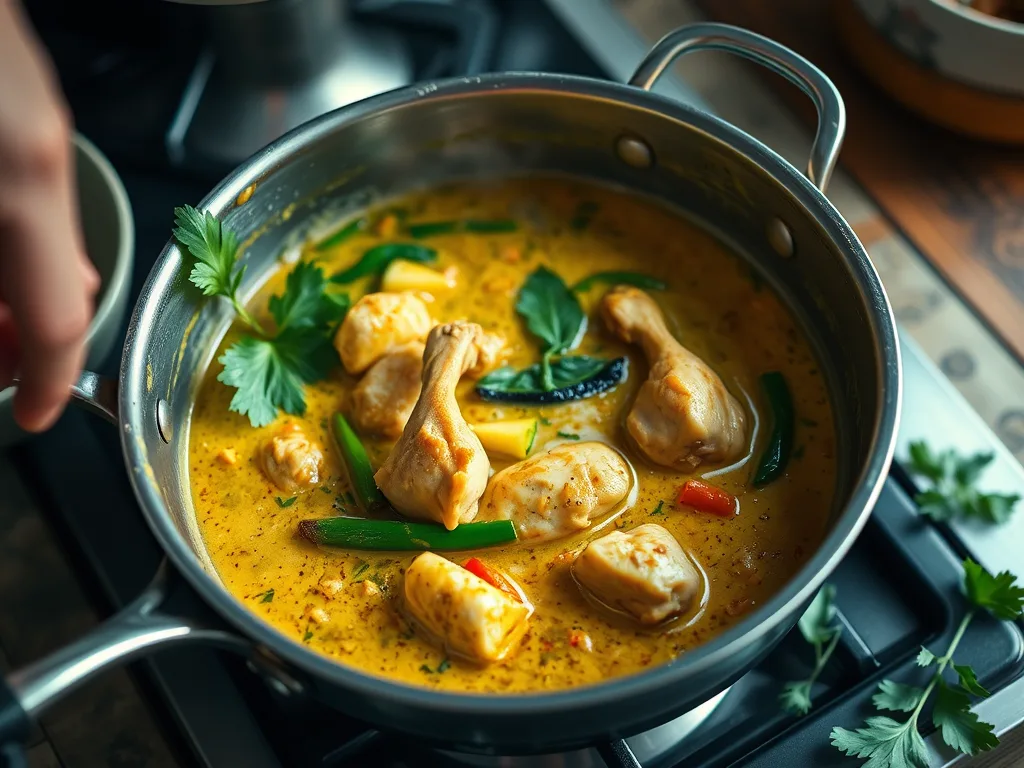
The Story Behind Thai Green Curry with Chicken
Thai green curry (kaeng khiao wan) is one of the world's great curry preparations — vibrant, fragrant, and electric with the freshness of green chilies and Thai basil in a way that no other curry in the world quite replicates. Despite being today's most internationally recognized Thai curry, it is historically one of the newer additions to the Thai culinary canon. The dish emerged during the reign of King Rama VI (1910-1925), when the use of fresh green chilies in curry pastes became fashionable in central Thai cooking. Earlier Thai curries tended to use dried red chilies or spices; the use of fresh green chilies gives kaeng khiao wan its bright, grassy, almost herbal heat that distinguishes it entirely from Indian-style curries.
What separates Thai green curry from many other comfort dishes is that it is both soothing and exciting. Coconut milk gives it creaminess, but the curry paste keeps it alive with heat, citrus, herbs, and spice. A good green curry should never taste flat. It should move across the palate: first rich and silky, then spicy, then aromatic, then a little sweet, and finally fresh from basil or lime leaves. That balance is why I love making it at home. Once you understand that Thai cooking often rests on harmony — salty, sweet, sour, spicy, and creamy — the dish becomes less intimidating and more like a conversation in the pot.
The curry paste — pounded in a granite mortar until silky smooth — is the soul of Thai green curry and involves a remarkable convergence of ingredients: fresh green chilies, lemongrass, galangal (a rhizome related to ginger but with a citrusy, medicinal flavor unlike any other), kaffir lime leaves and zest, garlic, shallots, fresh coriander root, shrimp paste, and cumin. Each ingredient is added individually to the mortar and pounded into the previous ones, the order and technique critical to the final paste's texture. Coconut milk — the medium of Thai green curry — was introduced to central Thai cooking through contact with Malay and Javanese cultures of southern Thailand and maritime Southeast Asia. It transforms the fierce, pungent paste into something silky, aromatic, and magnificent.
With chicken, green curry becomes especially approachable because the meat cooks quickly and absorbs the sauce beautifully. The vegetables can shift with the season — bamboo shoots, eggplant, bell peppers, green beans, zucchini — but the spirit remains the same. I like this dish when I want dinner to feel colorful and fragrant without spending hours in the kitchen. It is also a reminder that bold flavor does not always mean heavy food. Thai green curry is rich, yes, but it is lifted by herbs and aromatics at every turn. Served over jasmine rice, it becomes one of those meals where the rice is not just a side — it is there to catch every last spoonful of that beautiful sauce.
Time and Servings:
Prep Time: 10 minutes
Cook Time: 20 minutes
Total Time: 30 minutes
Servings: 4 servings
Nutrition (per serving):
- Calories: 360 kcal
- Protein: 22g
- Fat: 25g
- Carbohydrates: 12g
- Fiber: 3g
- Sugar: 5g
- Sodium: 650mg
Ingredients
- 1 lb chicken thighs, sliced
- 1 tbsp green curry paste
- 1 can (14 oz) coconut milk
- 1 tbsp fish sauce
- 1 tbsp brown sugar
- 1/2 cup Thai basil leaves
- 1 red bell pepper, sliced
- 1 zucchini, sliced
- 1 lime, juiced
- Fresh cilantro, chopped (for garnish)
Instructions
- Cook Chicken: Heat a small amount of oil in a large pan or wok over medium-high heat. Sauté the chicken slices until browned and just cooked through. Remove from the pan and set aside.
- Prepare Curry Base: In the same pan, add the green curry paste and cook for 1 minute until fragrant, stirring constantly.
- Add Coconut Milk and Seasonings: Stir in the coconut milk, fish sauce, and brown sugar. Mix well and bring the mixture to a gentle simmer.
- Add Vegetables: Add the sliced bell pepper and zucchini to the curry. Simmer for 5 minutes, or until the vegetables are tender yet crisp.
- Combine Chicken and Finish: Return the chicken to the pan and stir well. Simmer for an additional 5 minutes, allowing the flavors to meld together.
- Serve: Remove from heat and stir in the lime juice and Thai basil leaves. Garnish with fresh cilantro and serve hot with jasmine rice or noodles.
Tips for Success
- Curry Paste: Adjust the amount of green curry paste based on your spice tolerance. Add more for a spicier dish.
- Vegetable Variations: Swap out zucchini or bell peppers for eggplant, snap peas, or carrots to customize your curry.
- Coconut Milk: Use full-fat coconut milk for a richer and creamier curry.
- Balanced Flavor: Taste the curry at the end and adjust with extra lime juice, fish sauce, or sugar for a perfect balance of flavors.
Wine, Cocktail, or Drink Pairing
- Wine: Pair with a dry Riesling or Sauvignon Blanc to complement the creamy and citrusy flavors.
- Cocktail: A Thai Basil Mojito or a Lemongrass Mule enhances the aromatic profile of the curry.
- Non-Alcoholic: Serve with Thai iced tea or coconut water for a refreshing accompaniment.