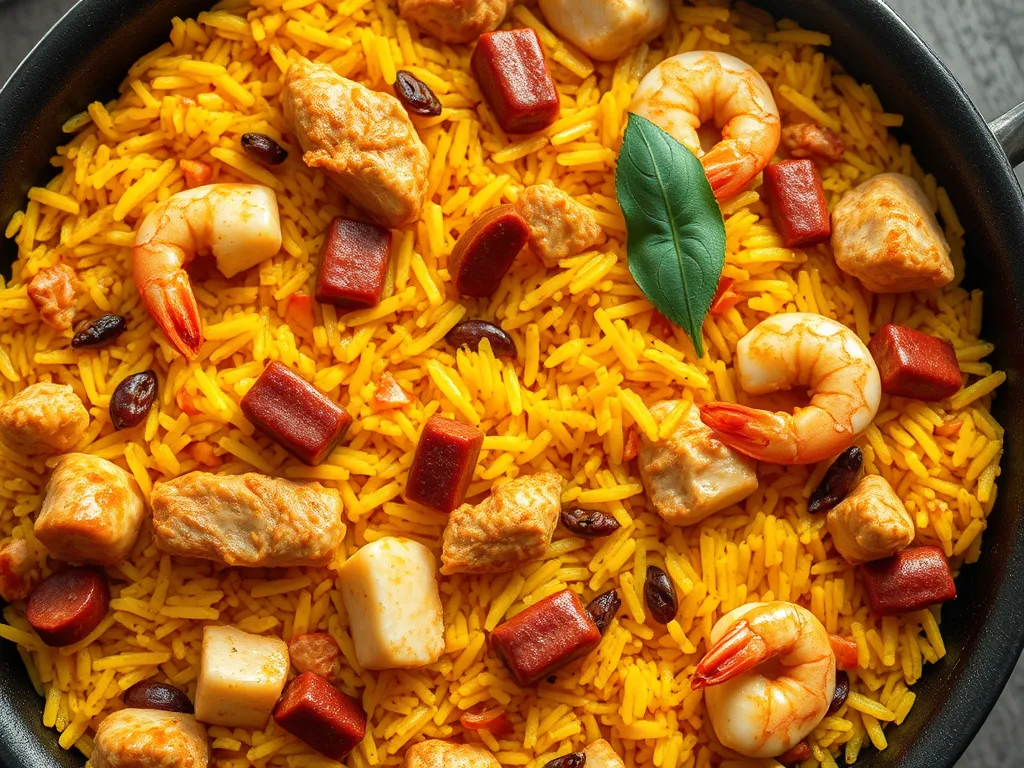
The Story Behind Spanish Paella Valenciana
Paella is Spain's most internationally famous dish — and also one of the most misunderstood. The authentic Paella Valenciana, protected by the Valencian community with ferocious regional pride, is not the seafood paella that most of the world associates with "Spanish paella." It is a rice dish made with rabbit, chicken, green beans, white beans (garrofon), ripe tomatoes, sweet paprika, saffron, and rosemary — cooked in olive oil in the wide, shallow pan that gives the dish its name (paella comes from the Latin "patella," meaning pan). The origins of paella lie in the paddy fields of Valencia's L'Albufera wetlands, where Moorish irrigation engineers had established rice cultivation in the 8th century under the Umayyad Caliphate.
What makes Paella Valenciana so fascinating is that it is both humble and fiercely protected. It began as field food, not palace food, cooked outdoors by workers who needed a filling meal from local ingredients. Yet over time, the rules around it became almost sacred. The rice matters. The pan matters. The fire matters. Even the order of cooking matters, because paella is not risotto and should not be stirred endlessly into creaminess. The goal is separate grains, deep flavor, and that prized bottom layer where the rice caramelizes against the pan.
The dish emerged as a practical field lunch for Valencian farmworkers, cooked over a wood fire with whatever ingredients were available — rabbit and snails from the surrounding land, fresh vegetables from the fields, rice from the nearby paddies. The wide, shallow paella pan was designed specifically to cook rice in a large, flat layer over open fire, producing the coveted socarrat — the caramelized, slightly crispy layer of rice at the bottom of the pan that is considered the highest achievement of paella cookery. Saffron — the world's most expensive spice by weight, made from the stigmas of Crocus sativus flowers — was brought to Spain by the Moors and became central to Spanish cooking. When Spanish emigrants spread paella to the rest of the world, the seafood version became dominant — a reasonable adaptation, but one that Valencians observe with barely concealed horror.
In my kitchen, paella is a reminder that technique can be just as important as ingredients. You build flavor first with the meat and vegetables, then let the rice absorb the broth without disturbing it too much. That restraint is hard for cooks who like to stir, but it is essential. The pan should be wide enough for the rice to cook in a thin layer, and the heat should encourage evaporation, concentration, and finally that gentle crackle at the bottom. Paella Valenciana is not just a recipe; it is a lesson in place, patience, and respect. When done well, it tastes like the land it came from — smoky, savory, golden, and deeply connected to the fields of Valencia.
What I love most about this dish is that it forces you to slow down and trust the process. You cannot bully paella into greatness. You season carefully, layer the flavors, pour in the broth, and then let the rice do what rice does. That quiet confidence is part of its beauty. A properly cooked paella brings people to the table before you ever serve it because the aroma of saffron, rosemary, paprika, and toasted rice fills the room. It is rustic, but it feels ceremonial. The pan comes straight to the table, everyone leans in, and the best bites are always the ones scraped gently from the bottom, where the socarrat has turned golden, crisp, and deeply savory.
Time and Servings:
Prep Time: 15 minutes
Cook Time: 30 minutes
Total Time: 45 minutes
Servings: 4 servings
Nutrition (per serving):
- Calories: 550 kcal
- Protein: 32g
- Fat: 28g
- Carbohydrates: 42g
- Fiber: 3g
- Sugar: 3g
- Sodium: 920mg
Ingredients
- 1 cup Arborio or Bomba rice
- 1/2 lb shrimp, peeled and deveined
- 1/2 lb chicken thighs, chopped
- 1/4 lb chorizo, sliced
- 1/4 cup olive oil
- 1 onion, finely chopped
- 1 red bell pepper, chopped
- 2 cloves garlic, minced
- 1/2 tsp saffron threads
- 1/2 cup peas
- 2 cups chicken broth
- Lemon wedges (for serving)
- Fresh parsley, chopped (for garnish)
Instructions
- Sauté Meat: Heat olive oil in a large paella pan over medium heat. Brown the chicken and chorizo for about 5 minutes, ensuring they're golden. Remove and set aside.
- Sauté Vegetables: Using the same pan, sauté onions, bell peppers, and garlic until softened and aromatic. Stir in rice and saffron threads, letting the rice absorb the flavors for about 2 minutes.
- Cook Paella: Add the chicken broth, shrimp, browned chicken, chorizo, and peas. Stir well to combine. Cover and simmer on low heat for 20-25 minutes, or until the rice is tender and the liquid has been absorbed.
- Serve: Garnish with freshly chopped parsley and serve with lemon wedges for a zesty burst of flavor.
Tips for Success
- Saffron: Toast saffron threads lightly in a dry pan before adding to intensify their flavor.
- Pan Choice: Use a traditional paella pan for even cooking. If unavailable, a large, shallow skillet will work.
- Avoid Stirring: Once the broth is added, avoid stirring the rice to achieve the characteristic crispy layer at the bottom, called socarrat.
- Ingredient Swaps: For a seafood-only version, substitute chicken and chorizo with mussels or clams.
Wine, Cocktail, or Drink Pairing
- Wine: A chilled Spanish Albariño or Verdejo complements the saffron and seafood beautifully.
- Cocktail: A light Sangria pairs well with the dish's rich flavors.
- Non-Alcoholic: Sparkling water with a twist of lemon offers a refreshing balance.