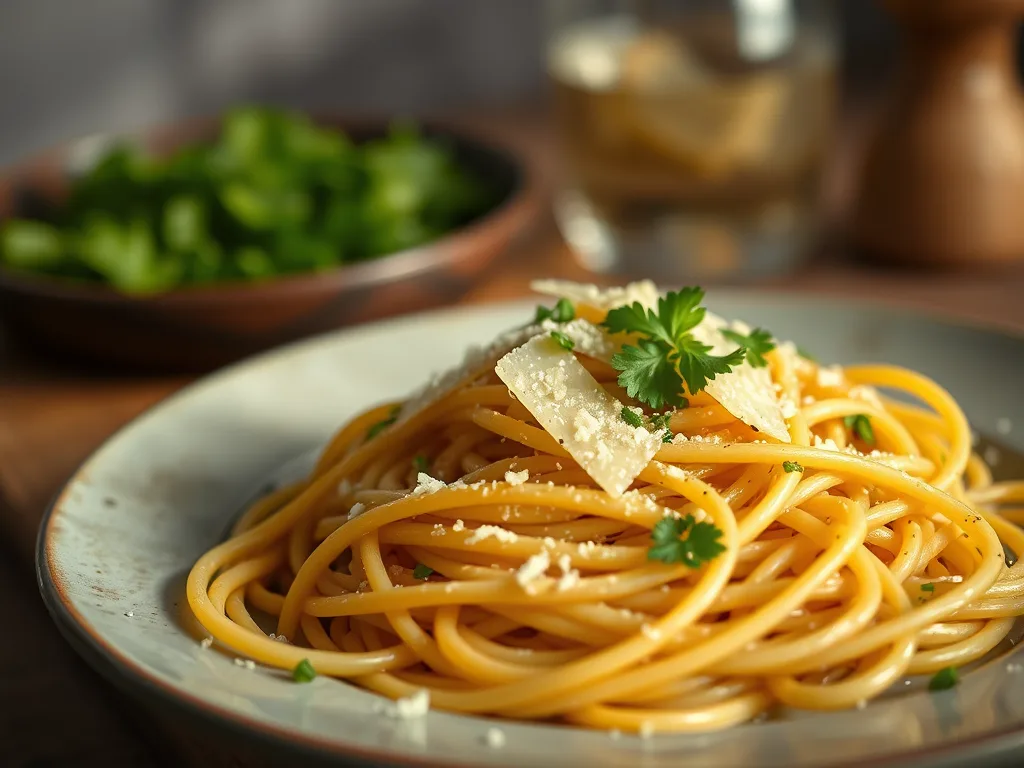
The Story Behind Spaghetti Aglio e Olio
Spaghetti aglio e olio — literally “spaghetti with garlic and oil” — is one of the purest expressions of Italian cucina povera, the tradition of “poor cooking” that transformed humble pantry ingredients into timeless dishes. Originating in Naples, this recipe became popular among working-class families because it required only a handful of inexpensive ingredients almost every household already had on hand: dried pasta, garlic, olive oil, and chili flakes. Despite its simplicity, aglio e olio has endured for centuries because it demonstrates one of the central philosophies of Italian cooking: when ingredients are high quality and treated properly, complexity becomes unnecessary.
The dish traces back to southern Italy, where olive oil has been central to daily life since Roman times. Garlic was widely used across the Mediterranean not only for flavor but for its medicinal reputation and affordability. Chili peppers, however, are a newer addition historically. They arrived in Europe from the Americas in the 16th century after the Columbian Exchange and quickly became deeply integrated into southern Italian cuisine, particularly in poorer regions where they provided inexpensive flavor and heat.
What makes spaghetti aglio e olio remarkable is how technique transforms minimal ingredients into something deeply satisfying. Garlic is gently toasted in olive oil until fragrant and lightly golden, infusing the oil without becoming bitter. Pasta water, rich with starch, emulsifies with the olive oil to create a silky sauce that clings to each strand of spaghetti. The result feels luxurious despite its humble origins.
I have always admired recipes like this because they prove that cooking does not need to be complicated to feel memorable. During long workdays or late nights, spaghetti aglio e olio became one of those dishes that could be prepared quickly while still delivering comfort and flavor. The aroma of garlic warming in olive oil instantly changes the atmosphere of a kitchen — simple, familiar, and deeply inviting.
In Italy, aglio e olio is often considered a midnight meal, the kind of pasta made after gatherings, celebrations, or evenings out when people want something comforting but effortless. It is also endlessly adaptable. Some cooks add parsley, anchovies, lemon zest, parmesan, or shrimp, while others insist the purest version should remain untouched.
Even with all its variations, the heart of the dish remains unchanged: a celebration of restraint, balance, and the idea that extraordinary food can come from ordinary ingredients. Spaghetti aglio e olio continues to endure because it captures the soul of Italian home cooking in its most honest form — simple, comforting, and made to be shared.
Time and Servings:
- Prep Time: 5 minutes
- Cook Time: 15 minutes
- Total Time: 20 minutes
- Servings: 4 servings
Nutrition (per serving):
- Calories: 400 kcal
- Protein: 10g
- Fat: 18g
- Carbohydrates: 50g
- Fiber: 3g
- Sugar: 2g
- Sodium: 220mg
Ingredients:
- 12 oz spaghetti (use gluten-free if necessary)
- 1/4 cup olive oil
- 6 cloves garlic, thinly sliced
- 1/2 tsp red pepper flakes
- Salt and pepper, to taste
- Fresh parsley, chopped (for garnish)
- Grated Parmesan (optional)
Instructions:
1. Cook Spaghetti:
- Bring a large pot of salted water to a rolling boil. Add the spaghetti and cook until al dente, following package instructions.
- Reserve 1/2 cup of the pasta cooking water, then drain the spaghetti and set it aside.
2. Sauté Garlic:
- In a large skillet, heat olive oil over medium heat.
- Add the thinly sliced garlic and sauté until golden and fragrant, about 2 minutes. Be careful not to let the garlic burn, as it will become bitter.
3. Add Red Pepper Flakes:
- Stir in the red pepper flakes and cook for another 30 seconds, infusing the oil with a subtle spicy kick.
4. Combine with Pasta:
- Lower the heat and add the cooked spaghetti to the skillet. Toss the pasta in the garlic oil until evenly coated.
- Gradually add the reserved pasta water as needed to loosen the sauce and create a silky texture.
5. Season and Serve:
- Season with salt and freshly ground black pepper to taste.
- Garnish with chopped parsley and, if desired, sprinkle grated Parmesan over the top.
Tips for Success:
- Choose High-Quality Olive Oil:
- Since olive oil is a key flavor component, opt for high-quality extra-virgin olive oil for the best taste.
- Mind the Garlic:
- Slice the garlic thinly and sauté it gently. Avoid high heat to prevent burning, which can ruin the dish's flavor.
- Al Dente Pasta is Key:
- Cook the spaghetti until al dente for the perfect texture. The reserved pasta water helps finish cooking the pasta in the sauce.
- Customize the Spice Level:
- Adjust the amount of red pepper flakes to suit your heat preference.
- Enhance with Add-Ins:
- For added flavor, consider tossing in cooked shrimp, sautéed mushrooms, or a handful of fresh spinach at the end.
- Use the Pasta Water Wisely:
- Adding pasta water gradually helps emulsify the oil and coat the spaghetti evenly.
Wine, Cocktail, or Drink Pairing:
- Pair this pasta with a dry Pinot Grigio, a classic Negroni, or a refreshing sparkling lemon water.
This classic recipe is a testament to the beauty of simplicity, offering bold flavors with just a handful of ingredients. Buon appetito!