The Story Behind South African Bobotie
Bobotie is South Africa's national dish — a fragrant, mildly spiced baked minced meat casserole topped with an egg custard, and one of the most compelling examples of culinary fusion in the world. Its origins lie in the Cape Colony of the 17th century, when the Dutch East India Company (VOC) established a refreshment station at the Cape of Good Hope in 1652. The VOC brought enslaved people from their trading posts in Malaysia, Indonesia, India, Bengal, and Madagascar to serve the colony, and these people brought with them the spices and cooking techniques of Southeast Asia and the Indian Ocean. The name "bobotie" likely derives from the Indonesian and Malay "bobotok" — a similar spiced dish — reflecting the Malay-Indonesian origins of the Cape Malay community that formed in early Cape Town.
The Cape Malay community created one of the world's most distinctive food cultures, blending Malay, Indonesian, and South Asian spicing (turmeric, curry, ginger, cardamom, tamarind) with Dutch cooking techniques (the egg custard topping, the baking dish) and local South African ingredients. Bobotie's combination of sweet and savory — dried apricots or raisins in the meat mixture, the sweet-spiced aroma of curry and bay leaf — reflects both the medieval sweet-savory tradition brought from Southeast Asia and the practical reality of Cape cooking, where imported spices were mixed with whatever was available locally. Today bobotie is a UNESCO World Food Programme-recognized heritage dish, and it represents the story of South Africa's complex, multicultural identity in a single, fragrant baking dish.
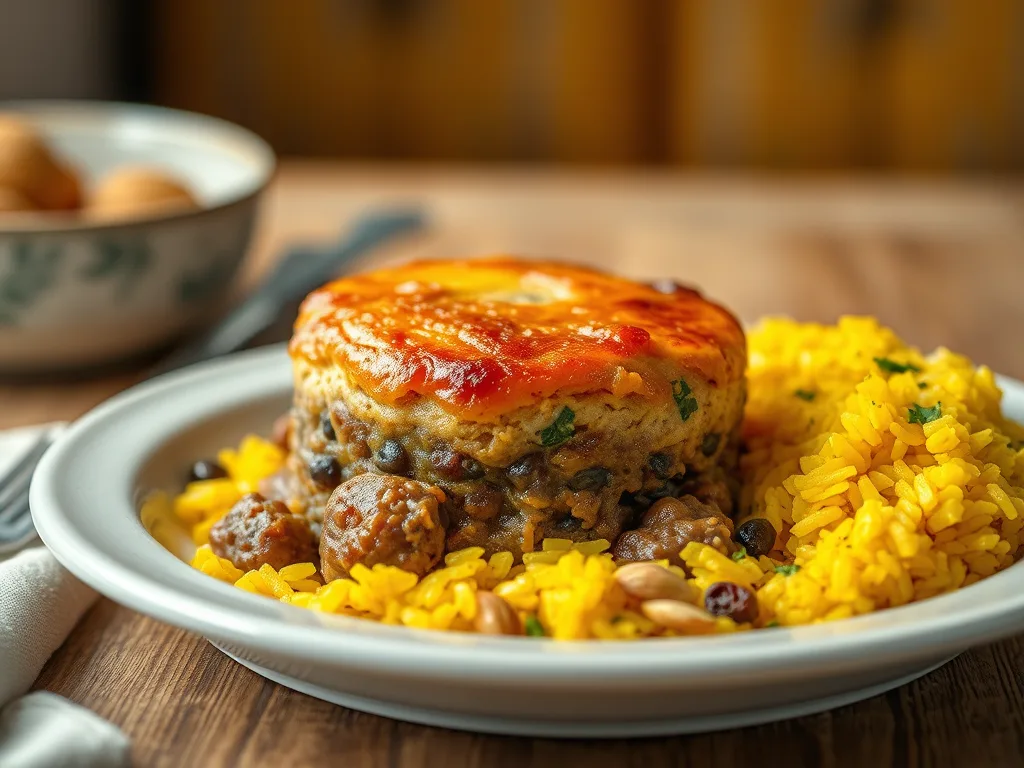
What makes bobotie so interesting to me is that it looks like a simple casserole, but the flavor tells a much bigger story. The meat is savory, the spices are warm rather than fiery, the dried fruit adds little bursts of sweetness, and the custard topping bakes into a soft golden layer that makes the dish feel comforting and complete. It is not a curry in the usual sense, and it is not a meatloaf either. It sits in its own beautiful category, shaped by migration, hardship, adaptation, and family cooking.
The yellow rice served alongside is more than a side dish. Turmeric gives it color, raisins often echo the sweetness in the bobotie, and the rice catches every bit of the spiced meat. As Chef Ruben, I love meals like this because they remind us that comfort food can carry complicated history while still bringing people together at the table. Bobotie is warm, aromatic, practical, and deeply human — a dish that turns a baking dish into a story of cultures meeting and creating something enduring.
Time and Servings:
Prep Time: 15 minutes
Cook Time: 55 minutes
Total Time: 1 hour 10 minutes
Servings: 4 servings
Nutrition (per serving):
Calories: 520 kcal
Protein: 28g
Fat: 28g
Carbohydrates: 44g
Fiber: 3g
Sugar: 13g
Sodium: 450mg
Ingredients:
- For the Bobotie:
- 1 lb ground beef
- 1 onion, chopped
- 2 cloves garlic, minced
- 1 tbsp curry powder
- 1/2 cup raisins
- 1/4 cup almonds, sliced
- 2 slices white bread, soaked in milk
- 2 eggs
- 1/4 cup milk (for custard)
- 1 tbsp chutney
- For the Yellow Rice:
- 1 cup basmati rice
- 1 tsp turmeric
- 1 tbsp butter
Instructions:
- Prepare the Bobotie:
- In a large skillet, heat oil and sauté onions and garlic until softened. Add curry powder and cook for 1 minute until fragrant.
- Stir in ground beef, cooking until browned. Mix in raisins, almonds, soaked bread (squeezed of excess milk), and chutney. Season with salt and pepper.
- Bake the Bobotie:
- Transfer the beef mixture to a greased baking dish. Beat 2 eggs with 1/4 cup milk to make the custard and pour it over the beef mixture.
- Bake in a preheated oven at 350°F (175°C) for 30-35 minutes until the custard is set and golden brown.
- Cook the Yellow Rice:
- In a saucepan, combine basmati rice, 2 cups water, turmeric, and butter. Bring to a boil, then reduce heat to low, cover, and simmer for 15-20 minutes until rice is tender and fluffy.
- Serve:
- Serve slices of the Bobotie with yellow rice on the side. Garnish with fresh cilantro or additional chutney if desired.
Tips for Success:
- Customize Spices: Add a pinch of cayenne for extra heat or adjust curry powder for a milder flavor.
- Raisin Alternatives: Substitute dried apricots or cranberries for a fruity variation.
- Bread Substitution: Use gluten-free bread if needed or mashed potatoes for a softer texture.
Wine, Cocktail, Drink Pairing:
Pair this dish with a fruity Chenin Blanc or a refreshing light lager. For a non-alcoholic option, try an aromatic Rooibos iced tea with a splash of lemon.