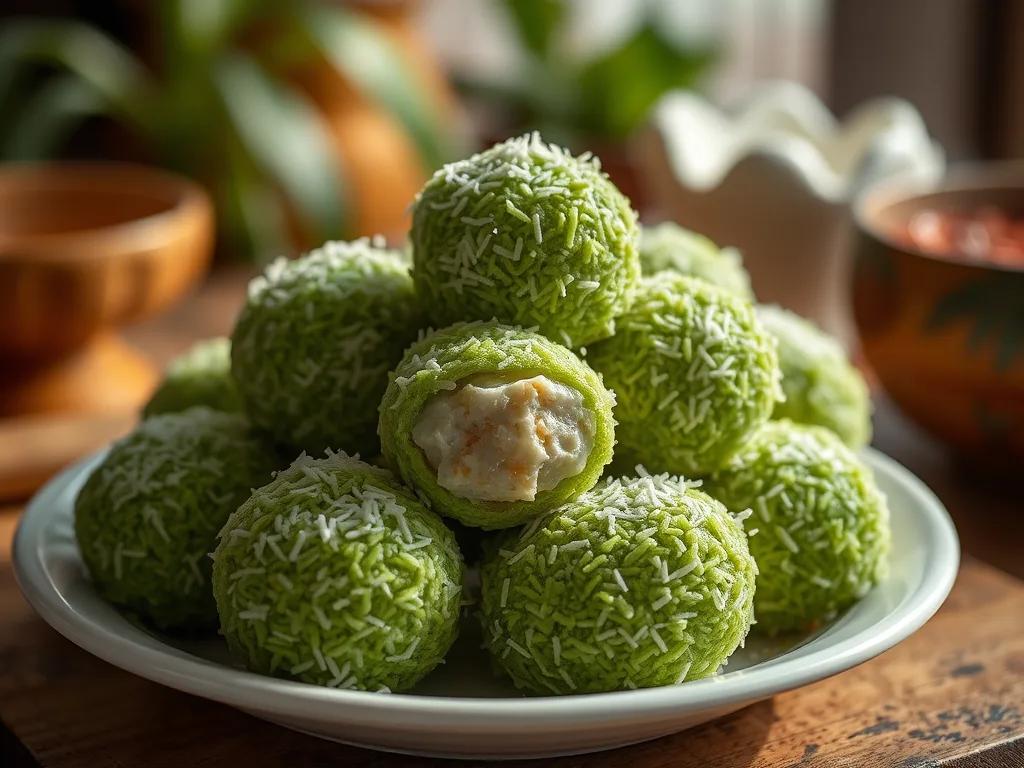
The Story Behind Singaporean Ondeh-Ondeh
Ondeh-ondeh, also spelled onde-onde, is one of Singapore and Malaysia's most iconic confections — a small green glutinous rice ball filled with molten gula melaka, rolled in freshly grated coconut, with a pop of liquid sweetness when bitten. Nearly identical to the Javanese klepon, ondeh-ondeh reflects the extraordinary culinary interconnections of maritime Southeast Asia, where Austronesian peoples have traded, migrated, and intermarried across a vast archipelago for thousands of years, carrying food traditions with them. The pandan leaf that colors the balls vivid green and gives them their characteristic vanilla-like fragrance grows throughout tropical Southeast Asia and is as central to the region's sweet foods as vanilla is to Western pastry. That pandan aroma is one of the things that makes ondeh-ondeh so instantly recognizable: grassy, floral, warm, and comforting all at once.
In Singapore, ondeh-ondeh is closely associated with Peranakan, or Nyonya, cuisine — the sophisticated hybrid culinary culture of Straits Chinese communities who blended Chinese, Malay, and Dutch colonial influences into something entirely unique. Making ondeh-ondeh was one of the kuih skills by which Peranakan women demonstrated their domestic excellence, and the confection was made in large quantities for weddings, birthdays, and festivals. Gula melaka — the dark, fragrant palm sugar made from the sap of the coconut palm — is not interchangeable with regular sugar; its complex, slightly smoky, caramel-like sweetness is fundamental to the ondeh-ondeh experience. Singapore has designated the Peranakan culinary tradition, including ondeh-ondeh, as part of its intangible cultural heritage, recognizing its importance to the nation's multicultural identity. From Chef Ruben’s kitchen, I love how much meaning can fit into one small bite. This is not just a sweet rice ball. It is texture, surprise, fragrance, and heritage all wrapped together.
The magic of ondeh-ondeh is in the burst. The dough must be soft and chewy enough to hold the filling, but not so thick that the palm sugar disappears. When the balls boil, the gula melaka melts inside, creating that signature liquid center. Then they are rolled in fresh grated coconut, which adds softness, richness, and a little savory balance. The technique requires gentle hands. If the dough cracks, the sugar leaks out. If the filling pieces are too large, the ball can burst during boiling. If the coconut is dry, the final texture loses some of its charm. I like to think of ondeh-ondeh as a lesson in small details. Fresh pandan gives the best color and fragrance, but pandan extract can help in a home kitchen. Glutinous rice flour gives the chewy texture, and a pinch of salt in the coconut makes the sweetness pop. These little sweets are often served as part of a larger kuih spread, where colors, shapes, and textures matter as much as flavor. They are playful, but they are not childish. They are refined in the way traditional sweets often are: simple ingredients, careful technique, and a result that feels joyful. When you bite into one and the warm palm sugar bursts across your tongue, you understand why ondeh-ondeh has traveled through generations. It is a tiny dessert with a big personality. I also love that it is meant to be eaten fresh, almost immediately, while the coconut is tender and the filling is still soft. That freshness makes it feel alive — a little green jewel of Southeast Asian sweetness, made to be shared, admired, and enjoyed in one unforgettable bite.
Time and Servings:
- Prep Time: 15 minutes
- Cook Time: 10 minutes
- Total Time: 25 minutes
- Servings: 15 pieces
Nutrition (per serving):
- Calories: 60 kcal
- Protein: 1g
- Fat: 1g
- Carbohydrates: 12g
- Fiber: 0g
- Sugar: 6g
- Sodium: 5mg
Ingredients:
- For the Dough:
- 1 cup glutinous rice flour
- 1/2 cup water
- For the Filling:
- 1/2 cup gula melaka (palm sugar), chopped into small pieces
- For Coating:
- 1/2 cup grated coconut
Instructions:
- Make Dough:
- In a medium bowl, mix the glutinous rice flour with water. Knead the mixture until it forms a smooth and pliable dough. If the dough is dry, add water gradually, a teaspoon at a time.
- Assemble Ondeh Ondeh:
- Pinch off a small piece of dough and flatten it into a disc about the size of a coin.
- Place a small piece of chopped palm sugar in the center. Wrap the dough around the sugar and seal the edges to form a smooth ball. Repeat with the remaining dough and sugar.
- Cook Rice Balls:
- Bring a pot of water to a boil. Carefully drop the rice balls into the boiling water.
- Cook for 3-5 minutes, or until the balls float to the surface, which indicates they are done.
- Use a slotted spoon to remove the cooked balls and drain well.
- Coat and Serve:
- Roll the warm rice balls in grated coconut, ensuring they are fully coated.
- Serve the Ondeh Ondeh warm for the best texture and flavor.
Tips for Success:
- Coconut Freshness: Use freshly grated coconut for an authentic texture and flavor. Lightly steam or salt the coconut to preserve freshness.
- Gula Melaka Options: If palm sugar is unavailable, brown sugar or jaggery can be substituted, though the flavor will differ slightly.
- Storage: Ondeh Ondeh is best served fresh but can be stored in an airtight container for up to a day.
Wine, Cocktail, or Drink Pairing:
- Pair Ondeh Ondeh with a hot cup of ginger tea or pandan-infused tea for a comforting, harmonious experience.