The Story Behind Roasted Brussels Sprouts with Balsamic Glaze
Balsamic-glazed Brussels sprouts represent the complete redemption of a vegetable that spent decades as the symbol of foods children were forced to eat. Brussels sprouts belong to the Brassica family — one of the oldest cultivated plant groups, eaten by ancient Romans and Greeks — but the Brussels sprout specifically was first developed in Belgium in the 16th century. Their terrible reputation came from decades of boiling, which releases bitter sulfurous compounds and turns them mushy. For years, people thought they hated Brussels sprouts when what they really hated was the way they were cooked. Once cooks started roasting them at high heat, everything changed. The same little vegetable that once smelled harsh and tasted bitter became crispy, nutty, browned, and sweet around the edges.
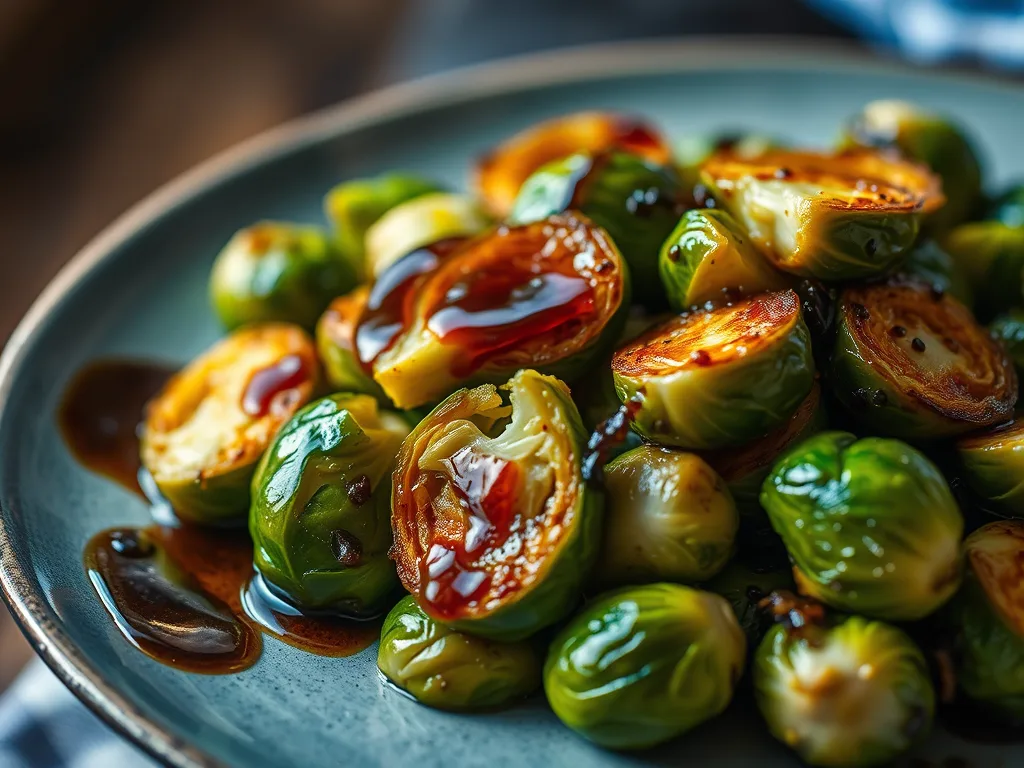
The roasting revolution changed everything: high-heat oven roasting caramelizes the outer leaves to a crispy, nutty sweetness that bears no resemblance to the boiled version. Balsamic vinegar — made from concentrated grape must in Modena and Reggio Emilia, Italy — adds a rich, sweet-tart complexity that elevates roasted Brussels sprouts to something genuinely craveable. Together they represent the meeting of Belgian agriculture, Italian tradition, and modern American cooking wisdom. From Chef Ruben’s kitchen, this is one of those Thanksgiving sides that earns its place because it gives the table contrast. It is green, glossy, tangy, slightly sweet, and crisp at the edges. On a holiday plate full of gravy, stuffing, potatoes, and casseroles, that contrast matters more than people realize. It keeps the meal from feeling too heavy.
The technique is straightforward but important. Cut the sprouts in half so the flat side can make contact with the hot pan. Use enough oil to coat them, but not so much that they feel greasy. Spread them out in a single layer because crowding causes steam, and steam is the enemy of crisp edges. Salt them before roasting so the flavor goes all the way through. The balsamic glaze should usually be added near the end or after roasting, because too much sugar in the oven can burn before the sprouts are tender. A good glaze should cling lightly, not drown the vegetables. You can keep the recipe simple or add toasted pecans, Parmesan, crispy bacon, garlic, shallots, dried cranberries, or red pepper flakes. I like to finish with a tiny splash of acid or extra glaze right before serving to wake everything up.
What makes this dish work so well for Thanksgiving is that it feels special without demanding too much attention. You can trim the sprouts ahead, make or buy the glaze, and roast them while other dishes rest. They are elegant enough for a holiday table but easy enough for a weeknight dinner. The browned leaves are the prize, so do not throw away every loose leaf when trimming; some of them crisp up like little chips. If you want a deeper savory note, add garlic or Parmesan. If you want more holiday color, add dried cranberries after roasting. These Brussels sprouts can sit beside turkey and stuffing, but they also work with steak, chicken, salmon, or pasta. They prove that one great cooking method and one great finishing ingredient can completely transform a vegetable’s reputation.
I also like this recipe because it gives people an easy way to add freshness and color to a holiday spread without making another heavy casserole. The balsamic glaze brings enough sweetness to feel festive, but the vinegar keeps it lively. For the best results, taste before serving. A tiny pinch of salt, a little pepper, or one more drizzle of glaze can make the difference between good and memorable. If the sprouts come out softer than you wanted, let them roast a few extra minutes before glazing. Crisp edges are worth waiting for. This is the kind of side dish that converts skeptics because it does not taste like obligation. It tastes like caramelized vegetables, sweet acidity, and smart cooking.
Time and Servings:
- Prep Time: 10 minutes
- Cook Time: 25 minutes
- Total Time: 35 minutes
- Servings: 6 servings
Nutrition (per serving):
- Calories: 130 kcal
- Protein: 4g
- Fat: 8g
- Carbohydrates: 12g
- Fiber: 4g
- Sodium: 150mg
Ingredients:
- 1 lb Brussels sprouts, halved
- 2 tbsp olive oil
- Salt and pepper, to taste
- 2 tbsp balsamic vinegar
- 1 tbsp honey
Instructions:
- Preheat the Oven:
- Preheat your oven to 400°F (200°C).
- Line a baking sheet with parchment paper for easy cleanup.
- Prepare the Brussels Sprouts:
- In a large mixing bowl, toss the halved Brussels sprouts with 2 tbsp of olive oil, a generous pinch of salt, and freshly ground black pepper.
- Spread the Brussels sprouts in a single layer on the prepared baking sheet, ensuring they are not overcrowded.
- Roast the Brussels Sprouts:
- Place the baking sheet in the preheated oven and roast for 20-25 minutes, stirring halfway through to ensure even browning.
- The sprouts are ready when they are crispy on the edges and tender in the center.
- Make the Balsamic Glaze:
- While the Brussels sprouts are roasting, prepare the glaze.
- In a small saucepan, combine 2 tbsp of balsamic vinegar and 1 tbsp of honey.
- Simmer over low heat for about 5 minutes, stirring occasionally, until the mixture thickens slightly and becomes syrupy.
- Combine and Serve:
- Once the Brussels sprouts are roasted, transfer them to a serving dish.
- Drizzle the balsamic glaze over the top and toss gently to coat.
- Serve warm as a flavorful and elegant side dish for Thanksgiving or any special occasion.
Tips for Success
- Crispy Roasting: Ensure Brussels sprouts are spread in a single layer on the baking sheet to allow for even roasting and achieve maximum crispiness.
- Avoid Crowding: Do not overcrowd your baking sheet; use two sheets if necessary to prevent steaming and encourage browning for a better texture.
- Glaze Timing: Add the balsamic glaze mixture only after roasting to prevent it from burning and to maintain its sweet, tangy flavor.
- Honey Alternative: For a vegan option or different sweetness, substitute the honey with an equal amount of maple syrup or agave nectar in the glaze.
- Store Leftovers: Store cooled leftovers in an airtight container in the refrigerator for up to 3 days, reheating gently in an oven or air fryer.
Wine, Cocktail, or Drink Pairing:
- Pair this side dish with a light and crisp Pinot Grigio, a fruity Zinfandel, or a festive sparkling cranberry spritzer.