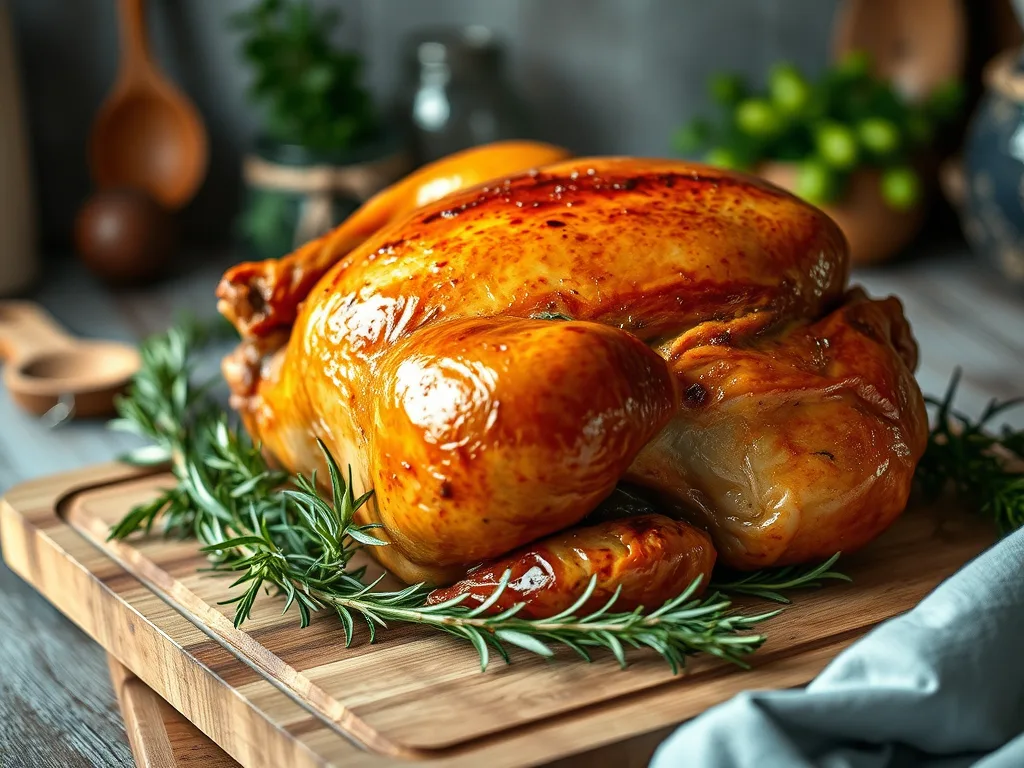
The Story Behind Roast Turkey with Herb Butter
Roast Turkey has been the centerpiece of American Thanksgiving since the holiday was formalized, but the bird's connection to the feast goes back much further. The wild turkey is native to North America, and the Wampanoag people had been hunting and consuming it for centuries before European contact. The 1621 harvest celebration at Plymouth Colony — now regarded as the "first Thanksgiving" — almost certainly included wild birds, though historical records suggest venison was the primary protein.
By the time Sarah Josepha Hale successfully campaigned for Thanksgiving to become a national holiday in 1863, turkey had cemented its place as the symbolic centerpiece. The herb butter technique — rubbing compound butter under and over the skin — was popularized in the late 20th century by American cooking authorities like Julia Child and James Beard, who advocated for basting and flavoring turkey as properly as any French roast. It is the method that transforms the often-dry Thanksgiving turkey into something genuinely magnificent.
What makes herb butter so effective is that it solves two problems at once: flavor and moisture. Turkey breast meat is lean, which means it needs help staying juicy. Sliding softened butter under the skin lets the fat melt directly into the meat while herbs, garlic, lemon zest, or shallots perfume the bird from the inside out. Rubbing more butter over the skin encourages browning, helping create that golden holiday centerpiece everyone wants to see when the platter comes out.
As Chef Ruben, I think turkey is less about showing off and more about care. A good roast turkey starts before it enters the oven: thawing properly, seasoning generously, drying the skin, and letting the bird cook evenly. Resting is just as important as roasting because the juices need time to settle. When done right, the turkey becomes tender, aromatic, and worthy of the table it anchors. Thanksgiving is full of side dishes, but the turkey still carries the ceremony. Herb butter gives it the flavor, shine, and respect it deserves.
The biggest lesson with turkey is that small steps add up. Dry skin browns better. A meat thermometer prevents guesswork. Aromatics in the cavity perfume the bird without overpowering it. Resting before carving keeps the slices juicy instead of dry. I love that herb butter gives home cooks a reliable way to make turkey feel special without complicated tricks. It is classic, practical, and exactly the kind of technique that turns Thanksgiving stress into confidence.
Time and Servings:
- Prep Time: 15 minutes
- Cook Time: 3 hours
- Total Time: 3 hours 15 minutes
- Servings: 10 servings
Nutrition (per serving):
- Calories: 400 kcal
- Protein: 45g
- Fat: 25g
- Carbohydrates: 3g
- Fiber: 0g
- Sodium: 800mg
Ingredients:
- 1 whole turkey (12-14 lbs)
- 1/2 cup unsalted butter, softened
- 2 tbsp fresh rosemary, chopped
- 2 tbsp fresh thyme, chopped
- 1 tbsp garlic, minced
- Salt and pepper, to taste
- 1 lemon, quartered
- 1 onion, quartered
- 2 cups chicken broth
Instructions (Detailed & Thorough):
- Preheat the Oven:
- Preheat your oven to 325°F (160°C).
- Position a rack in the lower third of the oven to allow room for the turkey.
- Prepare the Herb Butter:
- In a small mixing bowl, combine 1/2 cup of softened unsalted butter, 2 tbsp of chopped rosemary, 2 tbsp of chopped thyme, 1 tbsp of minced garlic, and a generous pinch of salt and pepper. Mix until well combined.
- Butter the Turkey:
- Pat the turkey dry with paper towels.
- Carefully loosen the skin over the turkey breast by sliding your hand under it, being careful not to tear it.
- Spread the herb butter generously under the skin, over the skin, and on the legs and wings.
- Stuff the cavity with the quartered lemon and onion for added flavor.
- Prepare for Roasting:
- Place the turkey breast-side up in a large roasting pan fitted with a rack.
- Pour 2 cups of chicken broth into the bottom of the pan to keep the turkey moist.
- Roast the Turkey:
- Roast the turkey in the preheated oven for about 3 hours, or until the internal temperature reaches 165°F (74°C) in the thickest part of the breast and 175°F (80°C) in the thigh.
- Baste the turkey with pan drippings every 30 minutes to keep the skin golden and crispy.
- Rest and Serve:
- Remove the turkey from the oven and tent it with aluminum foil. Let it rest for 20 minutes before carving to allow the juices to redistribute.
- Carve the turkey and serve with your favorite sides.
Tips for Success
- Butter Application: Gently separate the skin from the breast meat to generously spread the herb butter directly onto the meat for maximum flavor and moisture.
- Even Roasting: Rotate the turkey halfway through roasting and tent with foil if browning too quickly to ensure an evenly golden skin and moist meat.
- Rest Properly: Allow the roasted turkey to rest for at least 20-30 minutes before carving; this redistributes the juices, ensuring a tender and flavorful result.
- Check Temperature: Insert an instant-read thermometer into the thickest part of the thigh, avoiding bone, to confirm the turkey reaches a safe internal temperature of 165F.
- Add Broth: Pour chicken broth into the bottom of the roasting pan to keep the turkey moist and to create flavorful pan drippings for gravy.
Wine, Cocktail, or Drink Pairing:
- Pair this roast turkey with a crisp Chardonnay, a fruity Pinot Noir, or a warm spiced cider for a perfect holiday pairing.