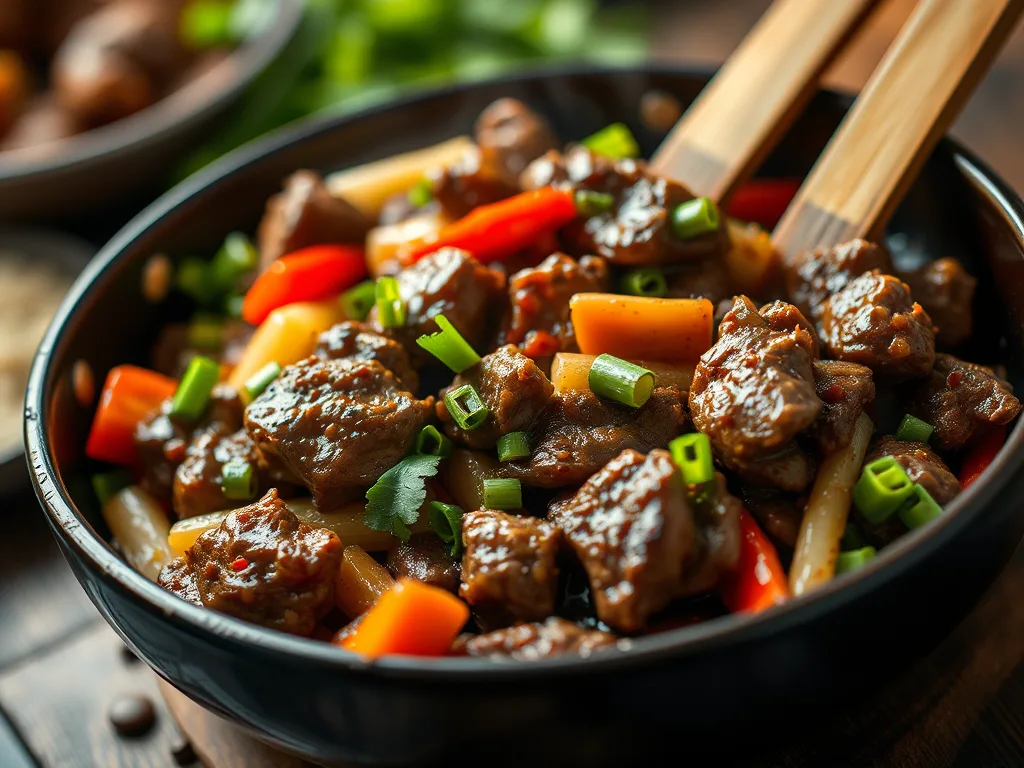
The Story Behind Beef Stir-Fry
Stir-frying — the technique of cooking ingredients rapidly in a very hot wok with constant movement — is one of the most sophisticated and demanding cooking methods in the world, despite its deceptively quick execution. The wok itself is a Chinese invention with a history of at least 2,000 years, developed during the Han Dynasty as a multi-purpose vessel that could be used for stir-frying, steaming, deep-frying, smoking, and boiling. The technique requires both extremely high heat — professional wok burners produce 50,000 to 200,000 BTU, far beyond any home stove — and extremely rapid movement to prevent burning. The coveted "wok hei" (literally "breath of the wok") — a smoky, caramelized quality that defines great stir-fried food — is produced by the Maillard reaction occurring simultaneously across the wok's entire surface at temperatures that most Western cooking methods never achieve.
Beef stir-fry reached Western audiences primarily through Chinese immigrant cooking in America, beginning with the Gold Rush era of the 1850s, when Chinese laborers established the first Chinese restaurants in California. The Chinese-American beef and broccoli that became a staple of every American Chinese restaurant is a direct descendant of Cantonese stir-fry traditions from Guangdong province, adapted to American tastes and American ingredients. The "quick and easy" stir-fry of the home kitchen sacrifices some wok hei in exchange for accessibility, but the fundamental appeal remains: a complete, nutritious, genuinely satisfying meal assembled in under fifteen minutes, from a tradition with two thousand years of perfection behind it.
Origin of the Recipe:
I”ll be honest — this recipe isn”t a deeply guarded family secret or passed down from generations. It's a product of practicality, culture, and global influence. The beef stir-fry with mixed vegetables you”re about to make has roots that reach back thousands of years to ancient China, where stir-frying was born as a way to cook food quickly over high heat while preserving nutrients.
Back then, it was about survival and resourcefulness — limited fuel meant fast cooking was essential. Over time, this method spread through Asia and eventually made its way into Western kitchens, transforming into the quick, crowd-pleasing dinner we all know today.
I first came across this dish during my long workweeks in IT. I needed something fast, healthy-ish, and flavorful that didn”t come out of a takeout box. Stir-fry became my go-to. One pan, one burner, and whatever veggies I had on hand — a simple formula that made me feel like I could cook and be productive at the same time.
This version isn”t trying to be authentically Chinese, Thai, or anything else — it”s a nod to a time-tested technique that”s been borrowed, adapted, and loved by cooks around the world. And now, I”m passing it to you.
Time and Servings:
- Prep Time: 15 minutes
- Cook Time: 15 minutes
- Total Time: 30 minutes
- Servings: 4 servings
Nutrition (per serving):
- Calories: 380 kcal
- Protein: 28g
- Fat: 18g
- Carbohydrates: 30g
- Fiber: 4g
- Sugar: 5g
- Sodium: 950mg
Ingredients:
- Main Ingredients:
- 1 lb beef sirloin, thinly sliced
- 2 tbsp soy sauce
- 1 tbsp oyster sauce
- 1 tbsp ginger, grated
- 2 cloves garlic, minced
- 1 tbsp vegetable oil
- 1 red bell pepper, sliced
- 1 broccoli head, cut into florets
- 2 carrots, sliced
- 1 onion, thinly sliced
- For Garnish and Sauce:
- 1 tsp sesame oil
- 1 tsp cornstarch mixed with 2 tbsp water (optional, for thickening)
- To Serve:
- 2 cups cooked rice
Instructions:
Marinate the Beef:
In a medium bowl, mix soy sauce, oyster sauce, ginger, and garlic. Add the thinly sliced beef and coat thoroughly. Let it marinate for 10 minutes while preparing the vegetables.
Heat the Skillet or Wok:
Heat 1 tbsp vegetable oil over medium-high heat in a large skillet or wok until hot.
Sear the Beef:
Add the marinated beef in a single layer and stir-fry for 2–3 minutes until browned (do not overcrowd). Remove the beef and set aside.
Stir-Fry the Vegetables:
In the same pan, add onion, red bell pepper, broccoli florets, and carrots. Stir-fry for 5–7 minutes, or until the vegetables are tender-crisp.
Return the Beef to the Pan:
Add the beef back to the skillet with the veggies. Stir everything together and cook for another 2 minutes to combine flavors.
Thicken the Sauce (Optional):
If a thicker sauce is desired, stir in the cornstarch slurry (1 tsp cornstarch + 2 tbsp water) and cook for 1 minute, stirring constantly.
Add Sesame Oil and Serve:
Drizzle 1 tsp sesame oil over the stir-fry, stir gently, and remove from heat.
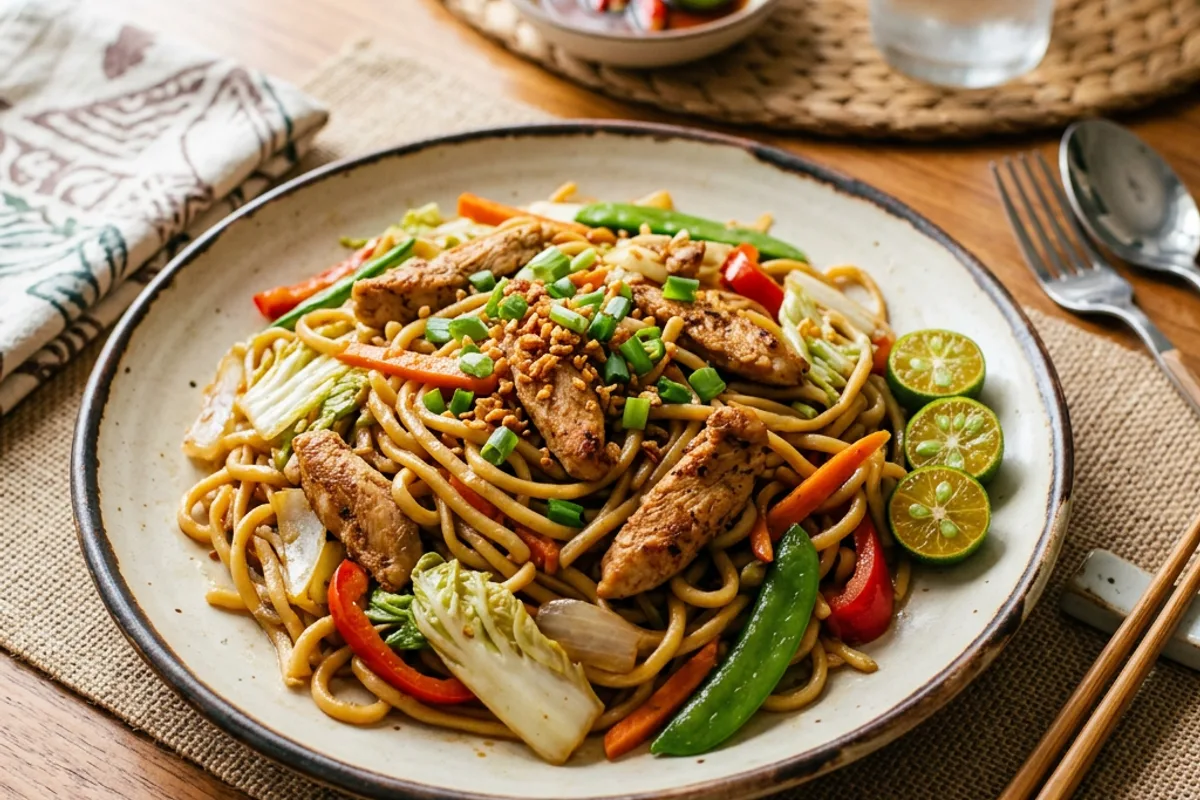
Serve hot over steamed rice, garnished with green onions or sesame seeds if desired.
Serve:
Serve the stir-fry hot over steamed rice. Garnish with green onions or sesame seeds for added flavor.
Tips for Success:
- Slice the Beef Thinly: Freeze the beef for 15 minutes before slicing to make thin cuts easier. Always slice against the grain for tenderness.
- Prep Ingredients First: Stir-frying is quick, so have all ingredients prepared and within reach before starting.
- High Heat is Key: Use medium-high to high heat for proper searing and flavor development.
- Customize Veggies: Substitute or add vegetables like snap peas, mushrooms, or baby corn for variety.
- Don”t Overcrowd the Pan: Cook in batches if necessary to ensure even cooking.
Wine, Cocktail, or Drink Pairing:
- Pair this stir-fry with a smooth Pinot Noir, a refreshing Lychee Ginger Mule, or a cold jasmine iced tea.
Tips for Success
Pair this dish with a chilled glass of dry Riesling or a crisp sparkling water with a splash of lime.
”“Updated on July 25, 2025 for improved formatting and user experience.”