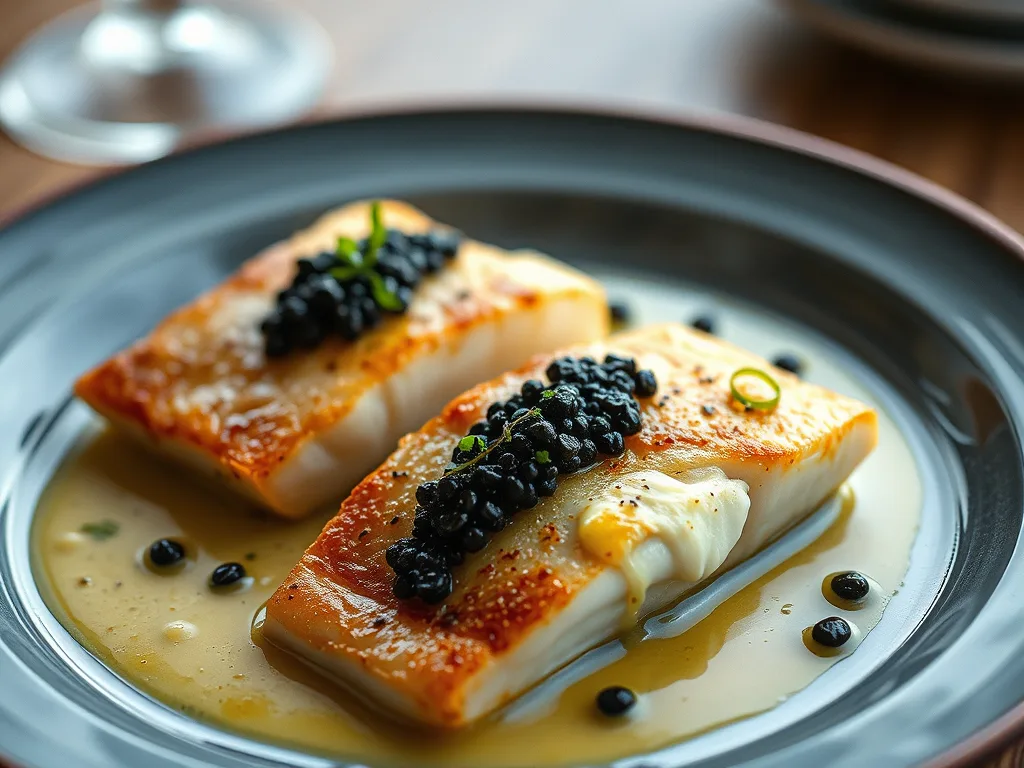
The Story Behind Pan-Seared Turbot with Caviar Beurre Blanc — Elegant Seafood
Pan-Seared Turbot with Caviar Beurre Blanc represents classical French haute cuisine at its most refined — a dish that combines one of Europe's most prized flatfish with the most luxurious garnish in the world and one of the great French butter sauces. Turbot (Psetta maxima) has been the most coveted flatfish in European fine dining for centuries — its firm, snow-white flesh and delicate sweetness made it a fish for kings, literally: Henri III of France reportedly interrupted a meeting of the Estates-General to ensure a turbot was properly sauced. The beurre blanc (white butter sauce) was created in the Loire Valley of France in the early 20th century — a happy accident that produced a sauce of extraordinary lightness, built entirely on emulsified butter.
Caviar — salted sturgeon roe, prized since the 12th century by Russian and Persian royalty — adds a salty, oceanic, elegantly indulgent dimension. Together, these three elements create a dish that is synonymous with French fine dining at its most accomplished.
What makes this dish so elegant is restraint. Turbot has a delicate sweetness and firm texture, so it does not need aggressive seasoning. A careful sear gives the fish a lightly golden surface while keeping the inside moist and clean-tasting. The beurre blanc brings acidity and richness at the same time: wine or vinegar reduced with shallots, then whisked with butter until glossy and smooth. It is a sauce that feels luxurious without being heavy when made correctly.
The caviar should be added gently at the end so its pearls stay intact and its briny pop remains fresh. Too much heat would dull its character. As Chef Ruben, I appreciate dishes like this because they teach precision. Every element matters: the pan temperature, the timing of the fish, the balance of the sauce, and the final garnish. It is not everyday cooking, but it is the kind of plate that makes a special dinner feel unforgettable — refined, oceanic, buttery, and unmistakably French.
This is also a dish that reminds me how luxury ingredients still need discipline. Expensive seafood and caviar do not automatically make a plate great; the technique has to protect them. The sauce should be warm but not broken, the fish should be rested just enough to stay juicy, and the garnish should enhance rather than dominate. When everything is handled with care, the result is quiet, graceful, and deeply memorable — the kind of seafood dish that feels like a celebration without needing to shout.
Time and Servings:
- Prep Time: 5 minutes
- Cook Time: 15 minutes
- Total Time: 20 minutes
- Servings: 4
Nutrition (per serving):
- Calories: 390 kcal
- Protein: 26g
- Fat: 30g
- Carbohydrates: 2g
- Fiber: 0g
- Sugar: 1g
- Sodium: 320mg
Ingredients:
- 4 turbot fillets
- 2 tbsp butter
- 1 tbsp olive oil
- Salt and pepper, to taste
- 1/4 cup white wine
- 1/4 cup heavy cream
- 2 tbsp caviar
- 1 tbsp lemon juice
Instructions:
- Prepare and Season: Pat the turbot fillets dry with a paper towel. Season both sides generously with salt and pepper.
- Pan-Sear the Fish: Heat olive oil and 1 tbsp of butter in a large skillet over medium heat. Once the butter is melted and foamy, carefully add the turbot fillets, skin-side down. Cook for 3-4 minutes per side until golden and flaky. Remove and set aside.
- Make the Beurre Blanc: In the same skillet, add white wine and lemon juice. Simmer over medium heat until the liquid reduces by half (about 2 minutes). Lower the heat, then stir in the heavy cream.
- Incorporate Caviar: Whisk in the remaining butter until emulsified. Gently fold in the caviar to maintain its texture. Adjust the seasoning with salt and pepper.
- Plate and Serve: Arrange the seared turbot on plates. Drizzle the caviar beurre blanc sauce generously over the fillets. Garnish with fresh herbs like dill or parsley for a touch of color and aroma.
Tips for Success:
- Fish Freshness: Use the freshest turbot fillets you can find to maximize flavor.
- Caviar Handling: Add the caviar at the very end to preserve its delicate texture and flavor.
- Wine Selection: Use a dry white wine like Sauvignon Blanc or Chardonnay for the sauce.
- Perfect Sear: Ensure the skillet is hot enough before adding the fish to get a perfect golden crust.
Wine, Cocktail, or Drink Pairing:
- Pair this elegant dish with a crisp, dry white wine like a Chablis or a light Champagne.
- For a non-alcoholic option, a sparkling elderflower lemonade complements the dish beautifully.