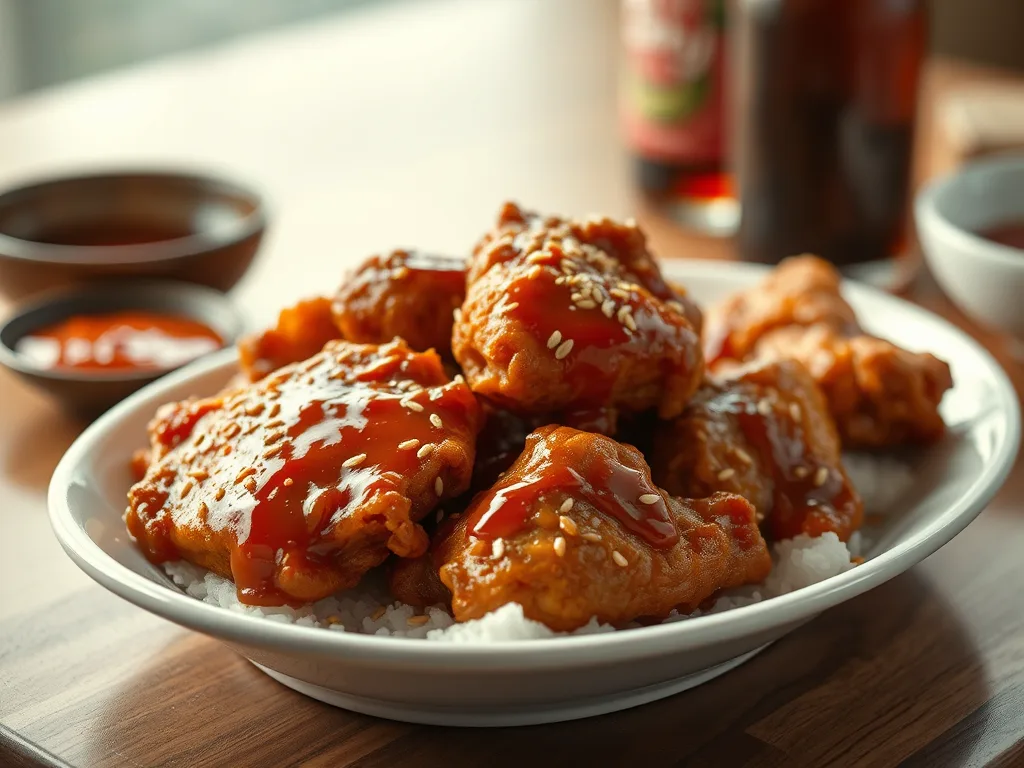
The Story Behind Dakgangjeong
Dakgangjeong is a deep-fried crispy chicken glazed in a sweet, sticky, gochujang-based sauce — essentially the Korean answer to sweet-and-sour chicken, but with more depth, more heat, and a considerably more addictive quality. The name combines "dak" (chicken), "gang" (strong or intense), and "jeong" (a style of sticky, glazed cooking). While fried chicken arrived in Korea in the 1970s with American fast food chains, Koreans rapidly transformed it into something new: double-fried for maximum crispiness and coated in sauces ranging from soy-garlic to fiery gochujang.
Dakgangjeong, with its lacquered glaze, is the sweeter, crunchier cousin of yangnyeom chicken and has been a staple of Korean street food and chi-maek culture (chicken and beer) for decades. Getting the glaze right — sticky enough to coat every piece but not so thick it compromises the crunch — is the entire art of this dish.
What makes dakgangjeong so satisfying is the contrast between the brittle crunch of the chicken and the glossy chew of the sauce. The double-fry technique matters because the first fry cooks the chicken, while the second fry drives off moisture and creates the crisp shell that can survive glazing. Without that crunch, the dish loses its magic. The sauce should cling to the chicken, not drown it.
Gochujang gives the glaze depth: spicy, fermented, savory, and slightly sweet. Garlic, soy sauce, rice syrup or honey, vinegar, and sesame oil build even more layers. As Chef Ruben, I love foods that hit multiple notes at once, and dakgangjeong does exactly that. It is sweet, spicy, sticky, crunchy, savory, and fun. Sprinkle it with sesame seeds or chopped peanuts, serve it with pickled radish, and you have the kind of Korean comfort food that disappears from the plate faster than you expect.
I also love that dakgangjeong is party food by nature. It can be eaten with chopsticks, skewers, toothpicks, or fingers, and it stays enjoyable even after cooling slightly because the glaze sets into a shiny coating. That makes it perfect for gatherings, game nights, potlucks, or a homemade Korean fried chicken night. The balance is the secret: enough sauce for flavor, enough crunch for texture, enough heat to keep you reaching back, and enough sweetness to make it dangerously addictive.
Time and Servings:
- Prep Time: 20 minutes
- Cook Time: 20 minutes
- Total Time: 40 minutes
- Servings: 4 servings
Nutrition (per serving):
- Calories: 450 kcal
- Protein: 25g
- Fat: 20g
- Carbohydrates: 40g
Ingredients:
- 1 lb chicken thighs, cut into bite-sized pieces
- 1/2 cup cornstarch
- 1/4 cup soy sauce
- 1/4 cup honey
- 2 tbsp gochujang (Korean chili paste)
- 2 cloves garlic, minced
- Vegetable oil (for frying)
- Sesame seeds, for garnish
Instructions:
- Prepare and Fry the Chicken:
- Pat the chicken pieces dry with paper towels.
- Coat the chicken evenly with 1/2 cup of cornstarch, ensuring each piece is well coated.
- Heat vegetable oil in a deep skillet or frying pan over medium-high heat until hot (about 350°F).
- Fry the chicken in batches, being careful not to overcrowd the pan, until golden brown and cooked through, about 5-7 minutes per batch.
- Remove the chicken from the oil and drain on paper towels.
- Make the Sweet and Spicy Sauce:
- In a medium saucepan, combine 1/4 cup soy sauce, 1/4 cup honey, 2 tbsp gochujang, and 2 cloves of minced garlic.
- Heat the mixture over medium heat, stirring frequently, until it begins to bubble and thicken slightly, about 3-5 minutes.
- Reduce the heat to low to keep the sauce warm.
- Toss the Chicken in the Sauce:
- Add the fried chicken pieces to the saucepan with the sauce.
- Toss the chicken thoroughly to coat each piece evenly with the sweet and spicy glaze.
- Serve:
- Transfer the chicken to a serving plate.
- Garnish with sesame seeds for a touch of flavor and texture.
- Serve immediately as a main dish or appetizer.
Tips for Success:
- For extra crispiness, double-fry the chicken by frying it a second time for 2-3 minutes after the first fry.
- Adjust the heat level by adding more or less gochujang to the sauce.
- Use boneless chicken breasts as a substitute for thighs if preferred.
Wine, Cocktail, or Drink Pairing:
- Pair this crispy chicken with a refreshing Korean Hite beer or a chilled soju cocktail for an authentic dining experience.