The Story Behind King Crab Ravioli with Lobster Bisque Sauce — Elegant Pasta
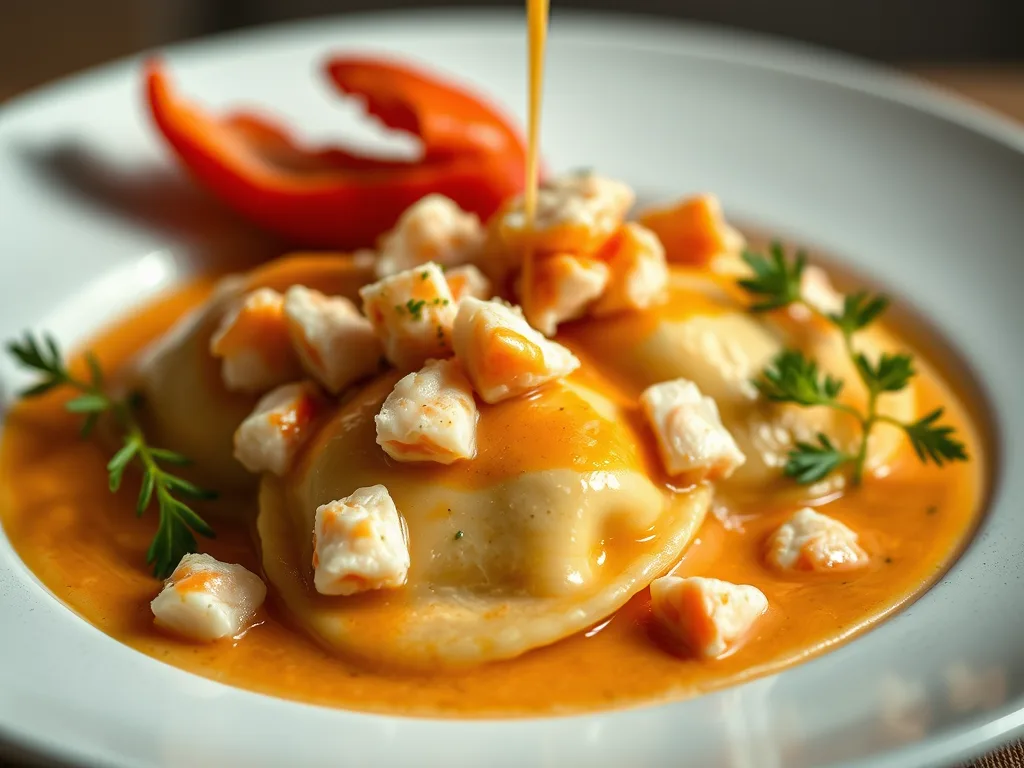
King Crab Ravioli with Lobster Bisque is an Italian-French hybrid dish that represents the pinnacle of fine dining pasta cookery. Ravioli — stuffed pasta — has been part of Italian cuisine since at least the 14th century, with the first written records appearing in Francesco di Marco Datini's merchant letters from Prato around 1383. The pasta is filled with a stuffing, sealed, and poached — a technique that showcases the skill of the pasta maker and the quality of the filling. Lobster bisque, the silky, shellfish-enriched cream soup, is a French classic with roots in Normandy and Brittany, where cream and shellfish have been combined since the 17th century. The word "bisque" may derive from "Biscaye," the Bay of Biscay, a historically important shellfish fishing region. Filling delicate ravioli with sweet king crab and serving them in a velvety lobster bisque creates a dish that draws on the finest traditions of both cuisines — Italian pasta artistry meeting French sauce sophistication.
What makes this dish feel so luxurious is that every part is built around delicacy. King crab has a naturally sweet, ocean-bright flavor that does not need aggressive seasoning. Lobster bisque brings depth from roasted shells, aromatics, stock, cream, and often a touch of brandy or cognac. Together, they create a seafood pasta that feels elegant without needing to be overloaded. From Chef Ruben’s kitchen, I see this as the kind of recipe you make when you want dinner to feel like an occasion. It is not everyday pasta. It is date-night pasta, anniversary pasta, holiday pasta, or the dish you make when you want people to sit down and say, “Okay, this is special.” The filling should be creamy enough to hold together but not so heavy that it hides the crab. A little ricotta, mascarpone, lemon zest, herbs, or shallot can support the crab, but the seafood should remain the star.
The technique rewards patience. Fresh pasta dough needs time to rest so it rolls smoothly and seals properly. The ravioli should be filled generously but not overstuffed, because too much filling can cause them to burst while cooking. Air pockets should be pressed out before sealing, and the edges need a good seal so the crab stays inside. The sauce is just as important. A good bisque begins with shellfish flavor, often from lobster shells roasted or simmered with aromatics. That step creates the deep seafood base that makes the sauce taste restaurant-quality. Cream adds silkiness, while a careful reduction concentrates the flavor. The final sauce should be smooth enough to coat the ravioli, not so thick that it overwhelms them. I like finishing with a little lemon or fresh herbs because rich seafood dishes need brightness. This recipe also tells a story about how great cuisines borrow from each other. Italian ravioli gives structure and elegance; French bisque gives sauce technique and luxury; king crab brings sweet, cold-water richness. On the plate, all of that history becomes one beautiful dish. Serve it in shallow bowls with just enough sauce to cradle the ravioli, and you have a meal that feels refined, generous, and unforgettable.
Time and Servings:
- Prep Time: 20 minutes
- Cook Time: 20 minutes
- Total Time: 40 minutes
- Servings: 4 servings
Nutrition (per serving):
- Calories: 520 kcal
- Protein: 34g
- Fat: 28g
- Carbohydrates: 30g
- Fiber: 1g
- Sugar: 2g
- Sodium: 600mg
Ingredients:
- For the Ravioli Filling:
- 1 lb king crab meat, finely chopped
- 2 cups ricotta cheese
- 1 egg
- Salt and pepper, to taste
- For the Pasta Dough:
- 1 batch fresh pasta dough (or use store-bought wonton wrappers for convenience)
- For the Lobster Bisque Sauce:
- 1 cup lobster bisque (store-bought or homemade)
- 2 tbsp heavy cream
- 1 tbsp butter
Instructions:
Make the Ravioli Filling:
- In a medium bowl, combine the king crab meat, ricotta cheese, and egg. Mix well until fully incorporated. Season with salt and pepper to taste. Cover and refrigerate until ready to use.
Roll Out the Pasta Dough:
- Roll the pasta dough into thin sheets using a pasta roller or rolling pin. Lay the sheets on a floured surface to prevent sticking.
Assemble the Ravioli:
- Place small spoonfuls of the crab mixture onto one sheet of pasta, leaving about 1-inch of space between each filling.
- Brush the edges around the filling with water, and carefully lay another sheet of pasta over the top.
- Gently press around each mound to seal, ensuring no air pockets remain. Cut into ravioli shapes using a pasta cutter or knife.
Cook the Ravioli:
- Bring a large pot of salted water to a gentle boil. Add the ravioli and cook for 3-4 minutes or until they float to the surface. Use a slotted spoon to remove and drain.
Prepare the Lobster Bisque Sauce:
- In a small saucepan, heat the lobster bisque over low heat. Stir in the heavy cream and butter, whisking until the sauce is smooth and heated through. Do not boil.
Serve:
- Plate the ravioli on warm plates and generously drizzle the lobster bisque sauce over the top. Garnish with fresh herbs, such as parsley or dill, if desired.
Tips for Success:
- Pasta Dough Tips: If using fresh dough, ensure it’s rolled out evenly to avoid uneven cooking.
- Sealing Ravioli: Press firmly to seal the edges, or use a fork to crimp for a decorative touch and extra security.
- Lobster Bisque: For the best flavor, use high-quality or homemade lobster bisque.
- Freezing Option: You can freeze assembled ravioli on a baking sheet before cooking. Once frozen, transfer to a freezer bag for easy meal prep.
Wine, Cocktail, or Drink Pairing:
- Wine Pairing: A buttery Chardonnay or a light Pinot Noir complements the rich flavors of this dish beautifully.
- Non-Alcoholic Option: A sparkling apple cider with a hint of lemon can provide a refreshing contrast to the creamy bisque.