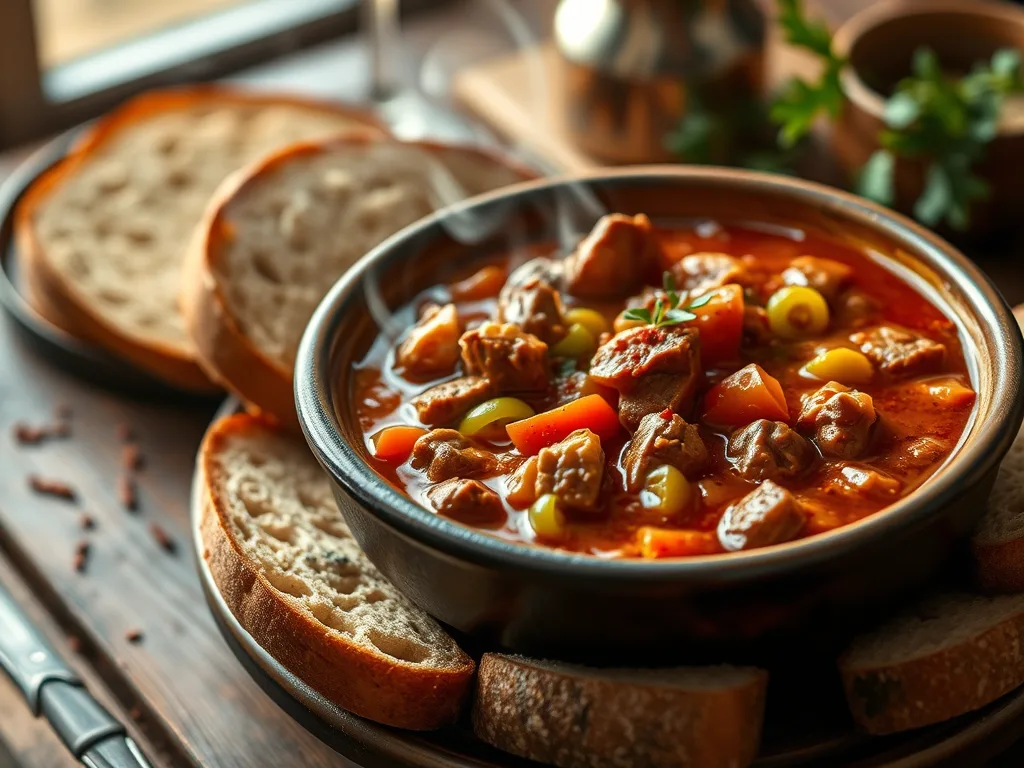
The Story Behind Hungarian Goulash
Goulash (gulyas in Hungarian) is the national dish of Hungary — a rich, paprika-infused beef stew that has become one of the most recognized dishes of Central European cooking. The word "gulyas" originally meant "herdsman" or "cowherd," and the dish was the food of the cattle drovers who drove Hungary's famous grey cattle (szurke marha) across the vast puszta (the Great Hungarian Plain) to markets in Vienna and beyond. These herdsmen had no access to fresh provisions on their months-long journeys, so they prepared a concentrated, dried version of the stew that could be rehydrated with water over a campfire — a prehistoric version of convenience food.
The critical turning point in goulash history was the arrival of paprika. Hot peppers were brought to Hungary via the Ottoman Empire in the 16th century, during the 150-year Ottoman occupation of much of the country. Initially used as a cheap substitute for expensive black pepper, paprika slowly became the defining flavoring of Hungarian cuisine, and its integration into goulash transformed the dish from a simple beef stew into something with genuine culinary identity. By the 19th century, goulash had moved from peasant food to national symbol — central to the Hungarian national revival of the 1800s, when intellectuals championed the puszta herdsman as the noble, unspoiled embodiment of the Hungarian character.
What I love about Hungarian goulash is that it proves a stew does not need dozens of ingredients to have depth. The soul of the dish comes from patience, onions, beef, and real Hungarian paprika. The paprika should be treated with respect: added to fat and aromatics so it blooms, but not scorched, because burned paprika turns bitter quickly. That one step can make the difference between a flat stew and one that tastes round, smoky, sweet, and deeply savory. The beef then simmers slowly until it becomes tender enough to give way with a spoon.
In my kitchen, goulash feels like cold-weather comfort with a backbone. It is hearty, but it is not just heavy. The paprika gives warmth and color, the onions melt into the broth, and the slow cooking creates a sauce that clings beautifully to potatoes, noodles, or crusty bread. It is the kind of dish that tastes even better the next day, after the flavors have had time to settle together. For Chef Ruben, this is exactly what a great stew should be: humble in origin, bold in flavor, and rich with the history of people who cooked for survival and somehow created something unforgettable.
Time and Servings:
- Prep Time: 20 minutes
- Cook Time: 2 hours
- Total Time: 2 hours 20 minutes
- Servings: 6 servings
Nutrition (per serving):
- Calories: 350 kcal
- Protein: 28g
- Fat: 18g
- Carbohydrates: 12g
- Fiber: 3g
- Sugar: 5g
- Sodium: 480mg
Ingredients:
- 2 lbs beef chuck, cubed
- 2 onions, chopped
- 2 tbsp Hungarian paprika
- 3 cloves garlic, minced
- 2 cups beef broth
- 2 large tomatoes, chopped
- 1 green bell pepper, chopped
- Salt and pepper, to taste
Instructions:
- Sear Beef:
- Heat a large pot or Dutch oven over medium-high heat.
- Add a little oil and sear the beef cubes on all sides until browned.
- Remove and set aside.
- Cook Vegetables:
- In the same pot, sauté onions until softened, about 5 minutes.
- Add minced garlic and cook for 1 minute. Stir in paprika and cook for another minute.
- Simmer Goulash:
- Return beef to the pot. Add beef broth, tomatoes, and bell pepper.
- Season with salt and pepper. Bring to a boil, then reduce to a low simmer.
- Cover and cook for 1.5 to 2 hours until beef is tender and flavors meld.
- Serve:
- Serve hot with crusty bread, dumplings, or noodles.
Tips for Success:
- Paprika Quality: Use authentic Hungarian paprika for the best flavor.
- Optional Additions: Add carrots or potatoes for a heartier stew.
- Leftovers: Goulash tastes even better the next day as the flavors deepen.
Wine, Cocktail, Drink Pairing:
- Pair with a robust red wine like Cabernet Sauvignon or a light lager for a classic Hungarian experience.