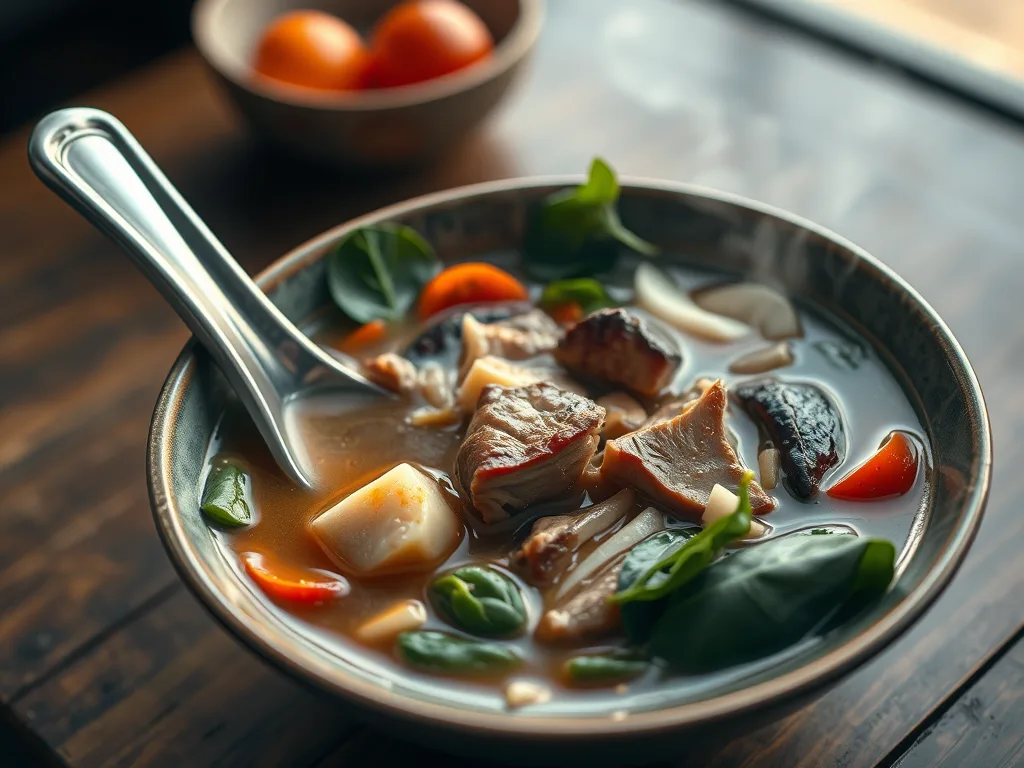
The Story Behind Sinigang na Baboy — Pork Sour Soup
Filipino Sinigang na Baboy is the ultimate Filipino comfort food — a sour tamarind broth packed with tender pork, vegetables, and the kind of warmth that feels like a hug in soup form. Sinigang belongs to a family of sour soups that are uniquely Filipino, distinct from any other cuisine in Southeast Asia. The souring agent has always been key: while tamarind is the most popular, different regions use guava, green mango, kamias, bilimbi, or even unripe tomatoes to create that signature tartness. That sourness is not a background note. It is the heart of the dish. It wakes up the appetite, balances the richness of pork, and gives the soup its unforgettable personality. For many Filipinos, one spoonful of sinigang tastes like home immediately.
The dish's name comes from the Tagalog word "sigang," meaning to cook in a sour broth. Long before colonization, this style of cooking was already deeply embedded in Filipino food culture. Today, Sinigang na Baboy is regularly voted the Philippines' favorite dish in national surveys — a sour, savory bowl of national pride. From Chef Ruben’s kitchen, I love sinigang because it challenges the idea that comfort food always has to be creamy, cheesy, or heavy. This comfort comes from brightness. The broth is light but deeply satisfying, and the vegetables make it feel nourishing. Pork ribs, belly, shoulder, or neck bones can all bring flavor, depending on how rich you want the soup. The meat simmers until tender, giving the broth body, while the tamarind brings that unmistakable tang.
The technique is about layering ingredients at the right time. Tougher pork cuts need time to soften, but vegetables should be added in stages so they do not all overcook. Daikon radish, eggplant, long beans, okra, tomatoes, water spinach, and taro can all appear depending on the cook and region. Taro is especially useful because it gives the broth a slightly thicker, silkier texture. The sourness should be adjusted near the end, because tamarind can vary in strength. Some cooks use fresh tamarind, some use paste, and many modern home cooks use sinigang mix for convenience. There is no shame in that when the goal is feeding people well. I like tasting the broth until it has that perfect balance: sour enough to make your mouth water, salty enough to feel savory, and rich enough from the pork to keep you coming back. Sinigang is often served with steamed rice, and that pairing matters. The rice softens the sour broth and turns the meal into something complete. It is rainy-day food, family food, and everyday food all at once. Sinigang na Baboy carries Filipino identity in a bowl: practical, generous, bright, and full of feeling.
Time and Servings:
- Prep Time: 20 minutes
- Cook Time: 45 minutes
- Total Time: 1 hour 5 minutes
- Servings: 6 servings
Nutrition (per serving):
- Calories: 300 kcal
- Protein: 25g
- Fat: 18g
- Carbohydrates: 15g
Ingredients:
- 1 lb pork belly, cubed
- 8 cups water
- 1 packet tamarind soup mix
- 1 tomato, quartered
- 1 onion, sliced
- 1 daikon radish, sliced
- 1 cup string beans, cut into 2-inch pieces
- 1 eggplant, sliced
- 1 bunch spinach
- Salt and pepper, to taste
Instructions:
- Boil the Pork:
- In a large pot, combine 8 cups of water and 1 lb of cubed pork belly.
- Bring to a boil over medium-high heat, skimming off any scum that rises to the surface.
- Add Aromatics and Tamarind Mix:
- Add 1 sliced onion, 1 quartered tomato, and 1 packet of tamarind soup mix to the pot.
- Reduce the heat to low and simmer for 30 minutes to tenderize the pork and infuse the broth with flavor.
- Add the Vegetables:
- Stir in the sliced daikon radish, string beans, and eggplant.
- Continue to simmer for another 15 minutes, or until the vegetables are tender.
- Finish the Dish:
- Add the bunch of spinach to the pot, letting it wilt in the residual heat for 1-2 minutes.
- Taste and season the soup with salt and pepper as needed.
- Serve:
- Ladle the Sinigang na Baboy into bowls and serve hot with steamed white rice for a complete and comforting Filipino meal.
Tips for Success:
- For a more traditional flavor, use fresh tamarind pulp instead of the tamarind soup mix.
- Add more vegetables like okra or green chili for extra variety and spice.
- Adjust the sourness by adding more or less tamarind mix to suit your taste.
Wine, Cocktail, or Drink Pairing:
- Pair this sour soup with a cold San Miguel beer or enjoy with a refreshing calamansi juice for an authentic Filipino experience.