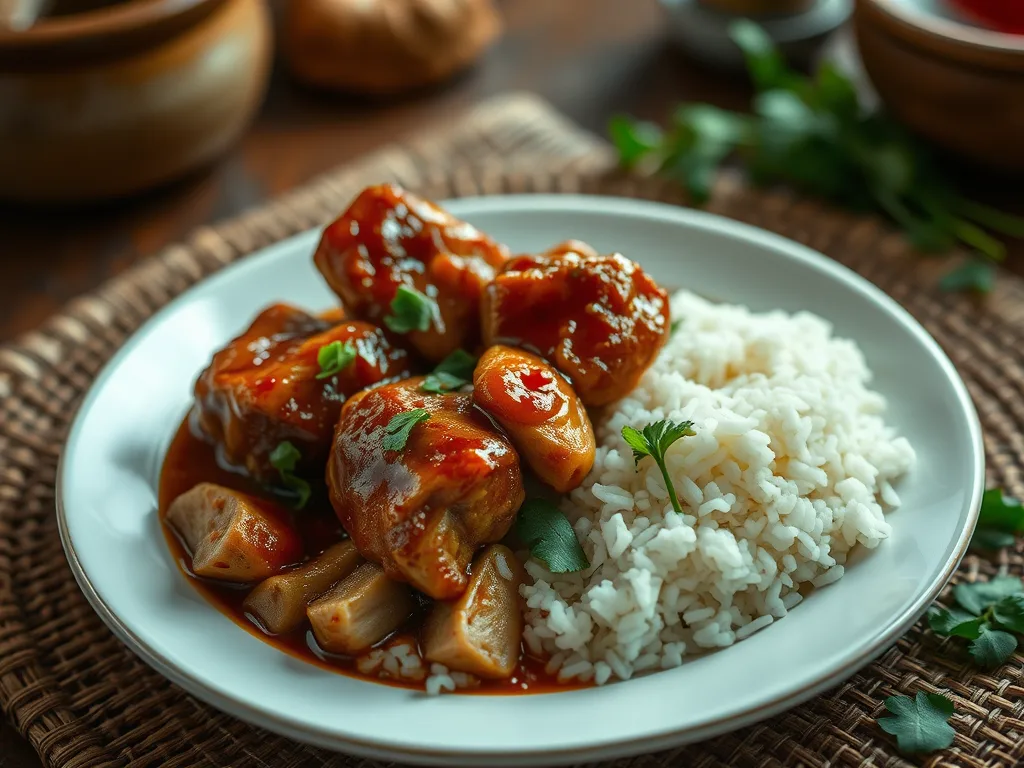
The Story Behind Chicken Adobo Braised Chicken
Filipino Chicken Adobo is the unofficial national dish of the Philippines — a dish so beloved that virtually every Filipino family has their own version passed down through generations. The word "adobo" comes from the Spanish word for marinade, but the Filipino technique predates colonization: ancient Filipinos preserved meat by stewing it in vinegar and salt. When the Spanish arrived in the 16th century, they recognized the method and gave it a familiar name. The genius of adobo lies in its balance: tangy vinegar, salty soy sauce, earthy bay leaves, and black pepper combine to create a deeply savory braise that actually improves the next day. Whether made with chicken, pork, or both, adobo is the taste of home for millions of Filipinos worldwide. It is also one of those dishes that proves preservation techniques often become flavor traditions. What began as a practical way to keep food safe became something people crave.
What makes adobo so powerful is that it is both simple and deeply personal. Some families use more vinegar for a sharper flavor, while others add a little sugar for balance. Some include coconut milk, potatoes, hard-boiled eggs, or chicken liver. Some simmer the chicken until saucy and tender, while others fry the pieces after braising for caramelized edges. Every version has a story, and nobody's family recipe is exactly the same. From Chef Ruben’s kitchen, I love that kind of recipe because it cannot be reduced to one official version. Adobo lives in family memory. It changes from region to region, household to household, and even cook to cook. The best version is often the one you grew up smelling from the kitchen.
The technique is about patience and balance. The vinegar should be allowed to simmer properly so its harsh edge softens into a bright, savory tang. Soy sauce brings salt and color, garlic adds depth, and bay leaves give the dish its familiar aroma. The chicken absorbs the sauce as it cooks, becoming tender and flavorful all the way through. Served over hot white rice, the sauce becomes just as important as the meat. That sauce is everything. It soaks into rice, coats the chicken, and brings together salt, acid, garlic, and fat in a way that feels deeply satisfying. If the sauce is too sharp, a little more simmering or a touch of sweetness can round it out. If it is too salty, more rice is usually the Filipino answer.
As Chef Ruben, I love dishes that taste even better after resting, and adobo is one of the great examples. The flavors deepen overnight, making leftovers something to look forward to. It is practical, affordable, comforting, and strong enough to represent an entire country's food culture. A pot of chicken adobo on the stove says dinner is handled, rice better be ready, and everyone is welcome at the table. I also appreciate how forgiving it is. You can make it with bone-in chicken for more flavor, boneless pieces for convenience, or a mix of chicken and pork for richness. You can reduce the sauce until glossy, leave it brothier, or fry the meat after braising for crisp edges. However you finish it, the soul remains the same.
Chicken adobo is not flashy food, but it is powerful food. It carries history, survival, family identity, and everyday comfort in one pot. That is why it continues to travel with Filipino families around the world. Wherever there is vinegar, soy sauce, garlic, bay leaves, chicken, and rice, there can be home.
Time and Servings:
Prep Time: 10 minutes (plus 30 minutes marinating time)
Cook Time: 35 minutes
Total Time: 45 minutes (active time) + 30 minutes marinating
Servings: 4 servings
Nutrition (per serving):
Calories: 280 kcal
Protein: 22g
Fat: 18g
Carbohydrates: 8g
Fiber: 1g
Sugar: 4g
Sodium: 780mg
Ingredients:
- 1 lb chicken thighs
- 1/4 cup soy sauce
- 1/4 cup vinegar
- 1 onion, chopped
- 5 cloves garlic, minced
- 1 tsp black peppercorns
- 2 bay leaves
- 1 tbsp brown sugar
- 1 tbsp vegetable oil
Instructions:
- Marinate Chicken:
- In a large bowl, combine soy sauce, vinegar, garlic, black peppercorns, and bay leaves.
- Add chicken thighs and coat well. Cover and let marinate for 30 minutes in the refrigerator.
- Cook Chicken:
- Heat vegetable oil in a pot over medium heat. Add chopped onions and sauté until softened.
- Remove chicken from the marinade (reserve the marinade) and sear in the pot for 2-3 minutes per side.
- Pour the reserved marinade over the chicken. Bring to a boil, then reduce heat to a simmer. Cover and cook for 25-30 minutes, stirring occasionally.
- Finish and Serve:
- Stir in brown sugar and simmer uncovered for another 5 minutes to thicken the sauce slightly.
- Remove bay leaves before serving.
- Serve hot with steamed rice for a traditional Filipino meal.
Tips for Success:
- Add Depth: Use a mix of soy sauce and coconut vinegar for a slightly sweeter, traditional flavor.
- Protein Variations: Substitute chicken with pork belly or tofu for a different twist.
- Thicker Sauce: Reduce the sauce longer if you prefer a more concentrated flavor.
Wine, Cocktail, Drink Pairing:
- Pair with a crisp white wine like Sauvignon Blanc or a refreshing Calamansi Cooler for a local Filipino touch. A light beer like San Miguel Lager also complements the dish’s tangy flavors.