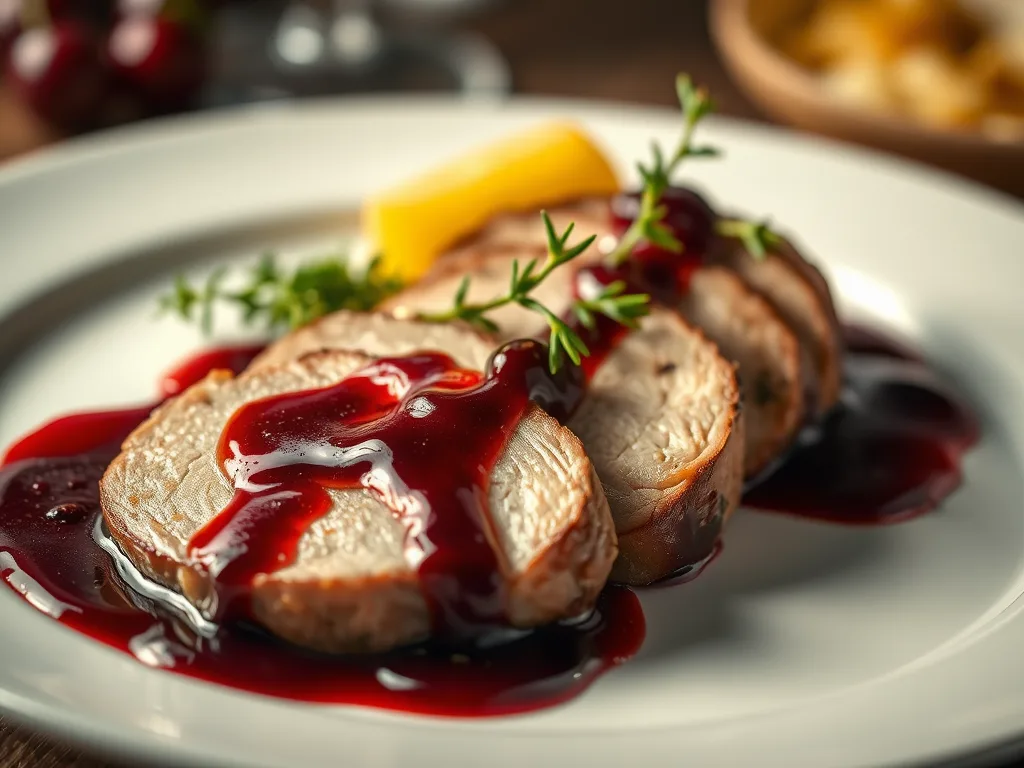
The Story Behind Duck Breast with Cherry Port Reduction
Duck a l'orange, canard aux cerises, duck confit — French cuisine has long been obsessed with duck, and the tradition of pairing its rich, gamey meat with tart or sweet-acid fruit sauces is one of the oldest and most logical pairings in classical cookery. The relationship between duck and fruit in French cuisine dates to the medieval period, when fruit — particularly tart varieties like cherries, bitter oranges, and prunes — was used to cut through the richness of fatty roasted meats. This was as practical as it was aesthetic: acidic sauces helped balance the richness and stimulate digestion in an era when fatty meats were prized for their caloric density.
Duck breast is one of those ingredients that feels luxurious, but it rewards patience more than difficulty. The real secret is the skin. A properly cooked duck breast begins in a cooler pan so the fat has time to render slowly, leaving the skin crisp and golden instead of rubbery. That rendered duck fat is liquid gold, and the browned bits left behind in the pan are exactly what give the sauce its depth. I love dishes like this because they teach you not to waste flavor. The pan is not dirty after searing; it is seasoned with everything the sauce needs.
Port wine, produced in the Douro Valley of Portugal, has been integral to French sauces since the 18th century, when trade agreements between Britain and Portugal flooded northern Europe with Port. French chefs adopted it enthusiastically, discovering that its sweetness, depth, and natural grape tannins made it an extraordinary reduction sauce base. The cherry-port reduction is fundamentally a sauce chasseur — a pan sauce made in the same pan as the seared duck breast, building on the caramelized fond for extraordinary depth. This is quintessentially classical French cuisine: precise, elegant, and built on the principle that the best sauces are the ones that make the most of what the meat itself leaves behind.
The cherries bring brightness, the Port brings body, and together they create that sweet-tart finish that makes each bite of duck feel rich but not heavy. This is the kind of recipe I think of when I want dinner to feel like an occasion without turning the kitchen into a restaurant line. You can serve it with roasted potatoes, parsnip puree, green beans, or even a simple salad, and the dish still holds the spotlight. It is dramatic in the best way — crisp skin, rosy meat, glossy sauce — but underneath the elegance is a very practical lesson: careful heat, a good pan sauce, and balance can turn a few ingredients into something unforgettable.
Time and Servings:
- Prep Time: 10 minutes
- Cook Time: 25 minutes
- Total Time: 35 minutes
- Servings: 4 servings
Nutrition (per serving):
- Calories: 480 kcal
- Protein: 32g
- Fat: 28g
- Carbohydrates: 12g
- Fiber: 1g
- Sugar: 9g
- Sodium: 380mg
Ingredients:
- 4 duck breasts
- Salt and pepper, to taste
- 1 cup fresh cherries, pitted
- 1/2 cup port wine
- 1 tbsp honey
- 1 tsp balsamic vinegar
- 1 tbsp butter
- Fresh thyme, for garnish
Instructions:
1. Prepare Duck Breasts:
- Score the Skin: Using a sharp knife, score the duck skin in a crosshatch pattern, being careful not to cut into the meat. This allows the fat to render out properly.
- Season: Generously season both sides of the duck breasts with salt and pepper.
2. Cook Duck Breasts:
- Render Fat: Heat a large skillet over medium heat. Place the duck breasts skin-side down in the pan without oil (the fat will render).
- Crisp the Skin: Cook for 6-8 minutes, pressing lightly to ensure even contact. The skin should become golden and crispy, with the fat rendered.
- Finish Cooking: Flip the duck breasts and cook for an additional 3-4 minutes for medium-rare (internal temp of 135°F/57°C). Adjust time for your desired doneness.
- Rest: Remove from the pan, tent with foil, and let rest for 5 minutes to retain juices.
3. Make Cherry Port Reduction:
- Deglaze the Pan: Pour off excess fat from the skillet, leaving about 1 tbsp behind.
- Add Ingredients: Add cherries, port wine, honey, and balsamic vinegar to the skillet. Scrape up any browned bits from the pan for extra flavor.
- Simmer: Cook over medium heat for 8-10 minutes, stirring occasionally, until the sauce reduces by half and thickens.
- Finish with Butter: Stir in butter for a glossy, velvety sauce. Adjust seasoning with salt if needed.
4. Plate:
- Slice each duck breast thinly against the grain. Arrange slices on a plate.
- Drizzle with the cherry port reduction and garnish with fresh thyme sprigs for a professional touch.
5. Serve:
- Pair with roasted root vegetables or a creamy potato purée for a balanced and elegant meal.
Tips for Success:
- Room Temperature Duck: Allow the duck breasts to come to room temperature before cooking to ensure even cooking.
- Perfect Searing: Keep the skillet at medium heat to avoid burning the skin before the fat renders out.
- Resting Time: Resting the duck is crucial for maintaining its juices and tenderness.
- Cherry Options: If fresh cherries are unavailable, use frozen cherries or a high-quality cherry preserve.
- Port Substitution: If you don”t have port wine, substitute with a full-bodied red wine and a touch of sugar.
Wine, Cocktail, or Drink Pairing:
- Serve this elegant duck dish with a velvety Pinot Noir, a rich Cherry Manhattan, or a chilled black cherry sparkling water.