The Story Behind Cornbread Stuffing
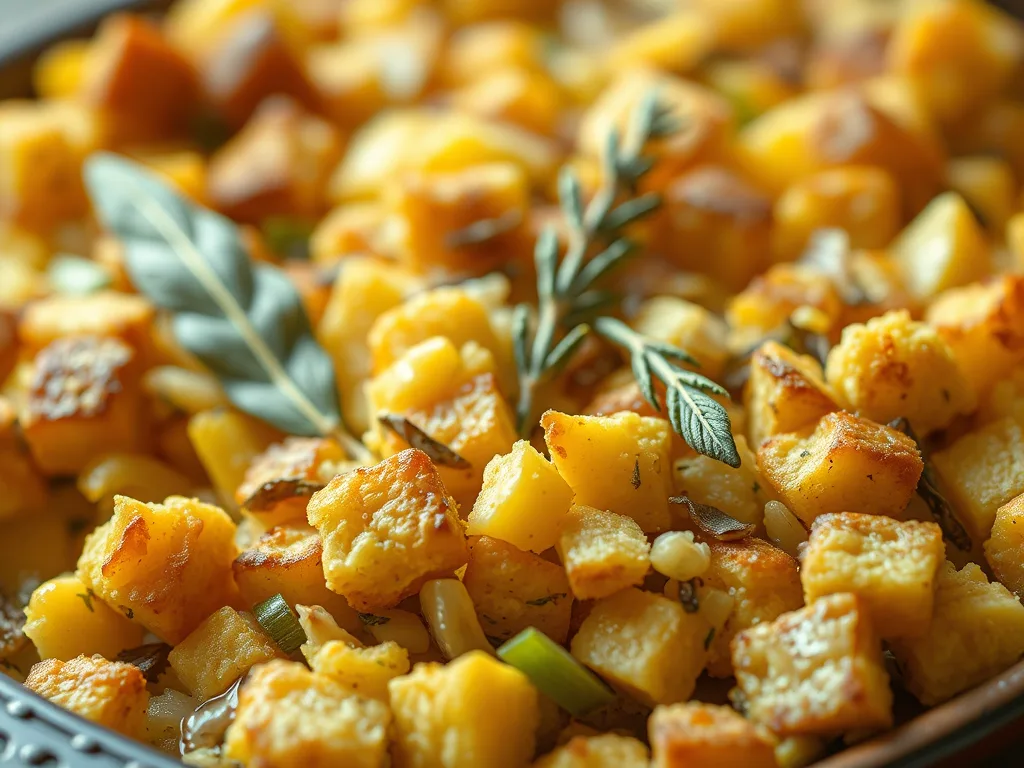
Cornbread Stuffing stands apart from all other Thanksgiving side dishes for one simple reason: it has genuine indigenous American roots. Corn, or maize, was domesticated in what is now Mexico thousands of years ago and spread throughout North America, becoming the primary grain crop of countless cultures — including the Wampanoag people of Massachusetts whose homeland hosted the 1621 harvest celebration. Cornbread — ground corn cooked with water or milk — was a staple food throughout the colonial South, and its transformation into stuffing or dressing was a natural evolution. When cooks had leftover cornbread, broth, onions, celery, herbs, and drippings, they turned those humble ingredients into a dish that could stretch a meal and still feel celebratory. That practicality is part of why it belongs on Thanksgiving tables.
The Southern distinction between "stuffing" cooked inside the bird and "dressing" baked separately is taken seriously: most Southern cornbread stuffing is made as a dressing, baked in a pan until set on top and moist within. The result — sweet, savory, and deeply satisfying — is perhaps the most American thing on the entire Thanksgiving table. From Chef Ruben’s kitchen, I love cornbread stuffing because it has personality. White-bread stuffing can be soft and neutral, but cornbread brings a golden color, a grainy texture, and a natural sweetness that plays beautifully with sage, onion, celery, black pepper, and rich broth. It feels rustic in the best way, like something that came from a cast-iron skillet and a family recipe card. It is the kind of dish that makes people talk about who made it best.
The technique starts before the mixing bowl. Good stuffing needs dry bread, and cornbread is no exception. Fresh cornbread can collapse into mush if it absorbs too much liquid too quickly, so day-old cornbread or lightly toasted crumbles work best. The vegetables should be sautéed until soft and fragrant, not tossed in raw, because Thanksgiving stuffing deserves rounded flavor. Sage is classic, but thyme, parsley, rosemary, and poultry seasoning all have their place. The broth should be added gradually. You want the mixture moist enough to hold together, but not so wet that it becomes heavy. Some families add eggs for structure; others keep it looser. Some like it sweet, some insist cornbread should never be sweet at all. That is the beauty of the dish: it carries regional and family opinions proudly.
Bake it until the top is golden and slightly crisp, while the center stays tender. If you like more crispy edges, use a wider baking dish. If you like it softer, cover it for part of the baking time. A little turkey drippings or good stock can deepen the flavor, while fresh herbs added near the end can brighten it. Cornbread stuffing also welcomes additions like sausage, mushrooms, jalapeños, apples, or pecans, but the basic version should still taste complete on its own. It is built from maize, memory, thrift, and holiday abundance. Cornbread Stuffing is not just a side dish. It is a piece of American food history, and when it is done right, it may be the first pan on the table to disappear.
What I enjoy most about cornbread stuffing is that it invites family tradition. One household may swear by a sweeter cornbread, another may demand a savory skillet version, and another may add hard-boiled eggs, sausage, or extra sage because that is how grandma did it. Those details matter because Thanksgiving dishes are not only about flavor; they are about recognition. People want to taste something that feels familiar. My advice is to start with a solid base, then season it like you mean it. Cornbread can be gentle, so herbs, broth, pepper, and salt need to bring it alive. The final spoonful should taste comforting, aromatic, and generous.
Time and Servings:
- Prep Time: 20 minutes
- Cook Time: 30 minutes
- Total Time: 50 minutes
- Servings: 8 servings
Nutrition (per serving):
- Calories: 290 kcal
- Protein: 5g
- Fat: 12g
- Carbohydrates: 40g
- Fiber: 4g
- Sodium: 400mg
Ingredients:
- 4 cups cornbread, cubed (day-old or slightly stale works best)
- 1/2 cup butter
- 1 onion, chopped
- 2 celery stalks, chopped
- 2 cups chicken or vegetable broth
- 1 tbsp fresh sage, chopped
- 1 tbsp fresh thyme, chopped
- Salt and pepper, to taste
Instructions:
- Prepare the Ingredients:
- Preheat your oven to 350°F (175°C).
- If using fresh cornbread, cut it into cubes and toast them in the oven at 250°F (120°C) for 10 minutes to dry them out slightly.
- Sauté the Vegetables:
- In a large skillet, melt 1/2 cup of butter over medium heat.
- Add the chopped onion and celery, and sauté for 5-7 minutes until softened and fragrant.
- Mix the Stuffing:
- In a large mixing bowl, combine the cubed cornbread, sautéed onion and celery, 1 tbsp of chopped fresh sage, and 1 tbsp of chopped fresh thyme.
- Gradually pour in 2 cups of chicken or vegetable broth while gently stirring to ensure the bread is evenly moistened but not soggy.
- Season the mixture with salt and pepper to taste.
- Assemble and Bake:
- Transfer the stuffing mixture to a greased 9x13-inch baking dish, spreading it out evenly.
- Bake in the preheated oven for 30 minutes, or until the top is golden and crispy.
- Serve:
- Remove the stuffing from the oven and let it cool slightly before serving.
- Serve warm as a delicious side dish for Thanksgiving or any holiday meal.
Tips for Success:
- For added texture, mix in chopped walnuts, pecans, or dried cranberries.
- Use homemade cornbread for the best flavor, or substitute with store-bought cornbread in a pinch.
- Adjust the seasoning to your preference by adding a pinch of poultry seasoning or a dash of nutmeg.
Wine, Cocktail, or Drink Pairing:
- Pair this stuffing with a medium-bodied Pinot Noir, a refreshing sparkling cider, or a cozy hot toddy for a perfect holiday pairing.