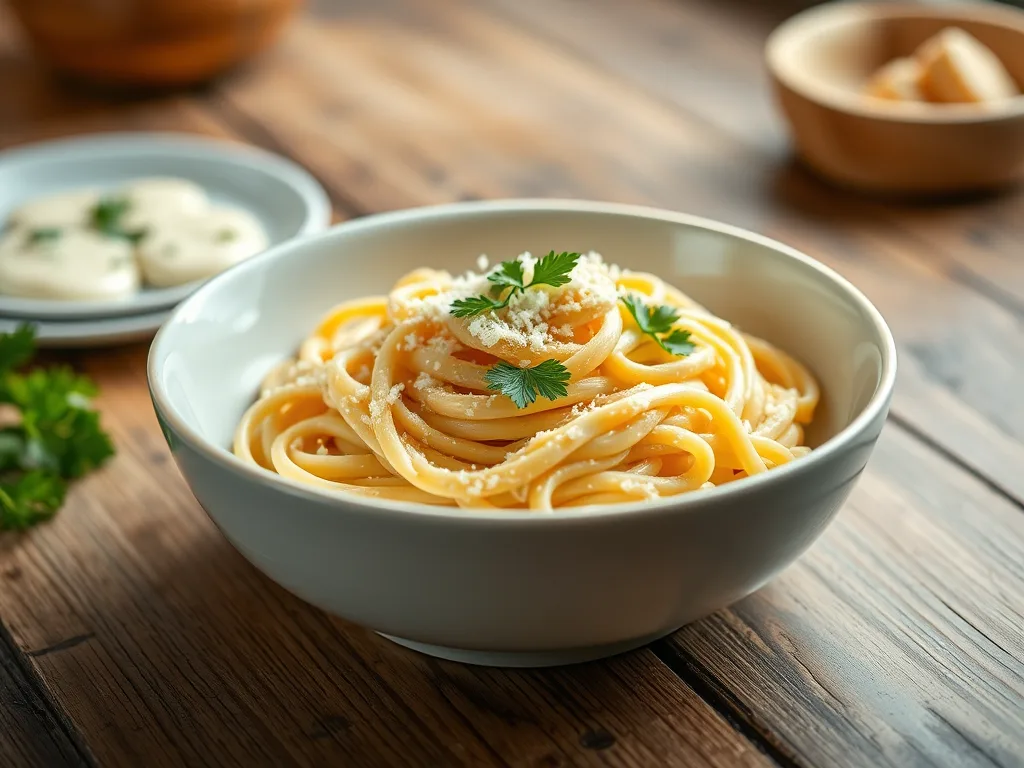
The Story Behind Copycat Olive Garden Fettuccine Creamy Alfredo Sauce
Fettuccine Alfredo has one of Italian-American cuisine's most delightful origin stories — a dish invented in Rome that became more famous in America than in its homeland. Alfredo di Lelio, a Roman restaurateur, created the original in 1914 for his pregnant wife who had lost her appetite: he combined fresh fettuccine with an extraordinary quantity of butter and aged Parmigiano Reggiano, tossed tableside with theatrical flair. The dish was simple — no cream in the original — but exquisitely rich. When American actors Mary Pickford and Douglas Fairbanks discovered it on their 1927 honeymoon, they brought the recipe home and championed it to their Hollywood friends. American food culture added heavy cream, transforming the Roman original into the richer, creamier "Fettuccine Alfredo" that became a staple of Italian-American restaurants. Olive Garden's version further popularized it for mainstream America in the 1980s and 1990s. Today's copycat version captures that beloved restaurant experience — silky, indulgent, and deeply satisfying.
What makes the Olive Garden-style Alfredo so memorable is that it leans fully into comfort. This is not the restrained Roman version where pasta water, butter, and cheese create a delicate emulsion. This is the creamy American restaurant version: generous, smooth, garlicky, and built to coat every strand of fettuccine. From Chef Ruben’s kitchen, I think both versions have their place. The original is elegant, but the creamy copycat version is the one many of us grew up craving. It reminds people of family dinners, unlimited breadsticks, big bowls of pasta, and the kind of meal where nobody is pretending to count calories. The sauce should feel luxurious without being greasy, rich without turning heavy, and cheesy without becoming grainy. That balance comes from heat control and good ingredients.
The technique for creamy Alfredo is simple but important. Garlic should be cooked gently in butter so it becomes fragrant, not browned and bitter. Cream should simmer, not boil aggressively, because too much heat can cause separation. Parmesan should be added off the highest heat and stirred until melted smoothly. Freshly grated cheese works better than pre-shredded because packaged cheese often contains anti-caking agents that prevent a silky sauce. Fettuccine is the classic pasta because its wide ribbons hold the sauce beautifully, but the sauce also works with linguine, penne, or tortellini. I like saving a little pasta water before draining because it can loosen the sauce and help it cling. Copycat recipes are not just about imitation; they are about bringing a familiar restaurant experience into your own kitchen. When you make Alfredo at home, you can control the garlic, the cheese, the thickness, and the seasoning. You can add grilled chicken, shrimp, broccoli, mushrooms, or keep it classic. For me, a bowl of creamy fettuccine Alfredo is comfort food with a little drama. It starts with a Roman love story, travels through Hollywood, becomes an American restaurant icon, and ends right on your dinner table with a fork, a napkin, and probably a second helping.
Time and Servings:
Prep Time: 10 minutes
Cook Time: 20 minutes
Total Time: 30 minutes
Servings: 4 servings
Nutrition (per serving):
Calories: 620 kcal
Protein: 20g
Fat: 42g
Carbohydrates: 45g
Fiber: 2g
Sugar: 3g
Sodium: 640mg
Ingredients:
- 1 lb fettuccine
- 1 cup heavy cream
- 1/2 cup unsalted butter
- 1 1/2 cups Parmesan cheese, grated
- Salt and pepper, to taste
- Fresh parsley, chopped (for garnish)
Instructions:
- Cook Pasta:
- Bring a large pot of salted water to a boil. Cook the fettuccine until al dente, about 10-12 minutes. Drain and set aside.
- Make Alfredo Sauce:
- In a large skillet over medium heat, melt the butter. Add the heavy cream and bring to a gentle simmer. Allow the mixture to simmer for about 5 minutes, stirring occasionally to thicken.
- Add Parmesan:
- Gradually whisk in the Parmesan cheese, stirring continuously until fully melted and smooth. Season with salt and pepper to taste.
- Combine:
- Toss the cooked fettuccine in the Alfredo sauce, ensuring every strand is coated. Adjust seasoning as needed.
- Serve:
- Transfer to serving plates. Garnish with chopped parsley and additional Parmesan cheese, if desired. Serve hot and enjoy!
Tips for Success:
- Parmesan Cheese: Use freshly grated Parmesan for the best texture and flavor; pre-grated cheese may result in a grainy sauce.
- Thickening: If the sauce is too thin, simmer it longer or add a touch of cream cheese for extra creaminess.
- Pasta Cooking Tip: Save 1/2 cup of the pasta water. You can use it to thin the Alfredo sauce if it becomes too thick.
Wine, Cocktail, Drink Pairing:
- Pair this creamy Alfredo dish with a crisp Pinot Grigio or a light Chardonnay to balance the richness of the sauce. For a non-alcoholic option, serve with lemon-infused sparkling water or iced tea.