The Story Behind Classic Sausage Stuffing
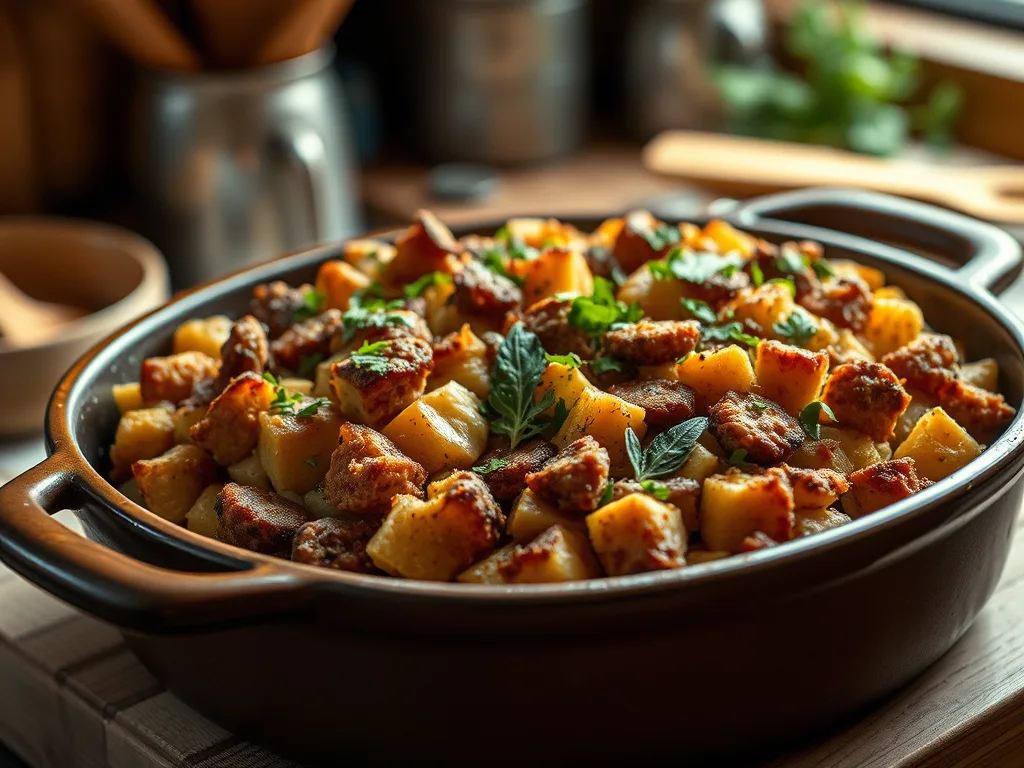
Thanksgiving Stuffing, or dressing, is the dish that Americans argue about most passionately — inside the bird or out? Cornbread or white bread? With oysters or without? Cubes or crumbs? Crispy edges or soft center? These debates reveal how deeply personal stuffing is to each family’s Thanksgiving tradition. People may try a new turkey method, switch up the vegetables, or add a different dessert, but change the stuffing too much and somebody at the table will notice immediately. That is because stuffing is not just a side dish. It is the flavor of memory, built from bread, herbs, broth, and whatever a family has decided belongs in the pan. Classic sausage stuffing is one of the most loved versions because it brings richness, savory depth, and that unmistakable holiday aroma.
The concept of stuffing a bird before roasting dates to ancient Rome, where old cookbooks describe preparations of birds filled with spiced minced meat and vegetables. The Thanksgiving stuffing tradition in America developed through the 19th century as turkey became the dominant holiday bird, with regional variations reflecting the ingredients available: cornbread in the South, oyster stuffing in New England, wild rice stuffing in the Midwest. The sausage and herb version — with its savory, fennel-scented sausage, celery, and onion — is among the most satisfying, the fat from the sausage basting the bread as it bakes into a richly flavored, comforting dish that is, for many people, the best thing on the Thanksgiving table. From Chef Ruben’s kitchen, I understand that completely. A great stuffing has texture, moisture, aroma, and enough flavor to stand up to gravy without disappearing.
The technique begins with the bread. Dry bread absorbs broth and sausage drippings without turning to paste, so day-old bread or toasted cubes are best. The sausage should be browned well, not just cooked through, because those browned bits build the foundation of the dish. Celery and onion should soften in the sausage fat, picking up all that flavor before the herbs go in. Sage is the classic Thanksgiving herb, but thyme, parsley, rosemary, and black pepper can round it out. Broth should be added gradually because different breads absorb differently. You want the stuffing moist, but not soggy. Eggs can help bind the mixture if you like a more structured scoop. Baking it uncovered gives a crisp top, while covering it for part of the time keeps the inside tender.
Classic sausage stuffing is also one of those recipes where the smell tells you almost everything. When the sausage is browning, the onion is softening, and the herbs hit the pan, the kitchen starts to feel like Thanksgiving before the turkey is even carved. If you want a sweeter note, add diced apples or dried cranberries. If you want deeper savoriness, add mushrooms or a splash of stock reduced with pan drippings. If you like a crispy top, bake it in a wider dish. Whether you call it stuffing or dressing, this dish is comfort in a casserole dish. Classic Sausage Stuffing brings the smell, the warmth, and the savory heart of Thanksgiving to the table.
One tip I like to keep in mind is that stuffing should taste seasoned before it goes into the oven. Bread can absorb a lot of flavor, so a mixture that tastes timid before baking may taste flat afterward. Taste the sausage, taste the broth, and season with care. The finished dish should be rich enough to eat alone, but balanced enough to welcome gravy, cranberry sauce, and turkey. That is what makes stuffing so important: it connects the whole plate. It catches gravy, sits beside the turkey, contrasts with cranberry sauce, and gives every bite that unmistakable holiday comfort. For many families, it is not Thanksgiving without it.
Time and Servings:
- Prep Time: 20 minutes
- Cook Time: 1 hour
- Total Time: 1 hour 20 minutes
- Servings: 8 servings
Nutrition (per serving):
- Calories: 350 kcal
- Protein: 15g
- Fat: 20g
- Carbohydrates: 30g
- Fiber: 2g
- Sodium: 900mg
Ingredients:
- 1 lb Italian sausage
- 1 loaf French bread, cubed and slightly stale (or dried overnight)
- 1 onion, diced
- 2 celery stalks, chopped
- 1 tbsp fresh sage, chopped
- 1 tbsp fresh parsley, chopped
- 2 cups chicken broth
- 2 eggs, beaten
- Salt and pepper, to taste
Instructions:
- Prepare the Sausage:
- In a large skillet over medium heat, cook 1 lb of Italian sausage, breaking it up into crumbles with a spoon.
- Cook until browned and fully cooked, about 8-10 minutes.
- Remove the sausage with a slotted spoon and set aside.
- Sauté the Vegetables:
- In the same skillet, add the diced onion and chopped celery.
- Cook over medium heat for 5-7 minutes, stirring occasionally, until the vegetables are softened and fragrant.
- Remove from heat and set aside.
- Mix the Stuffing:
- In a large mixing bowl, combine the bread cubes, cooked sausage, sautéed vegetables, 1 tbsp of chopped fresh sage, and 1 tbsp of chopped parsley.
- In a separate small bowl, whisk together the 2 beaten eggs and 2 cups of chicken broth.
- Pour the egg and broth mixture over the bread mixture, tossing gently to coat. Ensure the bread is evenly moistened but not soggy.
- Season with salt and pepper to taste.
- Bake the Stuffing:
- Preheat your oven to 350°F (175°C).
- Grease a 9x13-inch baking dish and transfer the stuffing mixture into the dish, spreading it out evenly.
- Bake for 45-50 minutes, or until the top is golden brown and slightly crisp.
- Serve:
- Remove the stuffing from the oven and let it rest for 5 minutes before serving.
- Serve warm as a flavorful and hearty Thanksgiving side dish.
Tips for Success:
- Use slightly stale bread for the best texture. Fresh bread can be dried in the oven at 250°F (120°C) for 10 minutes.
- Add other herbs like thyme or rosemary for extra flavor.
- For a richer stuffing, substitute 1/2 cup of the chicken broth with heavy cream.
Wine, Cocktail, or Drink Pairing:
- Pair this stuffing with a bold Cabernet Sauvignon, a dry Chardonnay, or a spiced apple cider for a festive holiday touch.