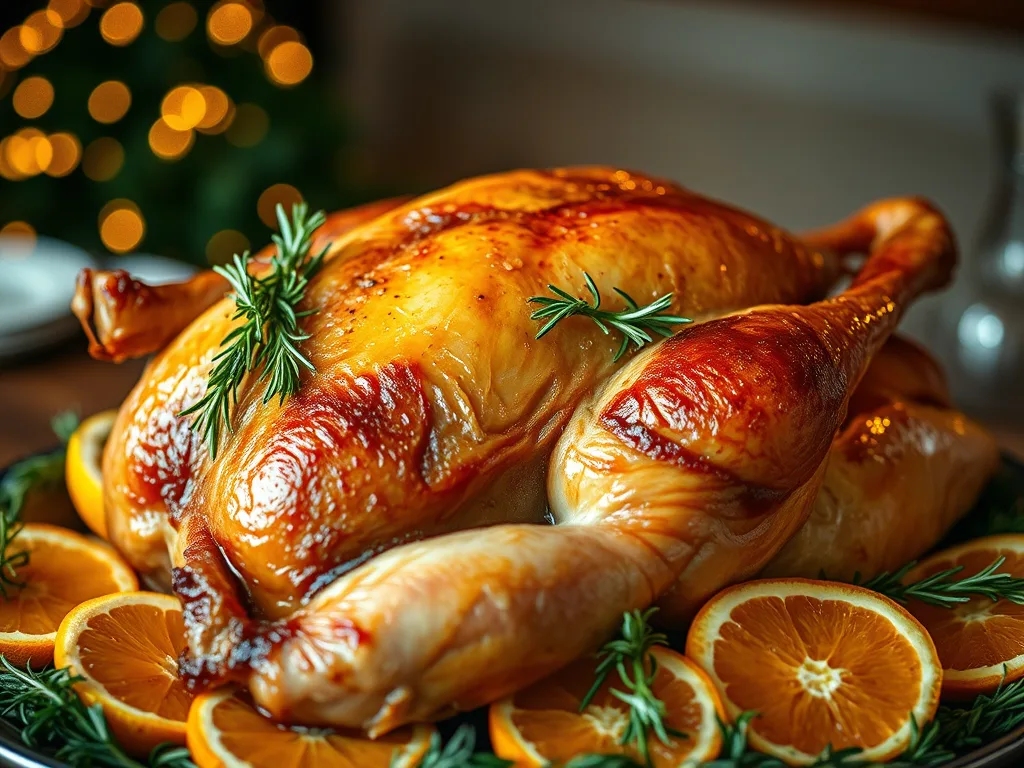
The Story Behind Christmas Goose with Orange Glaze a Festive Main Course
Christmas Goose with Orange Glaze is a dish with deep European holiday roots, long associated with abundance, celebration, and the kind of old-world feast that fills a table with drama. Before turkey became the dominant Christmas bird in many households, goose was one of the great festive centerpieces across Britain, Germany, France, Scandinavia, and parts of Eastern Europe. Geese were practical farm birds: they provided eggs, fat, feathers, and meat, and by late autumn they were naturally fattened from grazing and harvest leftovers. That made them ideal for winter celebrations. A roasted goose on Christmas Day symbolized plenty at a time of year when warmth, richness, and shared food mattered most. It is the kind of main course that immediately feels traditional, even if it is new to your own table.
The orange glaze brings a bright, elegant contrast to the richness of the bird. Goose meat is darker and more flavorful than turkey, with a generous layer of fat beneath the skin. That fat is one of its gifts, but it also needs balance. Citrus has been paired with rich poultry for centuries because acidity cuts through fat and fruit sweetness adds complexity. Orange, in particular, brings a festive aroma that feels right at home with winter spices, honey, herbs, and roasted meat. From Chef Ruben’s kitchen, I love the idea of using orange glaze because it gives the goose a glossy, golden finish while keeping the flavor lively. It turns a traditional roast into something that feels celebratory and slightly luxurious.
The technique for goose is different from turkey. Because goose has so much fat, the skin should be pricked carefully so the fat can render as it roasts. That rendered goose fat is liquid gold in the kitchen, perfect for roasting potatoes or vegetables. The bird should be seasoned well, and aromatics like orange, onion, garlic, thyme, rosemary, or bay can be placed inside the cavity for fragrance. Roasting at the right temperature allows the fat to render and the skin to crisp without drying out the meat. The glaze should usually be brushed on toward the later part of cooking so the sugars do not burn. Orange juice, zest, honey, brown sugar, mustard, vinegar, or warm spices can all create a beautiful glaze with sweet-tart balance. Resting the goose before carving is essential so the juices settle. Christmas goose also carries a sense of story. It appears in old holiday literature, traditional markets, and family feasts where the centerpiece mattered. Serving it today feels like reviving something grand and meaningful. It is rich, aromatic, and festive — a main course that asks people to gather, slow down, and enjoy a meal that feels worthy of the season.
Time and Servings:
- Prep Time: 20 minutes
- Cook Time: 3 hours
- Total Time: 3 hours 20 minutes
- Servings: 6 servings
Nutrition (per serving):
- Calories: 650 kcal
- Protein: 40g
- Fat: 52g
- Carbohydrates: 8g
Ingredients:
- 1 whole goose (10 lbs, thawed)
- 1 orange, sliced
- 1/4 cup honey
- 1/4 cup orange juice
- Salt and pepper, to taste
- Fresh thyme and rosemary, for garnish
Instructions:
Prepare the Goose:
- Preheat the Oven:
- Preheat your oven to 350°F (175°C).
- Prepare a roasting pan with a rack to hold the goose and catch the drippings.
- Pat Dry and Season:
- Pat the goose dry with paper towels to ensure crisp skin.
- Season generously inside and out with salt and pepper.
- Stuff the Cavity:
- Stuff the cavity with orange slices to add moisture and flavor.
- Score the Skin:
- Using a sharp knife, gently score the goose's skin in a crosshatch pattern. Be careful not to cut into the meat. This helps the fat render during cooking.
Roast the Goose:
- Initial Roasting:
- Place the goose on the roasting rack breast-side up.
- Roast in the preheated oven for 2.5 hours, basting every 30 minutes with pan drippings to keep the meat moist.
Prepare the Glaze:
- Make the Glaze:
- While the goose roasts, combine honey and orange juice in a small saucepan over medium heat.
- Simmer the mixture for 5 minutes until it thickens slightly. Set aside.
Glaze and Finish:
- Apply the Glaze:
- After 2.5 hours of roasting, brush the prepared glaze evenly over the goose's skin.
- Return the goose to the oven and roast for an additional 30 minutes, basting once halfway through.
Rest and Serve:
- Rest the Goose:
- Remove the goose from the oven and let it rest for 15 minutes to allow the juices to redistribute.
- Garnish with fresh thyme and rosemary for a festive presentation.
- Carve and Serve:
- Carve the goose and serve warm with your favorite holiday side dishes.
Tips for Success:
- Render the Fat: Lightly prick the skin and use a roasting rack to let the fat drip off. Save the rendered fat—it’s perfect for roasting potatoes or vegetables.
- Enhance the Flavor: Add garlic cloves, bay leaves, or star anise to the cavity for extra aromatics.
- Even Cooking: Rotate the roasting pan halfway through cooking to ensure even browning.
- Crispy Skin: For an extra-crispy finish, increase the oven temperature to 400°F (200°C) during the last 10 minutes of roasting.
Wine, Cocktail, or Drink Pairing:
- Pair this Christmas goose with a bold Pinot Noir, a rich Cabernet Sauvignon, or a festive mulled wine to complement its rich flavors.