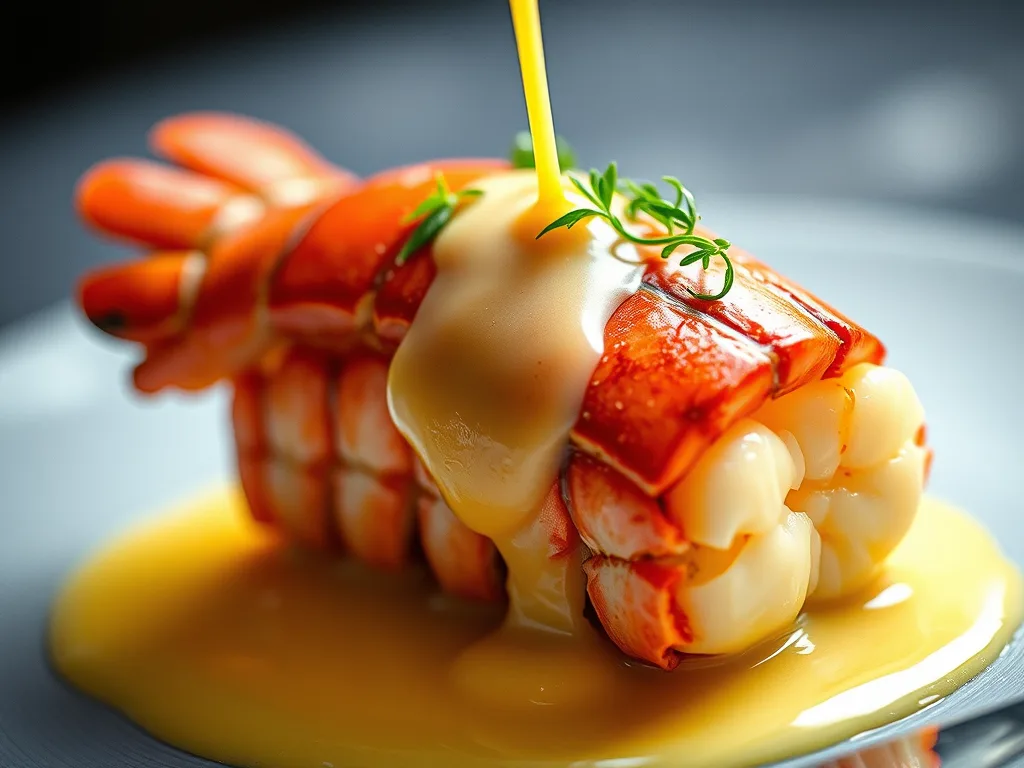
The Story Behind Butter-Poached Lobster with Vanilla Beurre Blanc
Butter-Poached Lobster with Vanilla Beurre Blanc is a dish that sits at the intersection of classical French technique and modern culinary creativity. The "beurre blanc" — white butter sauce — is one of the great masterpieces of French cuisine, originating in the Loire Valley of France in the early 20th century. Legend attributes its invention to a cook named Clémence Lefeuvre, or possibly her assistant Mère Michel, who accidentally forgot to add eggs to a béarnaise sauce while preparing a meal, producing instead this lighter, more delicate emulsified butter sauce. Whether the story is perfectly true or not, the result became a classic: butter whisked into a reduction of wine, vinegar, and shallots until it forms a glossy, tangy sauce that feels rich without being heavy.
The technique of poaching lobster in butter — maintaining a temperature low enough to gently cook the delicate meat without toughening it — became a signature of fine dining in the late 20th century, popularized by chefs like Daniel Boulud and Thomas Keller. The addition of vanilla to the beurre blanc is a modern innovation that draws on the affinity between vanilla and butter, adding a subtle floral sweetness that elevates the natural sweetness of lobster. From Chef Ruben’s kitchen, this dish feels like luxury handled with restraint. Lobster is already special, so the goal is not to bury it. The butter, vanilla, and sauce should frame the lobster, not compete with it. When done well, every bite is tender, sweet, silky, and aromatic.
The technique depends on temperature control. Lobster meat can become rubbery if cooked too aggressively, but butter poaching keeps it gentle. The butter should stay warm and fluid, not violently bubbling. The lobster slowly turns opaque and tender, absorbing the richness around it. Beurre blanc requires its own patience. The wine and vinegar reduction should be concentrated enough to give acidity, then cold butter is whisked in gradually to form an emulsion. If the heat is too high, the sauce can break; if too low, the butter may not incorporate properly. Vanilla should be used lightly. A split vanilla bean or a small amount of extract can add perfume, but too much will push the sauce toward dessert. I like pairing this dish with simple sides: asparagus, pommes purée, risotto, or lightly dressed greens. Anything too bold would distract from the lobster. This recipe also shows how modern fine dining often works: take a classical foundation, understand the science, and introduce one surprising element that makes the dish memorable. Vanilla with lobster may sound unusual, but it makes sense when you taste it. Both have natural sweetness, and butter ties them together. Butter-poached lobster with vanilla beurre blanc is elegant, romantic, and deeply French in spirit — a dish that turns careful technique into pure pleasure.
Time and Servings:
- Prep Time: 10 minutes
- Cook Time: 20 minutes
- Total Time: 30 minutes
- Servings: 2 servings
Nutrition (per serving):
- Calories: 720 kcal
- Protein: 26g
- Fat: 66g
- Carbohydrates: 6g
- Fiber: 0g
- Sugar: 1g
- Sodium: 380mg
Ingredients:
For the Lobster:
- 2 lobster tails
- 1 cup unsalted butter, melted
- 1/2 vanilla bean, seeds scraped
For the Vanilla Beurre Blanc:
- 1/2 cup white wine
- 1/4 cup shallots, finely chopped
- 1/2 cup heavy cream
- 1 tbsp lemon juice
- 1/2 cup unsalted butter, cold and cubed
- Salt and pepper, to taste
Instructions:
- Prepare the Butter Poaching Liquid:
- In a small saucepan over low heat, melt the butter.
- Split the vanilla bean lengthwise and scrape out the seeds. Add both the seeds and the pod to the melted butter. Keep the butter warm on low heat.
- Poach the Lobster Tails:
- Place the lobster tails in the melted butter, ensuring they are fully submerged.
- Poach gently for about 10 minutes or until the lobster is opaque and cooked through. Remove and set aside.
- Prepare the Vanilla Beurre Blanc:
- In a medium saucepan, melt a small piece of butter and sauté the shallots over medium heat until softened.
- Add the white wine and lemon juice, then simmer until reduced by half.
- Stir in the heavy cream and reduce slightly.
- Remove the pan from heat and whisk in the cold, cubed butter a little at a time until the sauce is creamy and emulsified.
- Strain the sauce through a fine mesh sieve for a smooth finish and season with salt and pepper to taste.
- Plate and Serve:
- Slice the lobster tails and arrange them on warm plates.
- Drizzle generously with the vanilla beurre blanc sauce.
- Garnish with microgreens or a sprig of fresh thyme, if desired.
Tips for Success:
- Keep Butter Temperature Low: Maintain the butter temperature on low to prevent the lobster from overcooking or the butter from separating.
- Emulsify the Sauce: For a silky beurre blanc, ensure the butter is cold and whisk it in gradually.
- Use High-Quality Ingredients: Fresh lobster, real vanilla beans, and good-quality white wine elevate this dish.
Wine, Cocktail, or Drink Pairing:
- Wine Pairing: A buttery Chardonnay complements the richness of the lobster and beurre blanc.
- Cocktail Pairing: A classic French 75 offers a citrusy and sparkling contrast.
- Non-Alcoholic Option: A sparkling elderflower lemonade adds brightness to the meal.
Enjoy this decadent dish as the centerpiece of your special celebration!