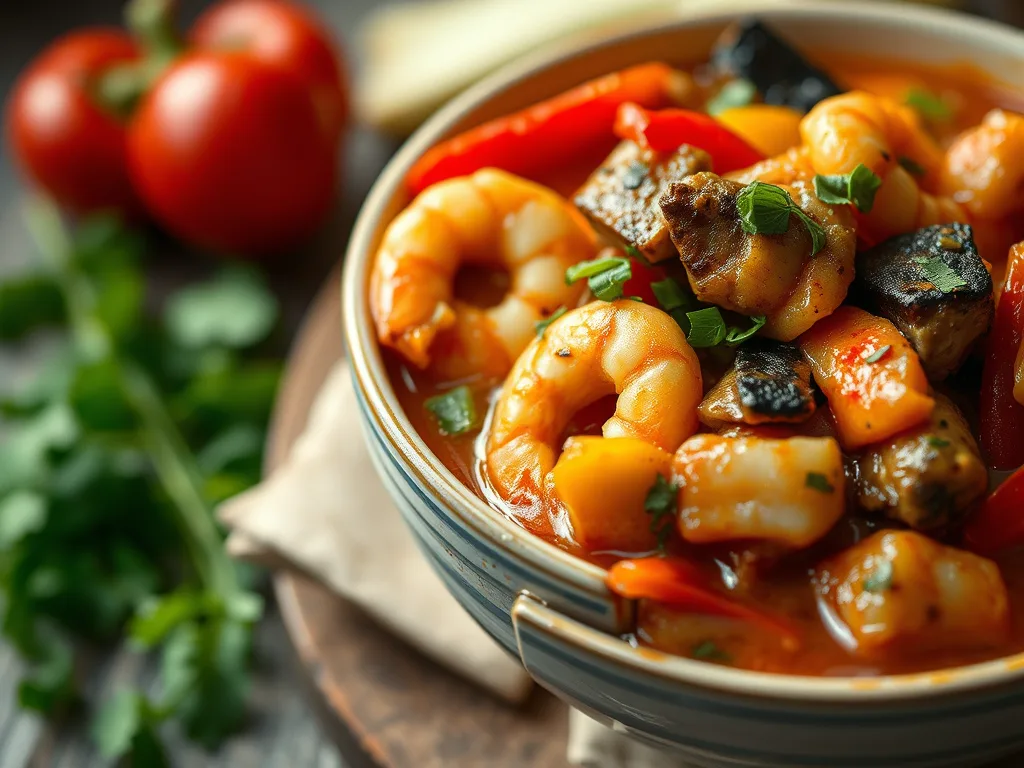
The Story Behind Brazilian Moqueca Baiana
Moqueca is one of the crown jewels of Brazilian cuisine — a fragrant coconut and tomato seafood stew that carries the DNA of three continents in a single pot. The dish originated with the indigenous Tupi people of Brazil's coastal regions, who cooked fish wrapped in banana leaves with local aromatics. When Portuguese colonizers arrived in the 16th century, they introduced onions, garlic, and tomatoes. But it was the forced arrival of enslaved West Africans to Bahia that transformed moqueca into what it is today: the Africans brought dende (red palm oil) and a tradition of rich, coconut-based stewing that turned a simple fish dish into something extraordinary.
The Baiana distinction is significant — there are two main regional styles. Moqueca Baiana, from the state of Bahia, is richer, redder, and more assertive, built on coconut milk, dende oil, and the complex spice palette of Afro-Brazilian cooking, reflecting the region's powerful African heritage. Moqueca Capixaba, from the neighboring state of Espirito Santo, uses no coconut milk or dende, and is lighter and more herb-forward. The rivalry between the two is passionate and ongoing — both states have registered their version as geographical heritage. The clay pot (panela de barro) in which moqueca is traditionally served is so integral to the dish that true Bahians insist the earthenware imparts an irreplaceable mineral quality to the stew.
What I love about Moqueca Baiana is that it feels festive without being complicated. The ingredients are layered rather than aggressively stirred: fish or seafood, peppers, onions, tomatoes, coconut milk, herbs, and that unmistakable dende oil. The stew simmers gently because seafood needs respect. Too much heat and the fish toughens; just enough heat and it stays tender while absorbing the perfume of the broth. The color alone is enough to make the dish feel special — golden-orange, creamy, bright, and inviting.
This is also a dish that celebrates balance. Coconut milk gives richness, tomatoes bring acidity, peppers add sweetness, cilantro or coriander brings freshness, and dende oil provides a deep earthy flavor that cannot be mistaken for anything else. Served with rice, farofa, or pirão, moqueca becomes a full meal that invites slow eating and conversation. As Chef Ruben, I appreciate recipes that tell a cultural story while still feeling accessible in the home kitchen. Moqueca does exactly that. It is coastal, soulful, colorful, and full of the layered history that makes food so powerful.
Time and Servings:
- Prep Time: 15 minutes
- Cook Time: 25 minutes
- Total Time: 40 minutes
- Servings: 4 servings
Nutrition (per serving):
- Calories: 380 kcal
- Protein: 28g
- Fat: 24g
- Carbohydrates: 12g
- Fiber: 3g
- Sugar: 5g
- Sodium: 460mg
Ingredients:
- 1 lb white fish fillets (e.g., sea bass or cod)
- 1/2 lb large shrimp, peeled and deveined
- 2 tbsp olive oil
- 1 onion, chopped
- 1 red bell pepper, sliced
- 1 yellow bell pepper, sliced
- 3 cloves garlic, minced
- 1 tsp paprika
- 1 can (14 oz) coconut milk
- 1/2 cup diced tomatoes
- 1 lime, juiced
- Fresh cilantro, chopped (for garnish)
- Salt and pepper, to taste
Instructions:
- Prepare Seafood:
Season the fish fillets and shrimp with lime juice, salt, and pepper. Set aside to marinate while preparing the vegetables. - Sauté Vegetables:
Heat olive oil in a large skillet or Dutch oven over medium heat. Add the chopped onion, red and yellow bell peppers, and garlic. Sauté for 5-7 minutes until the vegetables are softened. Stir in the paprika and cook for an additional minute to release its aroma. - Add Coconut Milk and Tomatoes:
Pour in the coconut milk and diced tomatoes. Stir to combine, then bring the mixture to a gentle simmer. Let it cook for 10 minutes, allowing the flavors to meld together. - Cook the Seafood:
Gently place the fish fillets and shrimp into the coconut milk mixture. Cover the skillet and let the seafood simmer for 5-7 minutes, or until the fish is tender and flakes easily and the shrimp are opaque and cooked through. - Serve:
Garnish the stew with freshly chopped cilantro. Serve hot with steamed rice or crusty bread to soak up the flavorful broth.
Tips for Success:
- Choose Fresh Seafood: Use fresh, firm white fish and large shrimp for the best flavor and texture.
- Don’t Overcook Seafood: Add the seafood in the final stage to prevent it from becoming rubbery.
- Balance the Flavors: Adjust the lime juice, salt, and pepper to achieve the perfect balance of tanginess and seasoning.
- Customize Heat: For added heat, include a finely chopped chili pepper when sautéing the garlic and vegetables.
Wine, Cocktail, or Drink Pairing:
- Wine Pairing: A chilled Sauvignon Blanc or a light Viognier pairs beautifully with the creamy, tropical flavors of the stew.
- Cocktail Pairing: A Caipirinha, Brazil’s signature cocktail made with lime and cachaça, enhances the dish’s citrus notes.
- Non-Alcoholic Option: Serve with coconut water or a limeade for a refreshing, tropical drink option.