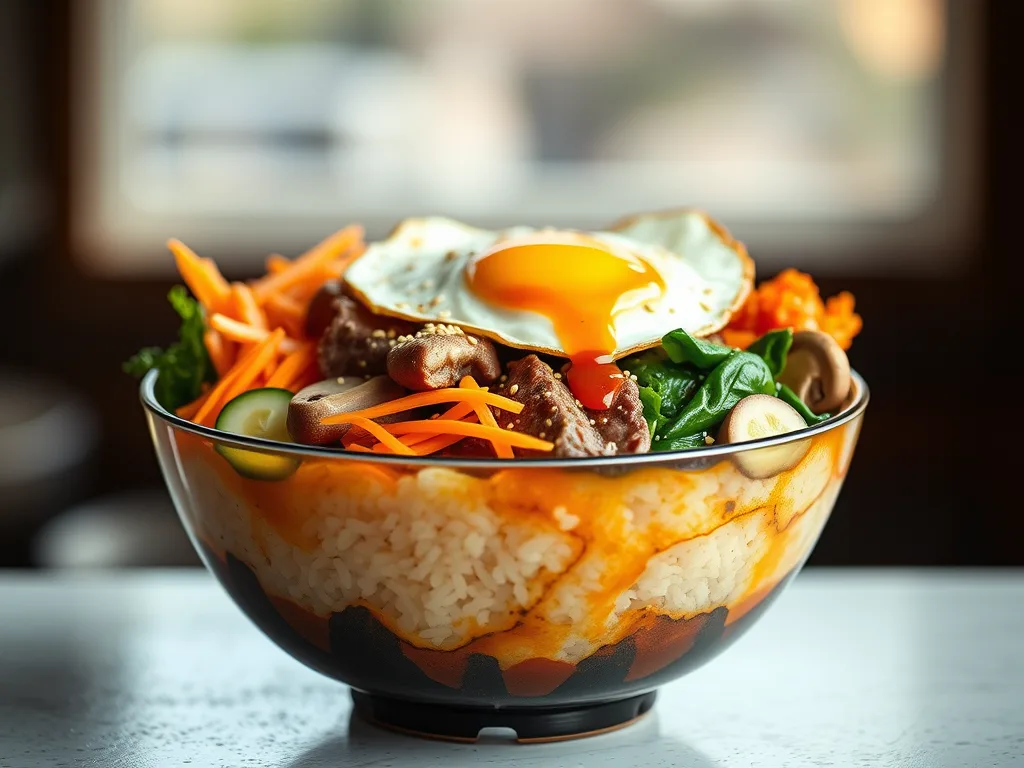
The Story Behind Bibimbap
Korean Bibimbap is arguably Korea’s most famous dish internationally — and one of its most beautiful, with its colorful arrangement of vegetables, meat, and egg over a bowl of white rice. The name means simply “mixed rice,” and the tradition of mixing various cooked ingredients into rice has roots going back to at least the Joseon Dynasty (1392–1897). Some historians believe Bibimbap evolved from the Korean custom of mixing together the remaining dishes from a meal on the last day of the year to ensure nothing was wasted.
The iconic version served in a sizzling hot stone bowl (dolsot bibimbap) creates a crispy rice crust at the bottom that is one of the great textural pleasures in all of Korean cuisine. The swirl of bright red gochujang sauce over the colorful array of vegetables makes bibimbap one of the world’s most photogenic dishes — and one of its most deeply satisfying to eat.
What I find endlessly fascinating about bibimbap is how its assembly mirrors the Korean culinary philosophy of balance — the five colors (white, red, black, green, yellow) representing the five elements and the five flavors (sweet, sour, salty, spicy, bitter) working together in a single bowl. Each vegetable component is seasoned and cooked separately, which is the part home cooks sometimes resist because of the time involved. Don’t resist it. The individual preparation of each namul (seasoned vegetable) is what gives every forkful of this dish its layered, complex character. The spinach is different from the bean sprouts, which are different from the carrots, and that variety is the whole point. Gochujang — the fermented red chili paste that serves as the sauce — is one of the great condiments of the world. Mixed with a little sesame oil, a touch of sugar, and rice vinegar, it transforms into a sauce that is simultaneously spicy, sweet, fermented, and deeply savory. Make extra and keep it in the refrigerator; you’ll find yourself putting it on everything.
The egg is the final, transformative element that holds everything together. A fried egg with a fully runny yolk is traditional — when you break it with your spoon and mix everything together, that rich yolk becomes an additional sauce that coats every ingredient in the bowl with a golden richness that ties the gochujang heat to the savory rice and the individual vegetables into one coherent dish. For dolsot bibimbap at home, a heavy cast-iron skillet heated until smoking works as a reasonable substitute for the stone bowl — add a thin layer of sesame oil to the pan before the rice goes in, and you will get that coveted crispy bottom.
Time and Servings:
- Prep Time: 20 minutes
- Cook Time: 30 minutes
- Total Time: 50 minutes
- Servings: 4 servings
Nutrition (per serving):
- Calories: 520 kcal
- Protein: 28g
- Fat: 18g
- Carbohydrates: 65g
- Fiber: 6g
- Sodium: 780mg
Ingredients:
- 2 cups cooked white rice (warm)
- 1/2 lb beef sirloin, thinly sliced
- 2 tbsp soy sauce
- 1 tbsp sesame oil
- 1 tbsp sugar
- 2 cloves garlic, minced
- 1 carrot, julienned
- 1 zucchini, julienned
- 1 cup spinach, blanched
- 4 shiitake mushrooms, sliced
- 2 eggs (fried or sunny-side-up)
- 1/2 cup kimchi
- 2 tbsp gochujang (Korean chili paste)
- 1 tbsp sesame seeds
- Vegetable oil (for stir-frying)
Instructions:
- Marinate the Beef:
- In a bowl, combine 2 tbsp soy sauce, 1 tbsp sesame oil, 1 tbsp sugar, and 2 cloves of minced garlic.
- Add the thinly sliced beef sirloin and toss to coat.
- Let the beef marinate for at least 15 minutes.
- Cook the Vegetables:
- Heat a small amount of vegetable oil in a skillet over medium heat.
- Stir-fry the julienned carrots for 2-3 minutes until tender but still crisp. Remove and set aside.
- Repeat the process with the julienned zucchini and sliced shiitake mushrooms, cooking each vegetable separately. Set aside.
- Cook the Beef:
- In the same skillet, stir-fry the marinated beef over medium-high heat until browned and cooked through, about 3-4 minutes. Remove from heat and set aside.
- Prepare the Gochujang Sauce:
- In a small bowl, mix 2 tbsp of gochujang with 1 tbsp of water and a dash of sesame oil until smooth. Adjust spice level to taste.
- Assemble the Bibimbap:
- Divide the warm cooked rice into four individual bowls.
- Arrange the cooked vegetables, beef, blanched spinach, kimchi, and fried or sunny-side-up eggs neatly on top of the rice in each bowl.
- Serve:
- Drizzle each bowl with the prepared gochujang sauce and sprinkle with sesame seeds.
- Mix everything together just before eating to enjoy the combination of flavors and textures.
Tips for Success
- Warm Rice Base: Ensure your cooked white rice is warm when serving to properly meld flavors and achieve the classic Bibimbap experience.
- Crisp Vegetables: Lightly cook vegetables like carrots and zucchini, aiming for tender-crisp texture, which adds a pleasant contrast to the soft rice.
- Protein Swap: Easily substitute beef sirloin with thinly sliced chicken, tofu, or even omit meat for a delicious vegetarian version of this bowl.
- Mix Thoroughly: Gently mix all components just before eating, ensuring the gochujang and egg yolk coat every bite for optimal flavor distribution.
- Store Separately: For best leftover quality, store cooked rice, protein, and vegetables in separate airtight containers in the refrigerator for up to two days.
Wine, Cocktail, or Drink Pairing:
- Pair Bibimbap with a refreshing Korean barley tea (boricha), a chilled glass of soju, or an ice-cold lager beer.