The Story Behind Argentinian Grilled Ribeye
Argentina has one of the highest per-capita beef consumption rates in the world, a distinction that comes directly from its geography: the Pampas — the vast, flat grasslands stretching across central Argentina — are ideally suited for raising cattle, and the country’s herds have been among the world’s largest since Spanish colonizers brought the first livestock in the 16th century. The gaucho, Argentina’s iconic cattle herder, developed the asado tradition: whole animals or large cuts cooked slowly over wood embers, seasoned only with coarse salt, and served with chimichurri. The ribeye, called ojo de bife in Spanish, is the prestige cut of the Argentinian asado — deeply marbled, richly flavored, and tolerant of the high-heat conditions of open-fire cooking. The pairing with chimichurri is as much about contrast as complement: the bright acid of the vinegar and the sharpness of the garlic and herbs cut through the beef’s fat in a way that refreshes the palate between bites, making each one taste like the first.
From Chef Ruben’s kitchen, Argentinian grilled ribeye is one of those dishes that reminds me how powerful simplicity can be. You do not need a complicated marinade when the beef is good. Salt, fire, patience, and a bright sauce can do more than twenty ingredients fighting each other. In Argentina, asado is not just a cooking method; it is a gathering. People stand around the grill, talk, wait, smell the smoke, and enjoy the slow build of anticipation. The person tending the fire, the asador, carries real responsibility. The meat is not rushed. The embers matter. The timing matters. The meal is social before the first bite ever reaches the plate.
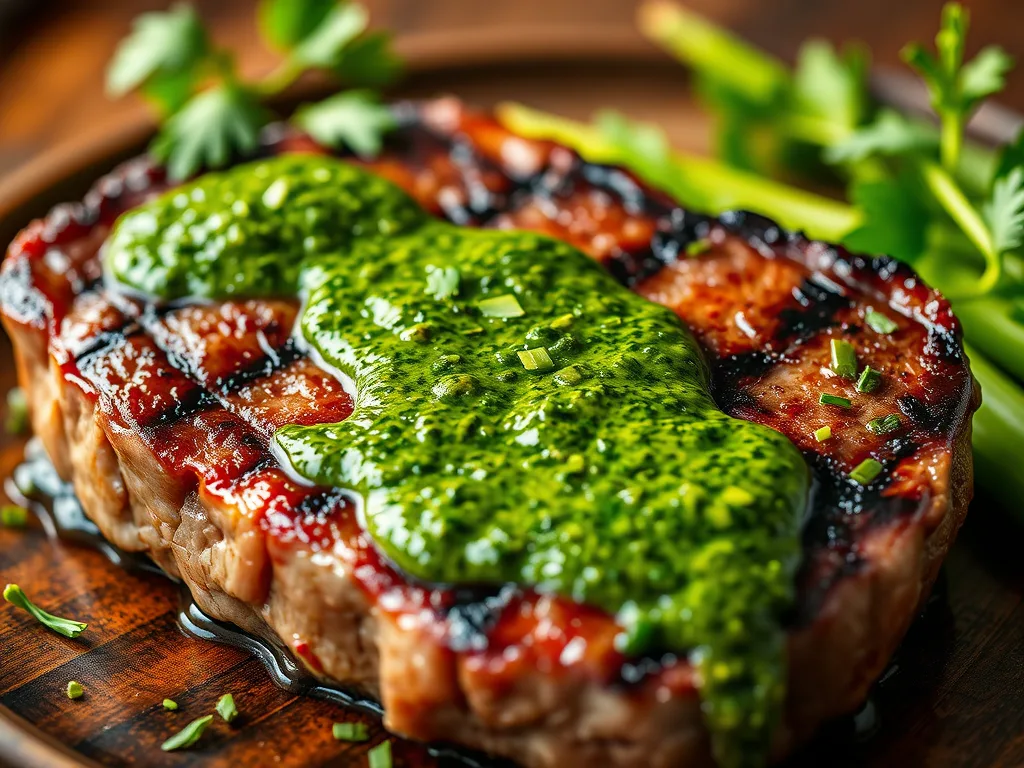
The technique for ribeye is about respecting the fat. Ribeye has beautiful marbling, and that fat needs heat to render and flavor the meat. A hot grill creates a crust, while a short rest after cooking allows the juices to settle. Coarse salt is traditional because it seasons the surface without masking the beef. Chimichurri should be fresh and punchy: parsley, garlic, oregano, vinegar, olive oil, red pepper flakes, and salt. It is not meant to be a smooth puree; it should have texture. Letting it sit for even 20 minutes helps the flavors mingle. Spoon it over the steak after grilling rather than using it as a heavy marinade, and the herbs stay bright. This dish is perfect for cookouts, family dinners, or any night when you want steak to feel like an event. Argentinian grilled ribeye with chimichurri celebrates beef, fire, and the beautiful balance of richness and acidity.
Time and Servings:
- Prep Time: 10 minutes (plus 30 minutes resting time for steaks)
- Cook Time: 10 minutes
- Total Time: 50 minutes (including resting time)
- Servings: 4 servings
Nutrition (per serving):
- Calories: 600 kcal
- Protein: 40g
- Fat: 48g
- Carbohydrates: 3g
- Fiber: 1g
- Sugar: 0g
- Sodium: 220mg
Ingredients:
- For the Steaks:
- 2 ribeye steaks (12 oz each)
- 2 tbsp olive oil
- Salt and pepper, to taste
- For the Chimichurri Sauce:
- 1/2 cup fresh parsley, chopped
- 1/4 cup fresh cilantro, chopped
- 3 cloves garlic, minced
- 1/4 cup red wine vinegar
- 1/2 cup olive oil
- 1/2 tsp red pepper flakes
- Salt and pepper, to taste
Instructions:
Prepare Steaks:
- Rub the ribeye steaks with olive oil and generously season with salt and pepper on both sides.
- Let the steaks rest at room temperature for at least 30 minutes to allow even cooking and better flavor absorption.
Grill Steaks:
- Preheat your grill to high heat (approximately 450°F/230°C).
- Place the steaks on the grill and cook for about 4-5 minutes per side for medium-rare, or adjust cooking time for desired doneness. Use a meat thermometer for precision:
- Medium-rare: 135°F (57°C)
- Medium: 145°F (63°C)
- Well-done: 160°F (71°C)
- Once done, remove the steaks from the grill and let rest for 5-10 minutes to redistribute the juices.
Make Chimichurri Sauce:
- In a mixing bowl, combine parsley, cilantro, garlic, red wine vinegar, and red pepper flakes. Gradually whisk in olive oil until well blended.
- Season with salt and pepper to taste. Allow the chimichurri to sit for a few minutes to meld the flavors.
Serve:
- Slice the ribeye steaks against the grain and plate.
- Generously spoon chimichurri sauce over the top.
- Serve immediately with roasted vegetables, potatoes, or a fresh green salad.
Tips for Success:
- Room Temperature Meat: Letting the steaks sit at room temperature before grilling ensures even cooking.
- Don’t Skip Resting: Allowing the steaks to rest after grilling locks in the juices for a succulent bite.
- Chimichurri Storage: Store any leftover chimichurri in an airtight container in the refrigerator for up to 5 days.
Wine, Cocktail, or Drink Pairing:
- Wine Pairing: Pair with a robust Malbec or a Syrah for a classic Argentine combination.
- Cocktail Pairing: A smoky Old Fashioned complements the grilled flavors beautifully.
- Non-Alcoholic Option: A glass of sparkling water with a splash of lime juice refreshes the palate.