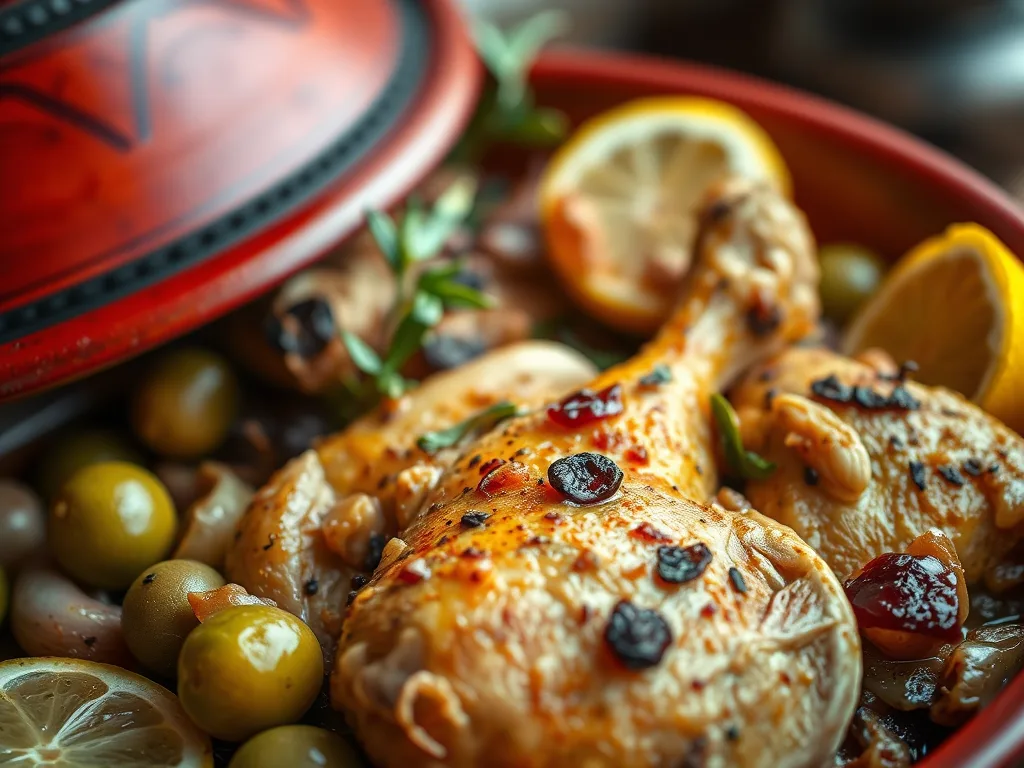
The Story Behind African Chicken Tagine with Preserved Lemons
The tagine is one of North Africa's most iconic dishes, named for the distinctive conical clay vessel in which it cooks. Berber people of the Maghreb, what is today Morocco, Algeria, and Tunisia, have been slow-cooking meat and vegetables in earthenware pots for thousands of years, long before Arab, Ottoman, or European influences shaped the region. The conical lid of a tagine is brilliant kitchen engineering. As steam rises, it condenses on the sloped walls and drips back down into the food, basting it continuously and allowing dishes to cook with very little added liquid. In an arid climate where water mattered, that design was not just beautiful. It was practical survival turned into culinary art.
Preserved lemons, the other star of this dish, are a cornerstone of Moroccan cooking and one of the world's great examples of flavor created through preservation. Whole lemons are packed in salt and their own juice, then left to cure until the rind softens and the flavor becomes intense, floral, salty, and bright. Fresh lemon gives sharp acidity, but preserved lemon gives depth. It tastes like citrus that has been transformed into a condiment, seasoning, and memory all at once. In chicken tagine, preserved lemons bring the dish to life.
Chicken tagine with preserved lemons and olives is often considered one of Morocco's signature dishes, especially associated with the flavors of Fez and the old medinas where spice shops, markets, and home kitchens have shaped Moroccan cuisine for centuries. The combination is unforgettable: tender chicken, golden spices, briny olives, silky onions, and preserved lemon rind cooked until everything tastes connected. It is savory, fragrant, salty, citrusy, and comforting without being heavy.
As Chef Ruben, I respect tagine cooking because it teaches patience. This is not a dish that needs aggressive heat or constant stirring. It asks you to build flavor slowly. Onions soften. Spices bloom. Chicken releases juices. Steam circulates. The preserved lemons and olives settle into the sauce. By the time the dish is ready, the flavors have had a conversation with each other. That is the beauty of slow cooking. It gives ingredients time to become more than themselves.
The spice profile is one of the reasons this dish is so loved. Moroccan cooking often uses warm spices like ginger, turmeric, cumin, cinnamon, saffron, coriander, and black pepper, but the goal is not simply heat. The goal is fragrance and balance. Turmeric gives color, ginger gives warmth, saffron adds luxury when used, and cumin brings earthiness. These spices do not overpower the chicken; they perfume it. When paired with preserved lemon, they create a sauce that feels both comforting and exciting.
Technique matters in a tagine, whether you are using the traditional clay vessel or a Dutch oven. Browning the chicken can add flavor, but many Moroccan-style preparations focus more on braising and spice infusion than hard searing. The onions are important because they melt into the sauce and create body. The preserved lemon rind is usually sliced or chopped, with the pulp sometimes removed depending on preference, because the rind carries the prized flavor. Olives are often added later so they keep their character without becoming too soft or overly salty.
One of the most beautiful things about this dish is the way it reflects North Africa's layered history. Indigenous Amazigh traditions, Arab spice routes, Andalusian influence, Jewish Moroccan preservation techniques, Mediterranean ingredients, and trans-Saharan trade all helped shape the cuisine. A single tagine can carry centuries of movement, adaptation, and exchange. That is what makes food history so powerful. You are not just eating chicken with lemon and olives. You are tasting geography, trade, climate, and culture.
Serving tagine is also part of the experience. Traditionally, it is placed at the center of the table and eaten with bread, not just as a utensil but as part of the meal. Moroccan bread scoops up sauce, catches tender pieces of chicken, and makes the dish communal. Rice or couscous can work beautifully too, especially for home cooks adapting the meal, but bread reminds you that tagine is meant to be shared. It is not a lonely plate. It is a centerpiece.
For home cooks, preserved lemons may feel like a specialty ingredient, but they are worth seeking out or making yourself. Once you taste how they change a dish, you understand why Moroccan kitchens treasure them. They add brightness without harshness and saltiness without tasting flat. In this recipe, they cut through the richness of the chicken and make the sauce unforgettable. A little goes a long way, but without them, the dish loses its signature voice.
African Chicken Tagine with Preserved Lemons is comforting, historic, and deeply aromatic. It reminds me that some of the world's greatest dishes were built around practical needs: preserving food, conserving water, cooking slowly, and feeding families well. Over time, those practical choices became tradition, and tradition became beauty. Every bite of this tagine carries that story, from the clever clay pot to the preserved lemon rind to the warm spices rising from the sauce.
Time and Servings:
Prep Time: 15 minutes (plus 30 minutes marinating time)
Cook Time: 1 hour 30 minutes
Total Time: 2 hours 15 minutes
Servings: 4 servings
Nutrition (per serving):
- Calories: 480 kcal
- Protein: 36g
- Fat: 32g
- Carbohydrates: 10g
- Fiber: 3g
- Sugar: 3g
- Sodium: 800mg
Ingredients
- 1 whole chicken, cut into pieces
- 2 preserved lemons, quartered
- 1 cup green olives
- 2 onions, sliced
- 4 cloves garlic, minced
- 1 tbsp ground cumin
- 1 tbsp ground coriander
- 1 tsp ground cinnamon
- 2 tbsp olive oil
- Fresh cilantro, for garnish
Instructions
Marinate Chicken
- In a large bowl, combine the cumin, coriander, cinnamon, salt, and pepper. Rub the mixture all over the chicken pieces. Cover and let marinate for 30 minutes to allow the flavors to penetrate.
Brown Chicken
- Heat olive oil in a tagine or Dutch oven over medium heat. Brown the chicken pieces on all sides, working in batches if necessary. Remove the chicken and set aside.
Sauté Aromatics
- In the same pot, add the sliced onions and minced garlic. Cook for 5-7 minutes until softened and fragrant.
Assemble Tagine
- Return the chicken to the pot, nestling it among the onions. Add the preserved lemons, olives, and enough water to cover the chicken halfway.
Simmer to Tender Perfection
- Cover the pot with a lid and reduce the heat to low. Simmer gently for 1.5 hours, occasionally stirring and adding water if needed to prevent sticking.
Serve
- Garnish the dish with fresh cilantro. Serve hot with couscous or warm flatbread to soak up the flavorful sauce.
Tips for Success
- Rinse Lemons: Always rinse preserved lemons thoroughly under cold water before using to reduce their intense saltiness and enhance their unique citrus flavor.
- Brown Chicken: Sear the chicken pieces well in olive oil until golden brown on all sides before adding other ingredients to build a rich, deep flavor base.
- Bloom Spices: Briefly toast the cumin, coriander, and cinnamon in the hot oil before adding other liquids to awaken their fragrant essential oils.
- Add Olives Late: Introduce the green olives during the last 15-20 minutes of simmering to prevent them from becoming overly soft or losing their distinct texture.
- Lemon Substitute: If preserved lemons are unavailable, substitute with the zest of one fresh lemon and 2 tablespoons of fresh lemon juice for a similar tang.
Wine, Cocktail, or Drink Pairing
- Wine: Pair with a medium-bodied white like Viognier or an aromatic red like Grenache.
- Cocktail: A Mint Julep or Lemon Thyme Spritzer complements the dish’s citrus and herbaceous notes.
- Non-Alcoholic: Moroccan mint tea or sparkling water with a slice of lemon offers a refreshing pairing.